 Get Insights

What medical technology evaluation misses in smart orthotics
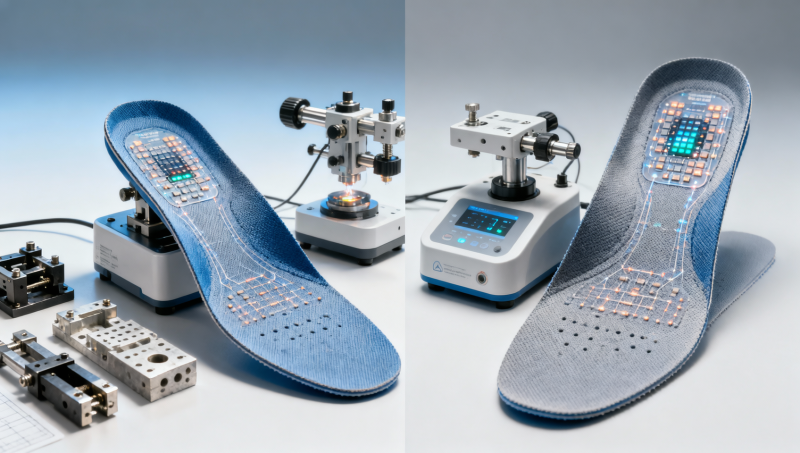
Smart orthotics are often judged by surface-level claims, yet true medical technology evaluation demands more than usability demos or marketing language. For global decision-makers, reliable medical device assessment depends on rigorous medical device testing, healthcare benchmarking, and proven medical technology compliance under MDR IVDR expectations. This article explores what conventional reviews overlook—and why clinical performance, durability, and regulatory evidence matter far more in value-based healthcare digital integration.
Why smart orthotics are frequently misjudged in medical technology evaluation
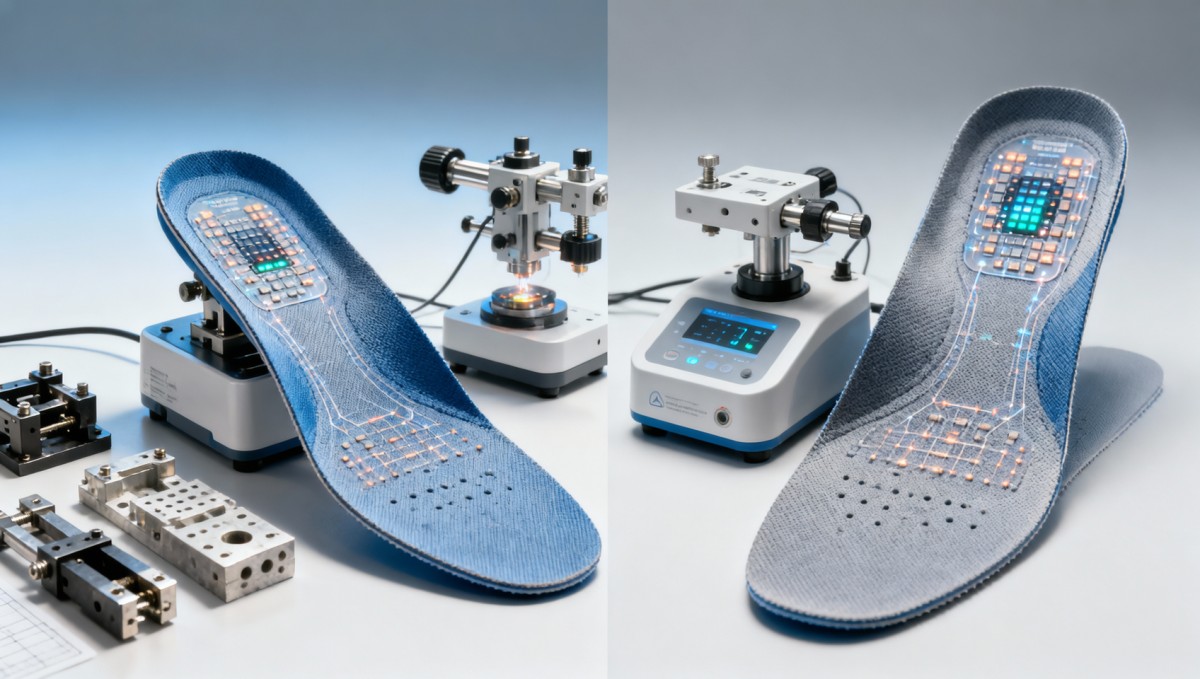
Many smart orthotics enter discussions through a familiar path: a polished demo, an attractive dashboard, and a short list of promised benefits such as gait tracking, pressure mapping, or remote monitoring. That is useful for first impressions, but it is not enough for medical technology evaluation. In procurement and clinical deployment, the real question is not whether a device looks advanced. It is whether the device performs consistently across repeated use cycles, varied patient profiles, and regulated care environments.
This gap matters because smart orthotics sit at the intersection of biomechanics, wearable sensing, software interpretation, and clinical workflow. A device may appear accurate in a 10-minute demonstration and still fail in a 6- to 12-month real-world use period. Sensor drift, poor material fatigue resistance, inconsistent fit, charging issues, and weak data traceability can all erode value. Conventional reviews often miss these factors because they prioritize visible features over measurable reliability.
For information researchers and device users, the first blind spot is overreliance on headline claims. For procurement teams, the blind spot is comparing vendors on price and functionality without a structured healthcare benchmarking framework. For enterprise decision-makers, the risk is larger: an apparently innovative product can create downstream costs in retraining, replacement cycles, documentation gaps, or nonconformity under MDR or related post-market expectations.
VitalSync Metrics approaches smart orthotics as an engineering and evidence problem, not a branding problem. That means examining signal quality, repeatability, material endurance, calibration stability, documentation maturity, and long-term serviceability. In practical terms, an evaluation should move through at least 3 layers: technical performance, clinical relevance, and compliance readiness. If one layer is weak, the entire purchase decision becomes less defensible.
What superficial product reviews usually emphasize
- Interface design, mobile app appeal, and ease of first-time setup rather than sustained use after 30, 60, or 90 days.
- Single-use demonstrations instead of repeat measurements under walking speed changes, footwear differences, and variable patient weight ranges.
- Marketing statements about precision without disclosure of test conditions, calibration intervals, or known operating limitations.
- General compliance language that does not explain documentation depth, traceability, software validation logic, or quality control process maturity.
The result is predictable. Devices may be shortlisted because they seem innovative, yet the evaluation has not addressed the factors that affect reimbursement logic, patient adherence, maintenance planning, or cross-site scalability. In value-based healthcare, missing these details is not a minor oversight. It changes total ownership risk.
Which technical performance indicators actually matter for smart orthotics
A strong smart orthotics review begins with technical performance that can be tested, repeated, and compared. This is where medical device testing should be much more rigorous than a feature checklist. Decision-makers should ask whether the system measures consistently over multiple sessions, whether the sensor output remains stable after routine cleaning and repeated load cycles, and whether software interpretation stays transparent when conditions change.
In practice, 5 core technical domains deserve attention: pressure sensing consistency, motion data repeatability, battery and charging durability, material fatigue behavior, and data transfer integrity. Each of these domains affects real clinical value. If pressure readings fluctuate beyond acceptable operational ranges during ordinary gait variation, treatment interpretation becomes unreliable. If materials degrade quickly, the device may remain digitally functional but clinically misleading due to altered fit or support behavior.
Another often-missed issue is interaction between hardware and anatomy. Smart orthotics are not isolated electronics. They function inside a dynamic biomechanical environment influenced by body mass, footwear, humidity, step count, and repeated deformation. A unit tested only in static conditions tells procurement almost nothing about long-duration use. Typical assessment periods should include short-cycle checks, mid-cycle wear review at 2 to 4 weeks, and longer durability observations across several hundred thousand loading events when the application justifies it.
The table below summarizes practical indicators that create a more defensible medical technology evaluation framework for smart orthotics. These are not universal pass-fail numbers. They are evaluation dimensions that help procurement teams compare suppliers with greater technical clarity.
A useful lesson from healthcare benchmarking is that no single parameter tells the whole story. Procurement should look for evidence sets rather than isolated claims. If a supplier discusses pressure accuracy but avoids long-term durability, or highlights software insights without data traceability details, the assessment is incomplete. Smart orthotics must be judged as systems, not gadgets.
A practical 4-point testing lens
1. Functional accuracy under realistic motion
Bench validation is necessary, but walking, standing transitions, uneven surfaces, and footwear variation often reveal deviations that static tests do not catch.
2. Reliability over time
A device that performs well on day 1 but degrades after several weeks is a procurement risk, especially when used across multiple sites or patient groups.
3. Interpretability of outputs
Operators need metrics they can understand and verify. Black-box indicators with unclear derivation are difficult to trust in a regulated healthcare setting.
4. Serviceability and support burden
Replacement parts, firmware maintenance, calibration support, and issue response times often determine whether the product remains viable after initial adoption.
Why compliance and documentation matter more than product claims
In smart orthotics, compliance is often simplified into a yes-or-no question. That is not enough. Medical technology compliance is not merely about whether a product references MDR, IVDR-related expectations, data governance, or quality management language. It is about whether the underlying technical file, risk documentation, labeling logic, intended use definition, and post-market support processes are coherent. Weak documentation can delay procurement approval even when the physical device appears promising.
This is especially important for enterprise decision-makers overseeing multi-country sourcing or integrating devices into digital care pathways. A supplier may provide broad statements on safety and performance, yet fail to present enough structured evidence for internal review. Procurement teams should expect clear answers to at least 5 questions: intended clinical purpose, validation scope, maintenance needs, data handling pathway, and change control process. If those answers remain vague, risk rises.
VitalSync Metrics helps buyers read beyond marketing compliance language by translating technical and manufacturing variables into benchmark-ready documentation. That includes identifying where a claim depends on narrow test conditions, where service life assumptions remain unsupported, and where device performance may not align with the procurement use case. For hospitals and laboratories, this reduces the chance of approving technology that later becomes difficult to defend internally.
The following comparison highlights the difference between a surface-level review and a compliance-aware evaluation model for smart orthotics.
For procurement, this difference is decisive. A well-presented product may still generate delays in legal review, quality review, or implementation approval if its documentation chain is weak. Strong compliance maturity does not guarantee clinical success, but poor compliance maturity often predicts operational friction within the first 3 to 9 months of rollout.
Core documentation checkpoints before approval
- Clear intended use statement linked to the real deployment scenario, not just generic mobility language.
- Testing summaries that explain conditions, duration, and limitations rather than only final outcomes.
- Defined maintenance intervals, cleaning limits, and battery replacement or recharge expectations.
- Traceable software and firmware update process, especially where analytics influence care decisions.
- Post-market feedback and complaint-handling pathway suitable for multi-site healthcare use.
How procurement teams should compare smart orthotics in real buying scenarios
A good procurement process does not begin with price. It begins with use-case fit. Smart orthotics used for rehabilitation monitoring, chronic condition management, sports medicine crossover, or fall-risk programs may look similar but require different evaluation priorities. In a rehabilitation department, repeatability over repeated sessions may carry more weight than app sophistication. In a distributed remote monitoring model, battery life and data export compatibility may become central.
This is where many buying teams lose time. They compare proposals with inconsistent criteria. One supplier emphasizes analytics. Another emphasizes comfort. A third emphasizes integration. Without a scoring structure, internal meetings become subjective. A more disciplined approach is to separate the decision into 4 buckets: clinical relevance, technical robustness, compliance readiness, and operational cost. Each bucket can then be weighted based on the institution’s goals over the next 12 to 24 months.
Healthcare benchmarking also helps align different stakeholders. Operators may prioritize usability and fit. Procurement may prioritize replacement cycles and service terms. Executives may prioritize evidence quality and scalability. These are not competing interests if the selection framework is built properly. They are complementary filters. The strongest smart orthotics solutions pass all three perspectives rather than excelling in only one.
The checklist below can be used as a practical procurement guide when reviewing smart orthotics suppliers, pilot proposals, or technical whitepapers.
A 6-item procurement checklist for smart orthotics
- Confirm the target use scenario. Is the product for rehabilitation follow-up, preventive screening, continuous remote tracking, or research-grade biomechanical analysis?
- Request evidence of medical device testing under repeated use, not only controlled demonstrations or first-use performance.
- Review service life assumptions. Ask what changes after 3 months, 6 months, and standard cleaning cycles.
- Check data workflow details, including export format, timestamp logic, missing data handling, and integration burden.
- Assess documentation quality for compliance, training, maintenance, and change control before pilot expansion.
- Model operational cost beyond unit price, including support response, replacements, consumables, and retraining needs.
Typical decision pitfalls to avoid
Choosing by feature volume alone
A longer feature list may increase complexity without improving clinical usefulness. Focus on measurable performance in the intended workflow.
Ignoring operator burden
If fitting, charging, syncing, and cleaning take too long per patient, adoption may drop even when the technology appears advanced.
Treating pilot results as final proof
A 2-week pilot can show promise but may not reveal fatigue issues, support load, or documentation gaps that emerge later.
Undervaluing independent benchmarks
Supplier-generated data is helpful, but independent technical benchmarking creates a more balanced and defensible buying process.
Common misconceptions, FAQ, and what decision-makers should ask next
The market still carries several assumptions that reduce evaluation quality. One assumption is that smart orthotics are mainly comfort products with optional digital features. In reality, once the technology contributes to monitoring, interpretation, or structured clinical workflows, the standard for evidence becomes much higher. Another misconception is that regulatory language automatically reflects technical maturity. It does not. A product can sound compliant while leaving important testing and service questions unresolved.
For information researchers, the next step is to move from feature discovery to evidence mapping. For operators, it is to identify which workflow variables create friction within the first 30 days of use. For procurement and leadership teams, it is to ask whether the supplier can support a full decision package: testing evidence, technical limitations, compliance documents, and implementation assumptions. That is where independent review becomes valuable.
Below are questions that frequently arise during smart orthotics evaluation. They reflect real search intent and common internal review concerns.
How should smart orthotics be tested before procurement approval?
They should be reviewed in stages rather than in a single demonstration. A practical approach includes bench verification, short-term operator assessment, and extended use observation over several weeks. The goal is to evaluate not only initial function but also repeatability, fit stability, charging behavior, and data consistency under normal usage variation.
What are the most important medical device testing priorities?
Start with repeatability, material fatigue behavior, and data traceability. Then examine software output transparency, cleaning tolerance, and battery endurance. These areas often reveal whether a product can support sustained clinical use or only short-term demonstration value.
Do all smart orthotics need the same compliance review depth?
No. The review depth depends on intended use, risk profile, data handling, and how the output is used within care pathways. However, any device positioned for healthcare deployment should be checked for documentation clarity, traceability, and lifecycle support, especially when integrated into digital monitoring environments.
Why do independent benchmarks matter if suppliers already provide data?
Because supplier data may be valid but still selective. Independent healthcare benchmarking helps normalize evaluation conditions, compare claims across vendors, and identify hidden trade-offs. It gives procurement and executive teams a more neutral basis for approval, rejection, or pilot expansion.
Why choose a data-driven evaluation partner before selecting smart orthotics
When smart orthotics are assessed only by appearance, feature count, or persuasive language, organizations often discover the true risks too late. VitalSync Metrics is built to reduce that risk. As an independent, data-driven think tank and technical benchmarking laboratory for MedTech and Life Sciences supply chains, VSM helps global decision-makers separate engineering reality from promotional noise. That matters when procurement must justify every technical choice under value-based healthcare expectations.
Our role is practical. We help buyers and innovators examine signal quality, durability assumptions, testing boundaries, manufacturing consistency, and documentation readiness. We translate these findings into standardized whitepapers and benchmark-oriented decision materials that support internal review. Instead of asking buyers to trust broad promises, we help them inspect measurable technical integrity.
If you are comparing smart orthotics suppliers, preparing a pilot, or reviewing a device for multi-site deployment, you can consult VSM on specific issues such as parameter confirmation, medical device testing scope, healthcare benchmarking criteria, expected delivery and validation timelines, documentation gaps, customization considerations, and MDR-related compliance questions. This is particularly useful when teams must align engineering, clinical, procurement, and executive priorities within a single decision cycle.
Contact VitalSync Metrics when you need a clearer basis for selection rather than another sales presentation. We can support technical comparison, sampling strategy, supplier evidence review, evaluation framework design, and quotation discussions grounded in real performance questions. In a market full of claims, independent engineering truth is often the fastest route to confident healthcare sourcing.
- medical device assessment
- medical technology compliance
- medical technology
- technical integrity
- MDR IVDR
- technical benchmarking
- material fatigue
- digital integration
- life sciences
- supply chain
- engineering truth
- global decision-makers
- data-driven
- clinical performance
- healthcare digital integration
- medical technology evaluation
- healthcare benchmarking
- medical device testing
- Remote Monitoring
- Smart Orthotics
Recommended News
- 2026.10.15Medical Packaging Heat Seal Testing: Seal Strength vs. Seal Integrity TestsDr. Julian Rossi (RehabTech Specialist)
- 2026.10.14Clinic Supplier Comparison: Evaluating Cost, Delivery Reliability, and SupportDr. Alistair Thorne (Senior Biomedical Engineer)
- 2026.10.13Engineering Performance Testing Services: Evaluating Test Methods and AccuracyDr. Alistair Thorne (Senior Biomedical Engineer)
The VitalSync Intelligence Brief
Receive daily deep-dives into MedTech innovations and regulatory shifts.