 Get Insights

Smart Orthotics Procurement Planning: Budget, Lead Times, and Supplier Risks
Smart Orthotics Procurement Planning: Budget, Lead Times, and Supplier Risks
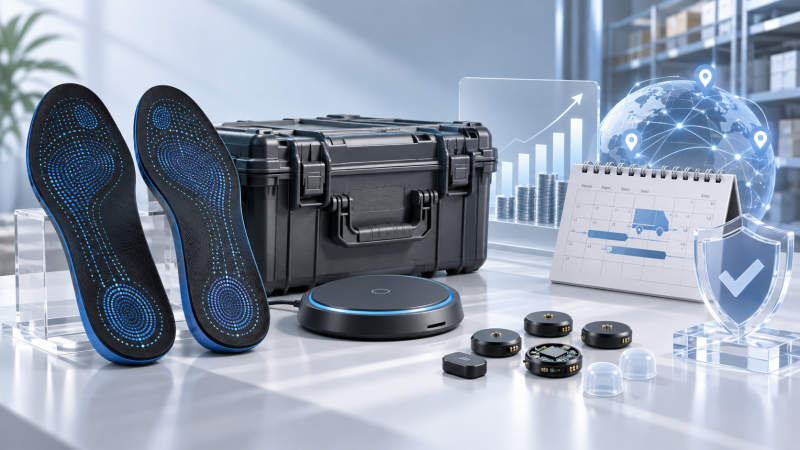
Smart orthotics procurement planning is often treated as a straightforward sourcing exercise: compare the price of an instrumented insole, select a supplier, and place an order. That approach works only when the product is being evaluated as a simple consumable. Smart orthotics are not simple consumables. They sit at the intersection of orthopedic design, wearable electronics, software, clinical workflow, and—in many procurement settings—medical-device compliance.
A low unit price can become expensive quickly if the device has inconsistent pressure readings, poor fit across shoe types, a short usable life, unclear software ownership, or a lead time that disrupts a rehabilitation program. Conversely, a premium-priced system may not justify its cost if the sensing data cannot be translated into a useful clinical or operational decision.
The practical question is not “Which smart orthotic costs less?” It is “Which option can be procured, deployed, supported, and replaced without creating hidden cost or clinical risk?” That distinction should shape the budget, supplier review, and contracting process from the beginning.
Start With the Intended Use, Not the Product Catalogue
“Smart orthotics” can describe very different products. One buyer may mean pressure-sensing insoles used in gait assessment. Another may be looking for connected orthoses that monitor movement or adherence. A research lab may need raw sensor output for algorithm development, while a hospital rehabilitation team may need a clinician-facing dashboard with simple reports and minimal setup.
Those are not interchangeable procurement requirements. Before requesting quotes, define the use case in operational terms:
- Is the device intended for clinical assessment, rehabilitation monitoring, research, sports performance, or remote patient follow-up?
- Will it support clinical decisions, or is it being used as an adjunctive wellness or activity-monitoring tool?
- Does the team need raw data, processed metrics, or only summary reports?
- Will patients wear the device daily, briefly during supervised sessions, or only in a laboratory?
- Who is expected to manage fitting, charging, cleaning, software access, and replacement?
This early work prevents a common mismatch: procuring a technically impressive platform designed for research when the clinical team needs a durable, easy-to-fit workflow tool—or buying a consumer-oriented device when data traceability is needed for a regulated clinical environment.
For cross-border projects, intended use also affects the documentation required from the supplier. In the European Union, MDR relevance depends on the product’s stated intended purpose and claims. IVDR is generally not the primary framework for orthotics unless a solution includes an in vitro diagnostic element, which is uncommon. Procurement teams should avoid assuming that a generic statement such as “medical grade” answers the regulatory question. Ask what the manufacturer claims the device does, in which markets it is supplied, and what documentation supports that position.
Build a Budget Around Total Acquisition Value
Unit price matters, but it is only one line in the cost model. Smart orthotics frequently carry costs outside the purchase order: software subscriptions, device management, calibration services, chargers, replacement sensor layers, data exports, onboarding, integration work, shipping, customs, and training time. These costs are not necessarily problematic; they simply need to be visible before the procurement decision is made.
A useful budget should separate the initial deployment from the operating period. The first year often includes one-time setup and training costs. Later years may be driven by replacement cycles, platform licences, support tiers, and the practical wear rate of the physical orthotic. If a supplier quotes only hardware, ask for a clearly itemized view of what is needed to keep the program functional for the expected procurement term.
The right comparison is therefore not merely cost per pair. Depending on the project, it may be cost per completed assessment, cost per monitored patient pathway, or cost per usable data set. A rehabilitation department that runs short, supervised assessments may prioritize fast turnaround and cleaning procedures. A remote-monitoring program may put greater weight on battery handling, patient adherence, connectivity, and replacement logistics.
Do not force every benefit into a financial formula. Some value is operational: fewer manual observations, more consistent gait documentation, or earlier visibility of offloading compliance concerns. But those benefits should be linked to a defined workflow rather than assumed from the presence of sensors.
Lead Times Are a Supply-Chain Question, Not Just a Delivery Date
Quoted lead times for smart orthotics can conceal several separate clocks. There may be time for standard hardware assembly, size selection, custom fitting, sensor calibration, firmware configuration, software-account provisioning, export documentation, and international shipment. If the order includes a pilot followed by a larger rollout, the lead time for the pilot is not automatically a reliable indication of the lead time for scale-up.
Custom or semi-custom systems deserve special caution. The procurement team should determine whether customization occurs at the factory, through a local clinical partner, or at the point of care. Each model has different implications for quality control, returns, and capacity. A supplier may be able to ship standard electronics rapidly while requiring a much longer window for patient-specific orthotic production.
For projects with fixed launch dates, request a milestone plan rather than accepting a single delivery promise. It should identify the date by which sizing information, clinical specifications, purchase-order approval, and software-access details must be submitted. It should also distinguish between “ready to ship,” “delivered,” and “ready for clinical use.” Those dates are often materially different.
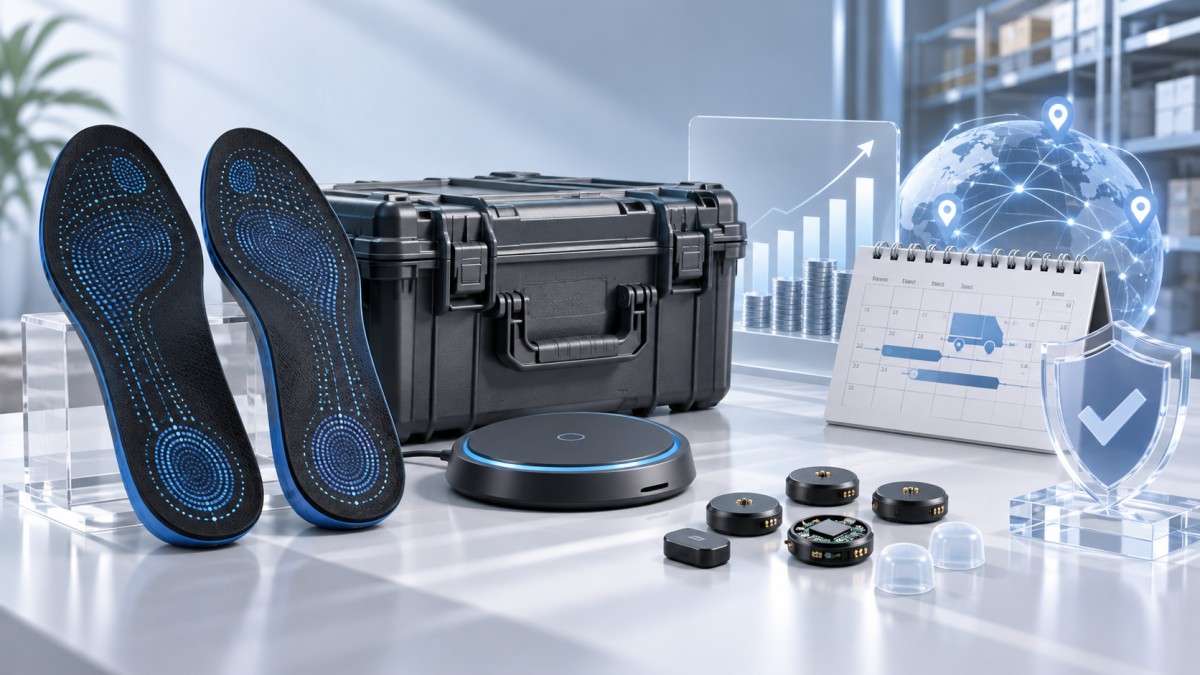
A modest buffer stock may be justified where continuity matters, but it should be planned intelligently. Holding excess inventory of a rapidly changing electronic product can create its own problem if firmware, batteries, or software compatibility move on before stock is deployed. The more sensible approach is usually to identify critical spares—such as chargers, receivers, replacement insoles, or a small number of ready-to-use units—and agree replenishment conditions in advance.
Test Technical Claims in the Context of Use
Supplier materials often highlight sensor count, sampling frequency, battery life, artificial intelligence features, or dashboard capabilities. These specifications may be relevant, but none should be evaluated in isolation. More sensors do not automatically mean better clinical insight. A high sampling rate may be unnecessary for a workflow that records basic walking assessments. A sophisticated algorithm may be difficult to validate if its output cannot be explained to clinicians or exported for independent review.
Ask suppliers how performance is maintained under realistic conditions: different footwear, user weights, gait patterns, moisture exposure, repeated flexing, and routine cleaning. If calibration is required, establish who performs it, how often it is recommended, whether it is user-accessible, and how the process is documented. If the answer is vague, the procurement risk is not merely technical. It affects service planning and accountability.
For systems that produce pressure, load, gait, or movement metrics, buyers should also ask what exactly each reported metric represents. Is it directly measured, calculated from sensor data, or generated by a proprietary model? Can the supplier provide technical documentation explaining limitations, test conditions, and intended interpretation? This is particularly important where clinicians, researchers, or quality teams need to assess whether a result is suitable for their own protocol.
Independent technical benchmarking can be useful at this stage. Organizations such as VitalSync Metrics focus on converting engineering parameters into comparable technical evidence, rather than relying solely on promotional claims. For a buyer, the value is not a generic supplier ranking. It is the ability to compare relevant questions: signal stability, material fatigue considerations, data integrity, interface compatibility, and whether the evidence actually matches the planned use case.
Supplier Risk Usually Appears After the Demonstration
A polished demonstration can show that a smart orthotic works once, in controlled conditions. Procurement due diligence should explore what happens after devices enter routine use. The key risks are often less visible: limited service capacity, dependence on a single battery or sensor source, software changes without adequate notice, restricted data access, and unclear responsibilities when a device fails.
A practical supplier review should cover manufacturing and support separately. A company can have a capable product-development team but limited ability to manage returns across several countries. It may offer a strong dashboard but have no defined process for handling account access when a hospital changes staff. It may manufacture hardware reliably while relying on a third-party cloud provider whose data-processing terms do not fit the buyer’s requirements.
The following questions tend to reveal whether a supplier is prepared for long-term delivery:
- Which components are proprietary, and which have qualified alternatives?
- What is the process for repair, replacement, and failure investigation?
- How are firmware and software updates communicated, tested, and rolled back if necessary?
- Who owns the data, and can authorized users export it in a workable format?
- What documentation is available for the applicable market and intended use?
- What happens if a model is discontinued during the contract period?
Do not treat these as hostile questions. Established suppliers should expect them. The concern is not that every supplier must have a perfect answer; few do. The concern is whether the answer is specific, documented, and commercially workable.
Use a Pilot to Reduce Uncertainty, Not to Postpone a Decision
A well-designed pilot can be the most efficient part of smart orthotics procurement planning. It should test the uncertainties that cannot be resolved on a specification sheet: fit consistency, clinician acceptance, patient handling, data quality in the real setting, charging behavior, cleaning demands, and the responsiveness of supplier support.
The pilot should have agreed acceptance criteria before devices arrive. These may include successful fitting across the intended user group, completion of a defined workflow, access to required data fields, and a tested route for reporting faults. Avoid making the pilot a broad “trial of innovation.” That usually creates plenty of anecdotal feedback but little procurement evidence.
It is equally important to agree what happens after the pilot. If the evaluation is successful, can the supplier reserve capacity for the next order? Will pricing, software terms, and support conditions remain valid? Is pilot data portable if the organization decides not to proceed? Those details are easier to settle before a team becomes invested in a platform.
A More Defensible Procurement Decision
The strongest smart orthotics purchase is rarely the one with the most features or the lowest quoted price. It is the one where clinical need, technical evidence, commercial terms, and supply continuity point in the same direction. That requires procurement teams to look beyond the product demonstration and ask how the system will behave after months of wear, staff turnover, software updates, and replenishment orders.
If there is one discipline worth protecting, it is traceability. Keep the intended use, technical requirements, evidence reviewed, lead-time assumptions, and supplier commitments in the same decision record. When a claim, delay, or support issue emerges later, that record makes it far easier to distinguish a normal operational problem from a supplier risk that should have been addressed in the contract.
Recommended News
- 2026.09.23Smart Orthotics Procurement Planning: Budget, Lead Times, and Supplier RisksSarah Jenkins (Laboratory Infrastructure Consultant)
- 2026.09.22How to Select Diagnostic Equipment for Reliable Point-of-Care Testing?Dr. Hideo Tanaka (Imaging Systems Analyst)
- 2026.09.21Selecting Molding Machines for High-Volume Medical Device Component ProductionDr. Alistair Thorne (Senior Biomedical Engineer)
The VitalSync Intelligence Brief
Receive daily deep-dives into MedTech innovations and regulatory shifts.