 Get Insights

Battery-Operated Mobility Equipment: Choosing Between Scooters and Power Wheelchairs
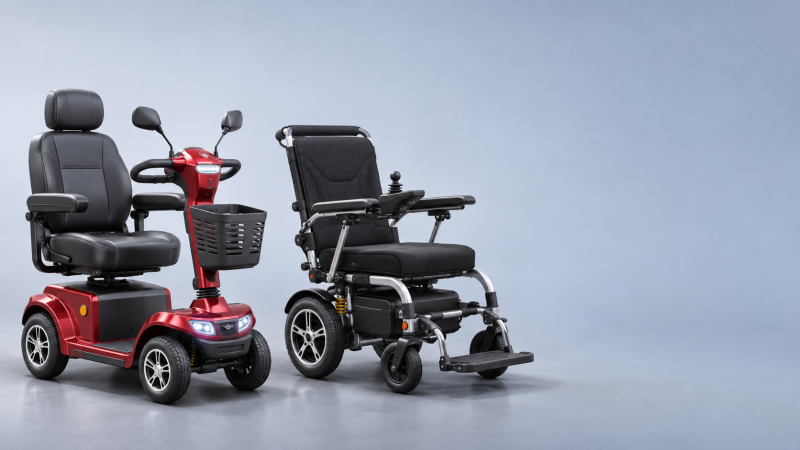
Choosing the right battery operated mobility equipment can make everyday travel more comfortable, convenient, and independent. But should you choose a mobility scooter or a power wheelchair?
The answer depends on your mobility needs, the environments you navigate, and practical factors such as seating, battery range, and transport. This guide compares both options to help you make a more confident choice.
As a starting point, a scooter often suits someone who can sit upright, steer a tiller, and transfer on and off independently. A power wheelchair generally offers more seating support and control options for people with greater mobility or postural needs.
Which Is Better for Your Everyday Mobility?
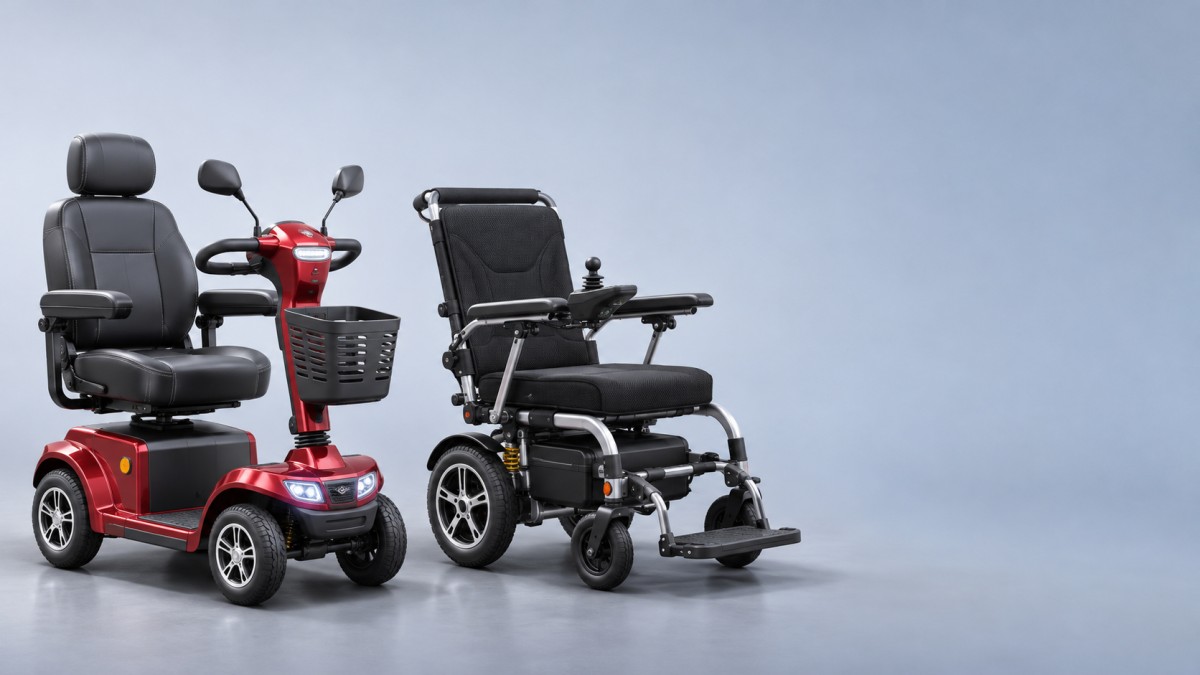
Start with the activities you want to do, not the longest list of features. Consider how you will move around your home, reach local destinations, and travel with other people.
A mobility scooter may be a practical choice if you can walk short distances, maintain an upright seated position, and use both hands comfortably to steer and operate the controls.
A power wheelchair may be better if you need support throughout the day, have difficulty walking or transferring, or cannot comfortably reach and operate a scooter’s steering column.
These are starting points rather than strict rules. Your strength, balance, fatigue, living space, and access to assistance all affect which individual model will work best.
How Do Mobility Scooters and Power Wheelchairs Compare?
Both devices use rechargeable batteries and electric motors, but their steering, seating, and intended use differ. The following comparison highlights questions to investigate during a demonstration.
Neither category guarantees a particular turning radius, range, or level of comfort. Compare the specifications and try the actual configurations you are considering.
Can You Use the Controls Comfortably and Safely?
Most scooters use a tiller positioned in front of the seat. You need enough arm movement and endurance to reach it, steer, and operate the speed controls.
Try holding the tiller for several minutes, including while turning. If reaching forward increases pain, affects balance, or quickly causes fatigue, another control setup may work better.
Power wheelchairs commonly use a joystick mounted beside the armrest. Depending on the model, its position and sensitivity may be adjustable to suit your reach and hand control.
For people who cannot use a standard joystick, some power chairs support alternative controls. A specialist can assess suitable options and arrange training for safe use.
Whichever device you choose, practice starting, stopping, reversing, and turning at low speed. Check that you can reach the controls without shifting into an uncomfortable or unstable position.
How Much Seating Support Do You Need?
If you plan to use the device for long periods, seating deserves as much attention as the motor. An uncomfortable position can make everyday trips tiring and difficult.
Scooters often have padded seats, armrests, and adjustable features, but support varies. Check seat width, depth, back height, foot placement, and whether you can sit upright without strain.
Power wheelchairs can offer more seating and positioning options, including specialized cushions, back supports, and, on some models, powered tilt or recline. These features depend on the configuration.
If you have pressure injury concerns, significant postural support needs, or difficulty changing position, ask an occupational therapist or other qualified clinician for a seating assessment.
Do not assume a thicker cushion is automatically appropriate. Cushion choice affects pressure distribution, stability, seat height, and transfers, so it should be matched to your needs.
Will It Fit Through Your Home and Usual Routes?
Measure the narrowest doors and hallways you use, as well as the space beside your bed, bathroom fixtures, and favorite chair. Include door handles and tight turns.
Compare those measurements with the device’s overall width and turning specifications. Allow extra clearance for your hands, feet, and the adjustments needed to navigate safely.
A compact power wheelchair may turn more easily in a small room, while a scooter with a longer base may need more maneuvering space. Individual models vary.
Check thresholds, elevator dimensions, ramp gradients, and any corners where you must turn immediately after entering. A device that fits through a doorway may still struggle with the approach.
Outdoors, consider pavement condition, crossings, shop entrances, and local weather. Ask the supplier which surfaces and slopes the specific model is designed to handle.
Do not judge stability by appearance alone. Follow the manufacturer’s guidance on slopes and obstacles, and practice unfamiliar routes with appropriate support until you feel confident.
What Battery Range Do You Really Need?
Manufacturer range figures are useful for comparing models, but they are usually measured under specified conditions. Your actual distance can be shorter during everyday use.
Hills, frequent stops, rough surfaces, low temperatures, tire condition, battery age, user weight, and carried items can all affect how far a charge lasts.
Estimate your longest typical round trip, including detours and errands. Choose a device with a comfortable range margin, and ask how the advertised figure was tested.
For example, if your usual return journey is six miles, a device advertised for exactly six miles leaves little room for hills, battery wear, or an unexpected change of plans.
Check where and how you will charge the battery. You need a convenient power outlet, enough space for the device or removable battery, and a routine you can manage.
Ask about charging time, battery type, expected replacement costs, and whether replacements are readily available. Use the compatible charger and follow the manufacturer’s charging and storage instructions.
If you plan to fly, contact the airline before booking. Battery chemistry, battery removal, device dimensions, and advance documentation can affect whether and how your equipment travels.
Can You Transport It in Your Vehicle?
A device described as portable may still be difficult to lift. Ask for the weight of the heaviest individual component, not just the total weight.
Try folding or disassembling the equipment yourself, or have the person who will transport it perform the task. Consider repeated lifting after a tiring day.
Measure the vehicle opening and available storage space. A device may fit inside the boot but still be too wide or tall to pass through its opening.
Larger scooters and power wheelchairs may require a vehicle lift, ramp, or accessible vehicle. Include installation, compatible vehicle requirements, and ongoing maintenance in your budget.
If you intend to remain seated in a wheelchair during vehicle travel, confirm that the chair and vehicle are suitable for that purpose and use approved restraint arrangements.
What Does Ownership Cost Beyond the Purchase Price?
Prices vary widely by location, model, seating, and features. Compare written quotes for the complete configuration you need rather than relying on a headline starting price.
Ask whether the quote includes delivery, setup, fitting, training, and any accessories. A suitable cushion, positioning support, or vehicle lift can change the total substantially.
Plan for batteries, tires, servicing, and repairs. Before purchasing, find out who provides local support, how quickly parts are available, and whether loan equipment is offered during repairs.
Review the warranty separately for the frame, electronics, motors, and batteries. Ask which faults, labor charges, transport costs, and routine wear are excluded.
Insurance or public funding may help eligible buyers, but rules depend on location, clinical need, and the device. Check requirements and obtain any necessary authorization before purchasing.
A used or refurbished device may cost less, but inspect its condition and service history. Ask about battery age, remaining support, and the availability of replacement parts.
How Can You Test Before You Buy?
Request a demonstration of the exact model and seating configuration you are considering. A brief drive in an open showroom cannot reveal every everyday difficulty.
Where possible, arrange a home assessment or trial. Test the device around furniture, through doorways, over thresholds, and along a representative outdoor route.
Practice getting on and off several times, including when tired. If another person assists you, involve them in the trial and discuss safe transfer methods.
Check visibility, braking response, foot clearance, and whether the controls remain comfortable after several minutes. Bring a list of daily tasks and note anything that feels awkward.
Ask the supplier to explain the return policy and any trial charges in writing. Confirm whether customized seating or equipment changes can affect your return options.
An occupational therapist, physical therapist, or qualified mobility specialist can help assess fit and use. Their input is especially valuable when posture, transfers, or changing needs are concerns.
Common Questions About Battery Operated Mobility Equipment
Is a mobility scooter easier to use than a power wheelchair?
That depends on the user. Some people prefer a scooter’s familiar handlebars, while others find a joystick easier because it requires less reaching or sustained arm movement.
Can a power wheelchair be used outdoors?
Yes, many can, but outdoor performance varies. Check the manufacturer’s guidance on surfaces, slopes, weather exposure, range, and obstacle handling for the specific model.
Can a scooter replace a wheelchair?
For some people, a scooter meets their mobility needs. Others need wheelchair seating, positioning, controls, or access features that a scooter cannot provide.
Do all devices fit in a car?
No. Some fold or disassemble for transport, while others need a lift or accessible vehicle. Always check component weights, dimensions, and your ability to load them.
Making Your Choice
Choose a scooter when its tiller, seating, transfers, and dimensions fit your abilities and routines. Choose a power wheelchair when its control and support options better match your needs.
Before committing, compare complete costs, check realistic range, and test the device in the places you use most. A good fit should support both today’s activities and foreseeable needs.
Recommended News
- 2026.11.22MedTech Benchmarking: Which Metrics Reveal Operational Performance?Dr. Alistair Thorne (Senior Biomedical Engineer)
- 2026.11.21Study Finds Declining Device Failure Transparency, Raising Questions About FDA OversightDr. Julian Rossi (RehabTech Specialist)
- 2026.11.21Technical Integrity Compliance: How to Document Design ChangesDr. Julian Rossi (RehabTech Specialist)
The VitalSync Intelligence Brief
Receive daily deep-dives into MedTech innovations and regulatory shifts.