 Get Insights

How to vet an industrial equipment supplier in Germany
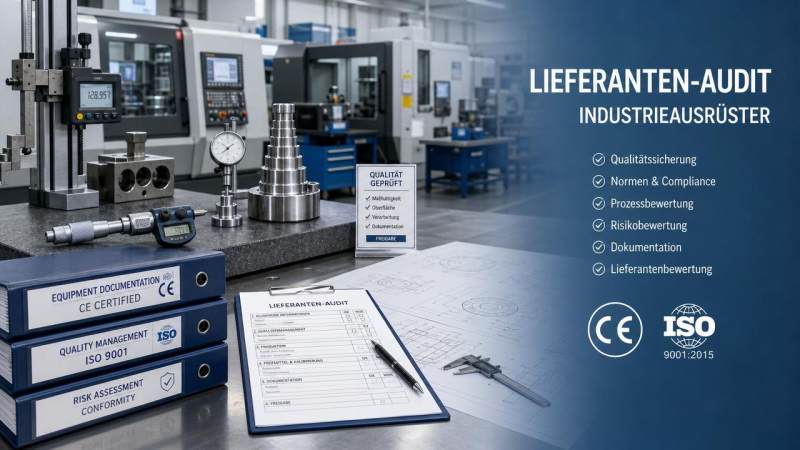
Choosing an Industrial & Manufacturing equipment supplier in Germany is no longer just about price or delivery speed. For sourcing teams, the real task is proving engineering quality, regulatory readiness, production consistency, and service durability. In complex sectors, a structured review reduces hidden risk, shortens qualification cycles, and improves confidence in every technical and commercial decision.
Why a checklist matters when reviewing an Industrial & Manufacturing equipment supplier in Germany
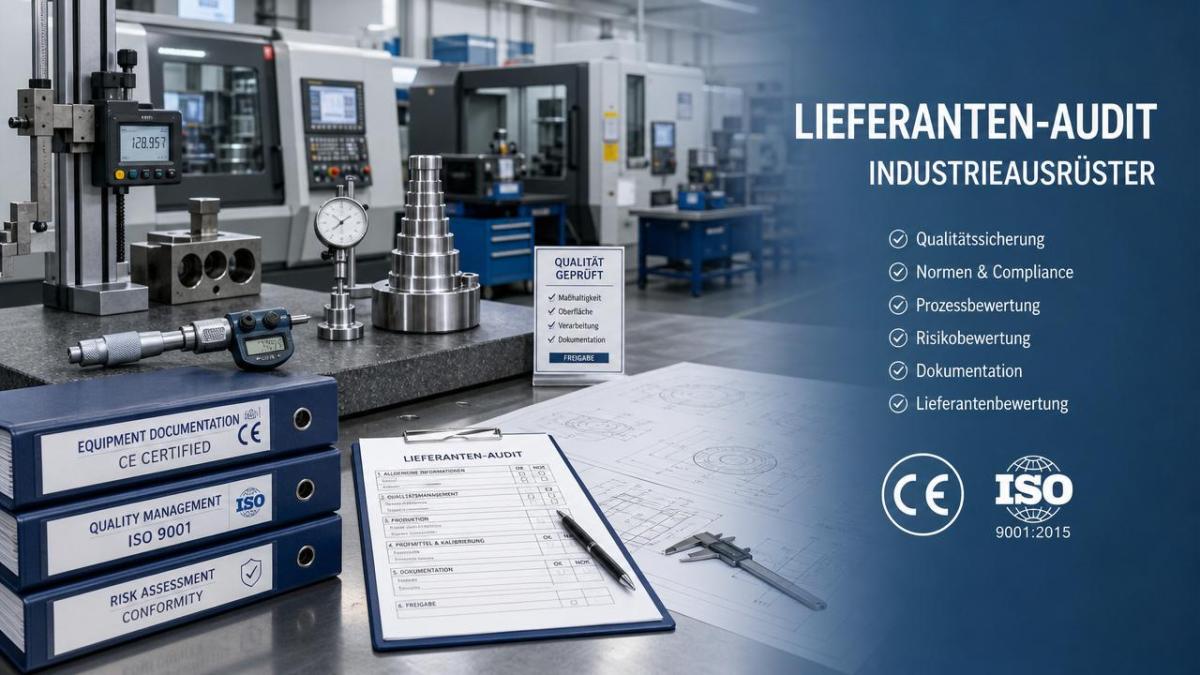
Germany has a strong industrial base, but supplier quality still varies by specialization, subcontracting depth, export experience, and documentation discipline. Reputation alone is not enough.
A checklist turns supplier evaluation into a repeatable process. It helps compare vendors on measurable evidence, not polished presentations or broad capability claims.
This is especially important when equipment must support regulated workflows, digital integration, validation records, or long operating cycles. In these cases, technical gaps become commercial losses.
Core checklist for vetting an Industrial & Manufacturing equipment supplier in Germany
- Verify legal identity, ownership, export registration, and operating history to confirm the supplier is stable, traceable, and contractually accountable across Germany and international markets.
- Request technical dossiers, machine specifications, material grades, tolerances, and performance curves, then compare them against actual application requirements instead of catalog summaries.
- Check quality management certificates such as ISO 9001, and review how inspections, calibration, nonconformance handling, and change control are documented in daily operations.
- Audit regulatory readiness where relevant, including CE marking support, machinery documentation, electrical safety files, and traceability needed for MDR, IVDR, or adjacent compliance frameworks.
- Confirm production capability by reviewing plant equipment, machining range, automation level, batch consistency, and bottlenecks that could affect lead times or repeat orders.
- Inspect supply chain resilience by identifying critical sub-suppliers, single-source materials, inventory policy, and contingency plans for logistics disruption or component shortages.
- Review test evidence, not just declarations, including FAT records, acceptance criteria, reliability data, failure rates, and maintenance intervals under realistic operating conditions.
- Assess engineering support depth by checking response times, design revision control, application guidance, installation support, and availability of multilingual technical documentation.
- Examine service capacity after delivery, including spare parts lead time, remote diagnostics, field service coverage, training materials, and escalation procedures for urgent failures.
- Validate cybersecurity and digital integration where equipment connects to networks, MES, ERP, or clinical systems, especially for software updates, access control, and data integrity.
- Compare commercial terms beyond unit price, including tooling ownership, warranty limits, installation scope, payment milestones, penalties, and responsibilities during commissioning.
- Run a reference check with similar projects in Germany or export markets to confirm the supplier can support comparable complexity, validation needs, and operating environments.
What strong evidence looks like
A credible Industrial & Manufacturing equipment supplier in Germany provides revision-controlled documents, measurable inspection data, named technical contacts, and a clear manufacturing flow.
Good signs include traceable serial records, sample acceptance reports, supplier audit openness, and realistic statements about limits, not exaggerated universal capability claims.
How the evaluation changes by application scenario
Custom automation or production line equipment
For custom equipment, design control is critical. Review interface definitions, PLC architecture, safety circuits, and how engineering changes are approved before fabrication begins.
A capable Industrial & Manufacturing equipment supplier in Germany should also define FAT, SAT, site utilities, and commissioning boundaries in writing before order release.
Precision components or process-critical machinery
When dimensional accuracy or process repeatability matters, inspect metrology systems, gauge calibration, Cp/Cpk practices, and evidence of long-run consistency across multiple batches.
Ask for sample inspection reports tied to material certificates and machining routes. This reveals whether process control is engineered or merely checked at the end.
Equipment used in healthcare, laboratory, or regulated environments
In regulated use cases, documentation quality becomes as important as hardware quality. Traceability, risk files, validation support, and controlled software versions must be reviewed early.
This is where independent benchmarking adds value. VitalSync Metrics supports evidence-based screening by translating technical performance into comparable sourcing intelligence.
Commonly missed risks when selecting an Industrial & Manufacturing equipment supplier in Germany
Hidden subcontracting: Some suppliers present broad in-house capability, but critical steps are outsourced. If subcontractors are unmanaged, lead time, quality, and traceability can deteriorate quickly.
Weak revision control: Approved drawings, software versions, and BOM changes may drift between quotation, build, and installation. That creates disputes and expensive rework during acceptance.
Incomplete service assumptions: Spare parts, remote support, and commissioning support are often discussed informally. If not written into scope, downtime risk shifts to the buyer.
Certification overreliance: A certificate alone does not prove process discipline. The real test is whether records, controls, and corrective actions are visible and current.
Overlooked integration issues: A machine may function mechanically yet fail during ERP, MES, sensor, or data interface integration. Digital compatibility should be tested before purchase approval.
Unclear lifecycle cost: A low initial quote can hide expensive consumables, proprietary parts, long service delays, or frequent recalibration requirements over the equipment lifetime.
Practical execution steps for supplier due diligence
- Build a weighted scorecard covering technical fit, quality evidence, service support, compliance readiness, and total lifecycle cost.
- Send the same technical questionnaire to each Industrial & Manufacturing equipment supplier in Germany under review for fair comparison.
- Request sample documents before a site visit, including inspection reports, manuals, certificates, and change control examples.
- Conduct a remote or on-site audit focused on production flow, incoming inspection, calibration, training, and escalation handling.
- Define acceptance criteria early, including performance thresholds, data outputs, documentation sets, and service response expectations.
- Pilot with a sample order, prototype build, or witness test before committing to a larger supply agreement.
Conclusion and next action
The right Industrial & Manufacturing equipment supplier in Germany should be proven through evidence, not assumed through market reputation. Technical records, process discipline, and service readiness matter more than polished sales language.
Start with a documented checklist, compare vendors using the same criteria, and escalate only those that pass quality, compliance, and lifecycle support review. For regulated or performance-sensitive projects, independent technical benchmarking can sharpen the decision further and reduce sourcing uncertainty before contract signature.
Recommended News
- 2026.10.15Medical Packaging Heat Seal Testing: Seal Strength vs. Seal Integrity TestsDr. Julian Rossi (RehabTech Specialist)
- 2026.10.14Clinic Supplier Comparison: Evaluating Cost, Delivery Reliability, and SupportDr. Alistair Thorne (Senior Biomedical Engineer)
- 2026.10.13Engineering Performance Testing Services: Evaluating Test Methods and AccuracyDr. Alistair Thorne (Senior Biomedical Engineer)
The VitalSync Intelligence Brief
Receive daily deep-dives into MedTech innovations and regulatory shifts.