 Get Insights

Surgical robot latency test methods vary more than expected
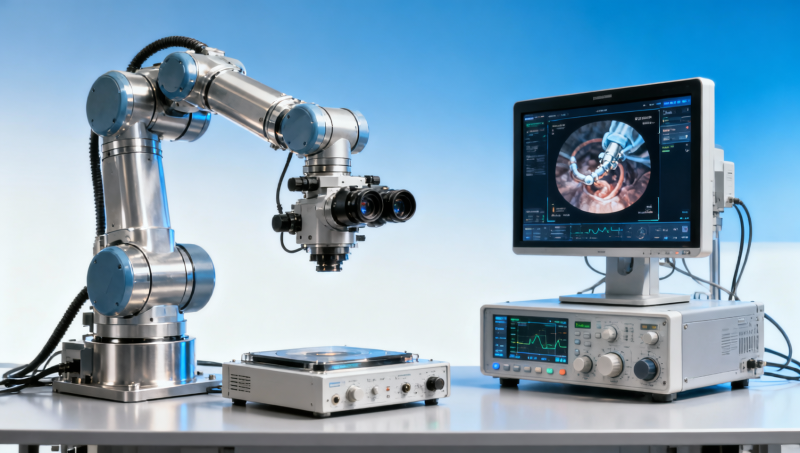
In surgical robotics, a single latency figure can be misleading: surgical robot latency test methods often vary more than expected, making cross-vendor comparisons unreliable. For procurement teams, engineers, and clinical operators, understanding how latency is measured—alongside factors like emc testing for medical electronics and fda mdr compliance checklist requirements—is essential to verifying real-world performance, safety, and long-term procurement value.
That challenge is becoming more urgent as hospitals move toward value-based procurement and robotics platforms shift from isolated capital purchases to digitally connected clinical systems. A quoted delay of 80 ms, 120 ms, or 200 ms may sound precise, but without a clear test method, the number can hide major differences in capture point, network path, video pipeline, instrument control loop, and averaging logic.
For information researchers, operators, sourcing teams, and executive decision-makers, the practical question is not simply whether a surgical robot is “fast.” The more important question is whether the latency result reflects real operating conditions, repeatable laboratory measurement, and regulatory-grade evidence that supports long-term deployment.
This is where an independent benchmarking mindset matters. VitalSync Metrics (VSM) focuses on turning engineering variables into comparable procurement intelligence, helping MedTech stakeholders examine technical integrity rather than relying on marketing summaries. In surgical robotics, latency testing deserves exactly that level of scrutiny.
Why surgical robot latency numbers often fail to match in real comparisons
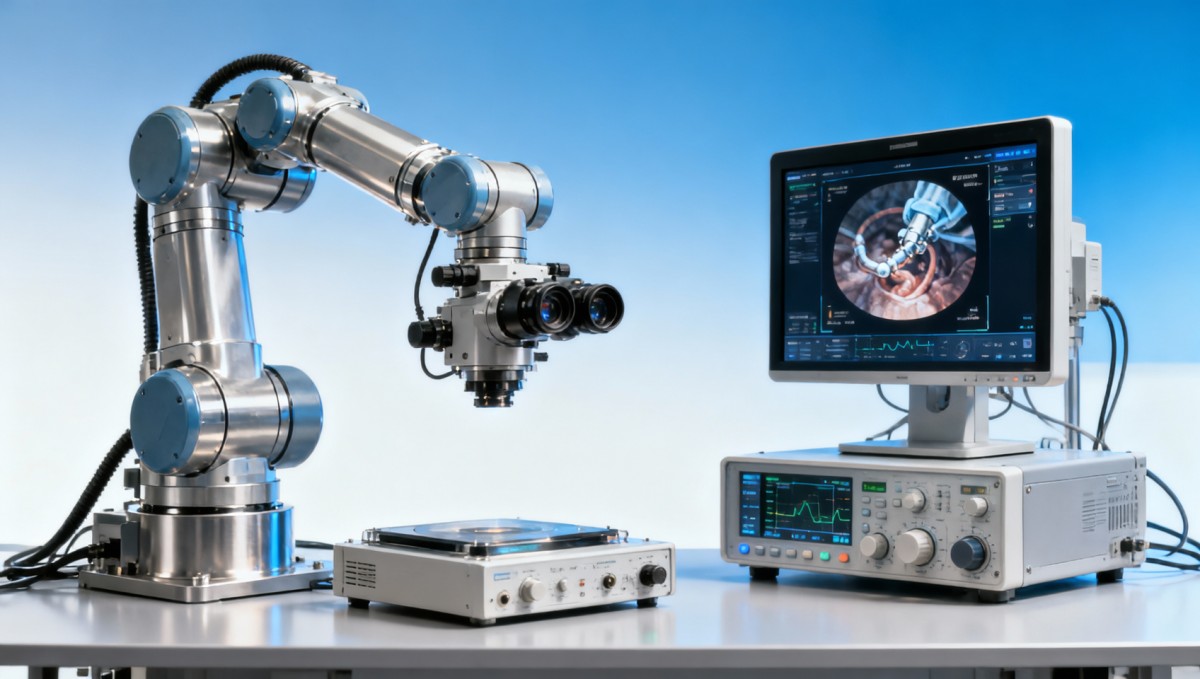
Surgical robot latency is usually described as the delay between surgeon input and visible or mechanical system response. In practice, however, there are at least 4 different points where timing can start and stop: hand controller motion, command processing, robotic arm motion, and image display update. If two vendors use different start and end points, their published numbers are not directly comparable.
Another source of variation is whether the test focuses on command latency, video latency, or end-to-end system latency. A command-only test may report 20–40 ms in an internal control loop, while a full visual-manual loop that includes camera capture, compression, display rendering, and actuation can rise to 100–250 ms. Both values may be technically correct, but they answer different procurement questions.
Environmental setup also affects results. A benchtop test in a controlled laboratory at 22°C with short cable paths and isolated power conditions may perform differently from an integrated OR environment with imaging equipment, electrosurgical devices, hospital network traffic, and longer signal paths. Even a difference of 30–50 ms can materially change operator perception during delicate tasks such as suturing or microscale dissection.
For clinical operators, the impact is not purely numerical. Latency influences hand-eye coordination, error correction, fatigue, and confidence during repetitive procedures lasting 90 minutes to 4 hours. For sourcing teams, inconsistent measurement methods increase the risk of overpaying for a platform whose reported responsiveness does not translate into real-world use.
Typical dimensions that change the reported latency result
Before comparing systems, procurement and engineering teams should check whether the published figure includes the same performance boundaries. The table below highlights common sources of mismatch.
The key takeaway is simple: a latency number without method disclosure is incomplete procurement evidence. Buyers should request timing definitions, sampling frequency, number of repetitions, and whether P95 or worst-case values were recorded, especially when evaluating robotic systems intended for high-precision specialties.
How latency should be tested for meaningful engineering and clinical use
A useful surgical robot latency test should combine repeatability, realistic workflow simulation, and traceable measurement points. At minimum, the protocol should define 3 layers: subsystem latency, integrated end-to-end latency, and stress-condition latency. This creates a more complete picture than a single best-case figure taken from a preconfigured demo environment.
Subsystem latency measures local delays in sensors, control boards, encoders, video capture modules, and display pipelines. Integrated latency then checks the response across the full user pathway, from surgeon hand movement to tool or image reaction. Stress-condition latency introduces variables such as electromagnetic interference, processing load, thermal drift, or network congestion over a 30–120 minute test duration.
Sampling strategy matters as much as instrumentation. A 10-sample trial may miss instability, while a 500-cycle test can reveal whether latency remains within a predictable band such as ±15 ms around the mean. For robotics systems used in minimally invasive surgery, buyers should look for both central tendency and tail behavior, since a few spikes above 250 ms may matter more than a smooth average of 110 ms.
Cross-functional review is also important. Engineers may prioritize repeatable waveforms and timestamp precision, while operators care about perceived lag during clutching, camera repositioning, and instrument articulation. Procurement teams need both perspectives translated into acceptance criteria that can be written into supplier qualification documents.
Recommended test components for supplier evaluation
- Define the timing path explicitly, such as controller motion to displayed image update, or controller motion to robotic end-effector displacement.
- Run at least 3 conditions: nominal load, peak processing load, and simulated OR integration with connected devices.
- Report average, median, P95, and maximum latency instead of a single headline value.
- Record environmental variables such as room temperature, cable length, display refresh rate, and software build version.
- Repeat the test after software updates or hardware changes to preserve comparability over the product lifecycle.
A practical benchmark framework
In many procurement projects, a 5-step structure works well: define use case, lock test boundaries, validate instruments, run repeated cycles, and document acceptance limits. This creates a basis for whitepaper-grade evidence instead of informal demonstration data. It also helps hospital groups compare suppliers on equal terms during a 6–12 month capital planning cycle.
The hidden link between latency, EMC testing, and compliance readiness
Latency should never be treated as an isolated robotics metric. In integrated medical electronics, timing behavior can shift when electromagnetic compatibility conditions change. That is why emc testing for medical electronics belongs in the same evaluation conversation. A robot that performs well in a clean lab but shows delayed command or image response near other powered systems may introduce operational risk even if its brochure latency appears competitive.
In practical terms, EMC-related disturbances can affect signal integrity, synchronization, data buses, camera modules, control boards, and display timing. The issue is not always total failure. More often, it appears as intermittent delay, jitter, dropped frames, or recovery lag. These effects may only emerge under specific frequencies, cable layouts, or device combinations, making them easy to miss if the validation scope is too narrow.
Compliance review adds another layer. Teams working through an fda mdr compliance checklist or broader MDR/IVDR documentation need traceability between performance claims and verification evidence. If a manufacturer advertises low latency, reviewers will expect a method, a test record, and a rationale showing that the claim remains valid under reasonably foreseeable operating conditions.
For procurement leaders, this means technical benchmarking should align with quality and regulatory documentation from the start. A low purchase price can quickly lose value if the system later requires additional shielding, display upgrades, software patches, or workflow restrictions after installation.
Where compliance and latency evaluation should intersect
The following matrix helps teams connect engineering tests with sourcing and compliance decisions.
A strong supplier should be able to explain not only the latency result but also the conditions under which the result remains valid. If that explanation is missing, the buyer should assume additional validation work may be required before clinical rollout.
What procurement teams should ask before accepting a latency claim
Capital equipment reviews often focus on price, service coverage, and installed base, but surgical robotics requires a deeper technical intake. When latency test methods vary, the safest path is to convert the claim into a structured supplier questionnaire. This prevents ambiguity and improves side-by-side comparison during RFP or technical due diligence.
Start by separating three evaluation domains: engineering integrity, clinical usability, and compliance readiness. A platform may score well in one area but poorly in another. For example, a robot might deliver low average delay in a factory test yet lack transparent documentation for software version control, display configuration, or worst-case latency excursions.
Buyers should also examine lifecycle implications. If latency performance depends on a specific monitor, cable set, GPU configuration, or software release, replacement parts and update governance become part of total cost of ownership. Over a 5–7 year equipment horizon, such dependencies can affect maintenance budgets, validation effort, and clinical scheduling flexibility.
Independent benchmarking is especially useful when multiple vendors present polished but non-equivalent data. A neutral lab framework can help convert supplier claims into normalized evidence and reveal whether a difference of 15 ms is meaningful, negligible, or overshadowed by larger risks such as signal instability, integration complexity, or poor documentation discipline.
A practical procurement checklist
- Request the exact latency definition and whether the result is subsystem-only or end-to-end.
- Ask for the number of cycles tested, such as 100, 500, or 1,000 repetitions.
- Confirm whether average, median, P95, and maximum values are available.
- Review EMC-related performance stability and integrated OR test conditions.
- Check whether software updates trigger retesting or field revalidation obligations.
- Map the latency claim to the supplier’s quality and regulatory documentation package.
Decision matrix for sourcing teams
The table below can be used during vendor scoring meetings to separate attractive claims from decision-grade evidence.
Using a matrix like this helps executive teams avoid false equivalence between vendors. It also creates a documented rationale that supports board review, technical committee decisions, and post-award accountability.
Implementation guidance for hospitals, MedTech startups, and benchmarking labs
Hospitals evaluating robotic platforms should treat latency verification as part of commissioning, not just pre-purchase review. A good implementation plan includes factory data review, site acceptance testing, and periodic recheck after integration changes. Even a limited 2-day validation window can uncover display mismatches, synchronization issues, or cabling choices that affect response consistency.
For MedTech startups, early benchmarking can reduce downstream redesign costs. Validating timing behavior at prototype, design verification, and pre-submission stages creates a clearer engineering record and lowers the chance that performance claims will need to be revised late in commercialization. In many cases, running 3 benchmark rounds across the development cycle is more cost-effective than correcting a poorly defined claim after customer scrutiny.
Benchmarking laboratories should aim for method transparency, calibrated instrumentation, and clearly bounded reporting language. The most useful reports do not exaggerate significance; they show what was measured, under what conditions, with what uncertainty, and where the result should or should not be generalized. That discipline is particularly important in surgical robotics, where users may interpret one number as a proxy for the whole operating experience.
This is the broader value of VSM’s data-driven approach. By converting technical parameters into standardized, decision-ready analysis, independent benchmarking helps the healthcare supply chain filter out promotional ambiguity. For buyers and developers alike, the result is better alignment between engineering truth, procurement confidence, and long-term clinical usability.
Common implementation mistakes to avoid
- Accepting a single average latency value without asking for worst-case behavior.
- Ignoring EMC interaction until late-stage installation or complaint investigation.
- Failing to link software revisions to renewed performance verification.
- Comparing vendors using non-equivalent test boundaries or different display chains.
- Treating operator feedback as subjective noise instead of a valid signal about perceived system delay.
FAQ: questions decision-makers often raise
How much latency is acceptable in surgical robotics depends on the procedure, interface design, and control architecture. What matters most is not one universal threshold, but stable and disclosed performance under defined conditions, including normal use and stress scenarios.
Should hospitals run independent verification even when the vendor provides test data? In many high-value purchases, yes. Independent review is useful when the system will be integrated with existing OR equipment, remote visualization tools, or specific display chains that differ from the vendor’s standard setup.
How often should latency be retested? A common trigger-based approach is better than arbitrary repetition: retest after major software releases, controller changes, display replacements, or OR integration modifications that could alter signal timing or processing behavior.
Surgical robot latency test methods vary more than many stakeholders expect, and that variation can distort product comparisons, procurement scoring, and even compliance narratives. The most reliable decisions come from method transparency, realistic system-level testing, and alignment between latency data, EMC behavior, and regulatory documentation.
For hospitals, developers, and technical evaluators seeking decision-grade evidence instead of marketing shorthand, VitalSync Metrics provides an independent framework for benchmarking medical technology with engineering discipline. To discuss a custom evaluation plan, compare vendor methodologies, or explore a standardized whitepaper approach, contact VSM to get a tailored solution for your robotics assessment program.
Recommended News
- 2026.10.15Medical Packaging Heat Seal Testing: Seal Strength vs. Seal Integrity TestsDr. Julian Rossi (RehabTech Specialist)
- 2026.10.14Clinic Supplier Comparison: Evaluating Cost, Delivery Reliability, and SupportDr. Alistair Thorne (Senior Biomedical Engineer)
- 2026.10.13Engineering Performance Testing Services: Evaluating Test Methods and AccuracyDr. Alistair Thorne (Senior Biomedical Engineer)
The VitalSync Intelligence Brief
Receive daily deep-dives into MedTech innovations and regulatory shifts.