 Get Insights

What mining equipment fails first in harsh conditions?
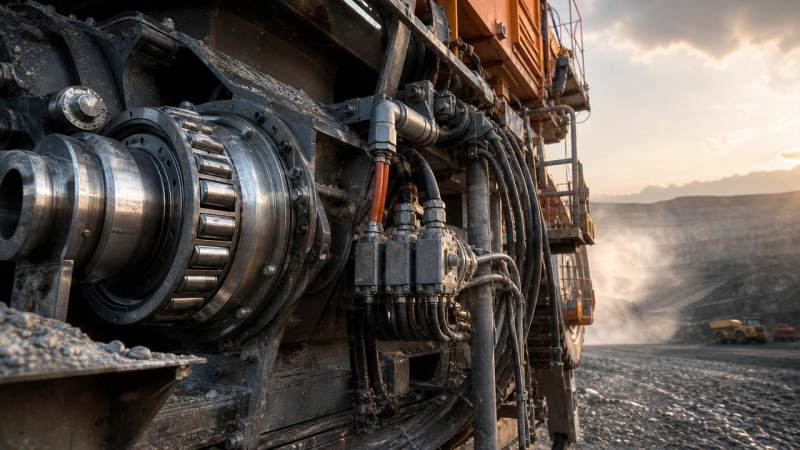
In harsh mining environments, even the most rugged Industrial & Manufacturing equipment for mining industry can fail earlier than expected. Dust, shock loads, heat, moisture, and chemical exposure attack components long before the machine frame shows damage.
The first failures are rarely dramatic. They begin with overheating bearings, leaking seals, drifting sensors, damaged cables, and contaminated hydraulic circuits. Knowing these weak points helps reduce downtime, repair costs, and safety risks.
This guide answers common questions about failure order, warning signs, and maintenance priorities across Industrial & Manufacturing equipment for mining industry. It also explains how evidence-based testing principles support better reliability decisions.
What mining equipment components usually fail first in harsh conditions?
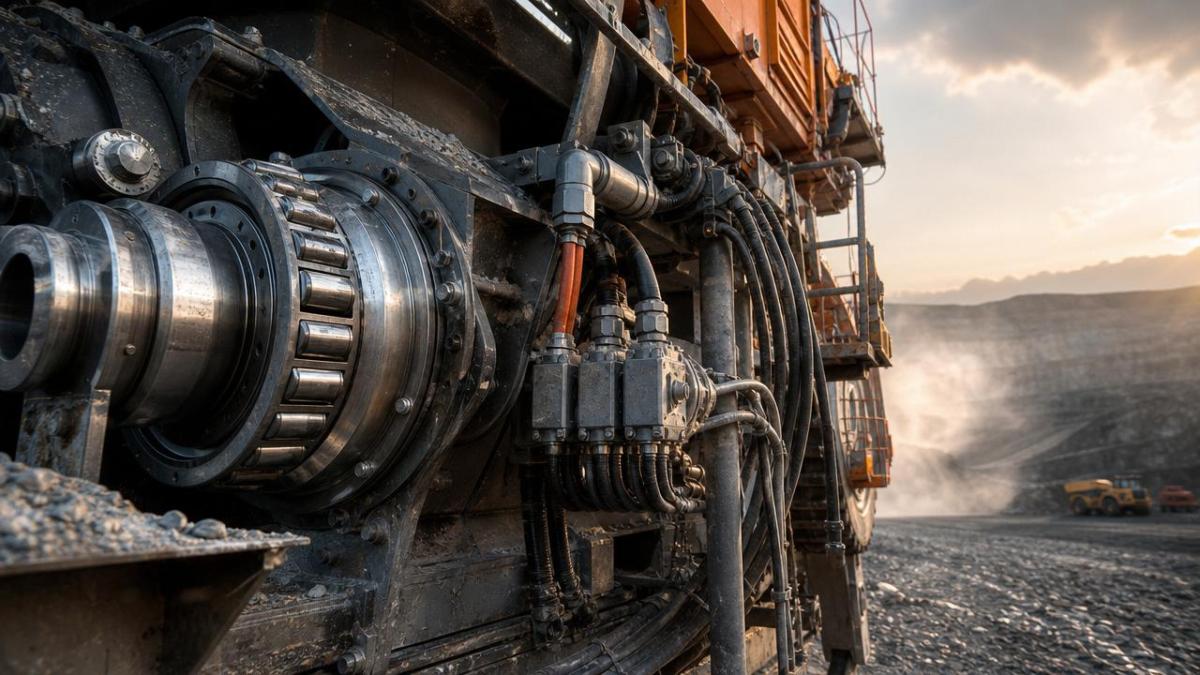
In most cases, bearings and seals fail first. These parts sit at the intersection of friction, contamination, and motion. They are small, but they protect much larger systems.
Bearings suffer from poor lubrication, dust ingress, misalignment, and shock loading. Once surface pitting starts, heat rises quickly. That heat then accelerates grease breakdown and metal fatigue.
Hydraulic seals are another early failure point. Abrasive particles scratch sealing surfaces. High pressure pulses and temperature swings harden elastomers, causing leaks and loss of actuator performance.
Electrical connectors also fail early in Industrial & Manufacturing equipment for mining industry. Vibration loosens contacts. Moisture and fine dust create corrosion paths that interrupt sensors, motors, and controls.
Belts, hoses, and cable jackets often degrade before major structural elements. UV exposure, oil contact, rock impact, and repeated bending all shorten service life in mobile and fixed mining assets.
- Bearings: heat, dust, misalignment, lubrication failure
- Seals: abrasion, pressure cycling, chemical attack
- Sensors: vibration drift, contamination, connector faults
- Cables: insulation cracking, crush damage, moisture ingress
- Hydraulic hoses: burst risk, fatigue, external wear
Why do these failures happen before major structural damage appears?
Large frames are designed with generous safety margins. Smaller functional parts are not exposed in the same way, but they absorb daily operating stress more directly.
A truck body or crusher housing may survive years of punishment. Meanwhile, a bearing raceway experiences millions of contact cycles. A seal lip continuously rubs under pressure and contamination.
Mining also combines several stressors at once. Fine dust enters interfaces. Sudden load changes create impact. Washdowns introduce moisture. Temperature extremes change material behavior and lubricant viscosity.
This is why Industrial & Manufacturing equipment for mining industry often shows functional failures first, not visible frame collapse. Reliability declines in the support systems before structural failure becomes obvious.
The four main accelerators
- Contamination that enters lubrication, hydraulics, and enclosures
- Vibration that loosens fasteners and damages electrical continuity
- Thermal cycling that expands and contracts critical interfaces
- Overload events that exceed design assumptions in short bursts
Each factor may seem manageable alone. Together, they create rapid wear progression. Early-stage monitoring matters because small component failures can trigger larger system shutdowns.
How can early warning signs be identified before a breakdown?
The earliest signs are usually subtle. Operators may notice rising temperature, unusual vibration, slower response, fluid drips, or inconsistent machine feedback before a complete stoppage occurs.
For bearings, listen for grinding, rumbling, or high-frequency noise. Check for grease discoloration. Compare surface temperatures across similar units working under similar loads.
For hydraulics, watch for pressure instability, delayed movement, foaming fluid, and external leakage. A small seal issue often appears as efficiency loss before visible component collapse.
For electrical systems in Industrial & Manufacturing equipment for mining industry, intermittent faults are a major clue. Sensor dropouts, false alarms, and startup inconsistency often point to connectors or cable damage.
Practical inspection checklist
- Measure temperature trends, not one-time readings
- Track vibration signatures on rotating assets
- Inspect seals for dust caking around wet areas
- Review oil cleanliness and particle counts
- Check connectors for corrosion and loose retention
- Monitor hose abrasion where movement repeats
Data quality matters. At VitalSync Metrics, the core principle is simple: trust measured performance, not assumption. The same mindset improves maintenance decisions in mining systems.
Which harsh conditions are most damaging to Industrial & Manufacturing equipment for mining industry?
Abrasive dust is often the most damaging condition. It penetrates seals, contaminates grease, scratches shafts, and blocks cooling paths. Fine particles can be more destructive than larger debris.
Constant vibration is equally serious. It affects rotating parts, electrical continuity, mount stability, and fatigue life. Repeated vibration transforms small misalignments into chronic failure patterns.
Heat accelerates chemical breakdown. Lubricants oxidize faster. Rubber hardens. Electronic life shortens. Combined with dust, high temperatures turn ordinary wear into accelerated reliability loss.
Moisture causes corrosion, insulation weakness, and contaminated fluids. Underground mines, washdown zones, and coastal sites create especially difficult environments for Industrial & Manufacturing equipment for mining industry.
How should maintenance priorities be set for faster reliability gains?
Start with components that fail often, stop production quickly, or create safety exposure. In many operations, this means rotating assemblies, hydraulic sealing points, and electrical interfaces.
Not every part deserves the same inspection frequency. A risk-based plan works better than equal treatment. Focus attention where harsh conditions meet high consequence.
Recommended priority order
- Lubrication control and contamination management
- Bearing temperature and vibration monitoring
- Seal inspection at hydraulic and rotating interfaces
- Cable routing, connector locking, and enclosure checks
- Alignment verification after impact or component replacement
This approach improves Industrial & Manufacturing equipment for mining industry without requiring a full redesign. Many failures come from poor contamination control rather than weak equipment design alone.
Condition-based maintenance usually outperforms calendar-only routines. If a machine runs in cleaner conditions, intervals may be extended. If contamination is severe, shorter intervals are justified.
What mistakes cause preventable early failure in mining equipment?
One common mistake is selecting parts by price alone. Low-cost seals, bearings, or connectors may look acceptable on paper, but fail quickly under real mining exposure.
Another mistake is ignoring compatibility. The wrong grease, seal material, or cable jacket can fail rapidly when exposed to heat, chemicals, or pressure spikes.
Improper installation also causes early damage. Misalignment, over-tightening, under-tightening, and poor surface preparation reduce reliability in Industrial & Manufacturing equipment for mining industry.
A final mistake is relying only on visual checks. Some of the worst failures begin internally. Oil analysis, temperature trending, and vibration review reveal issues that eyes alone cannot detect.
Harsh mining service does not destroy every component at the same speed. The earliest failures usually appear in bearings, seals, cables, sensors, and hydraulic interfaces.
For Industrial & Manufacturing equipment for mining industry, better outcomes come from measuring real stress, contamination, and performance drift. Early evidence supports better replacement timing and fewer surprise shutdowns.
Use this failure order as a practical starting point. Review inspection routes, strengthen contamination control, and compare field data regularly. Reliability improves when maintenance decisions follow engineering truth, not guesswork.
Recommended News
- 2026.10.15Medical Packaging Heat Seal Testing: Seal Strength vs. Seal Integrity TestsDr. Julian Rossi (RehabTech Specialist)
- 2026.10.14Clinic Supplier Comparison: Evaluating Cost, Delivery Reliability, and SupportDr. Alistair Thorne (Senior Biomedical Engineer)
- 2026.10.13Engineering Performance Testing Services: Evaluating Test Methods and AccuracyDr. Alistair Thorne (Senior Biomedical Engineer)
The VitalSync Intelligence Brief
Receive daily deep-dives into MedTech innovations and regulatory shifts.