 Get Insights

Why automation solutions fail after a promising demo
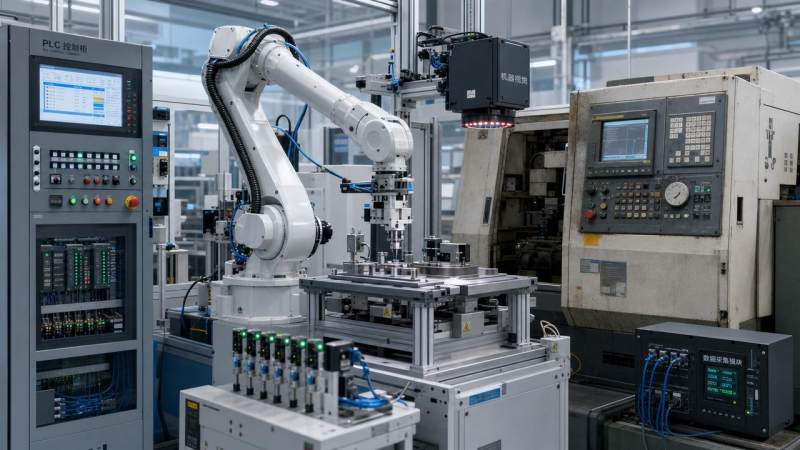
A polished demo can make Industrial & Manufacturing automation solutions look like an easy win, yet failure often begins after deployment. Real facilities introduce unstable data, legacy equipment, safety constraints, and compliance requirements that demos rarely reveal.
In healthcare, laboratory operations, device production, and broader industrial settings, the problem is rarely automation alone. The problem is whether Industrial & Manufacturing automation solutions can perform under validated conditions, integrate with regulated workflows, and stay reliable over time.
That is why technical benchmarking matters. VitalSync Metrics (VSM) approaches automation evaluation through measurable engineering evidence, not presentation polish, helping decision processes focus on durability, traceability, and operational truth.
What Industrial & Manufacturing automation solutions actually include
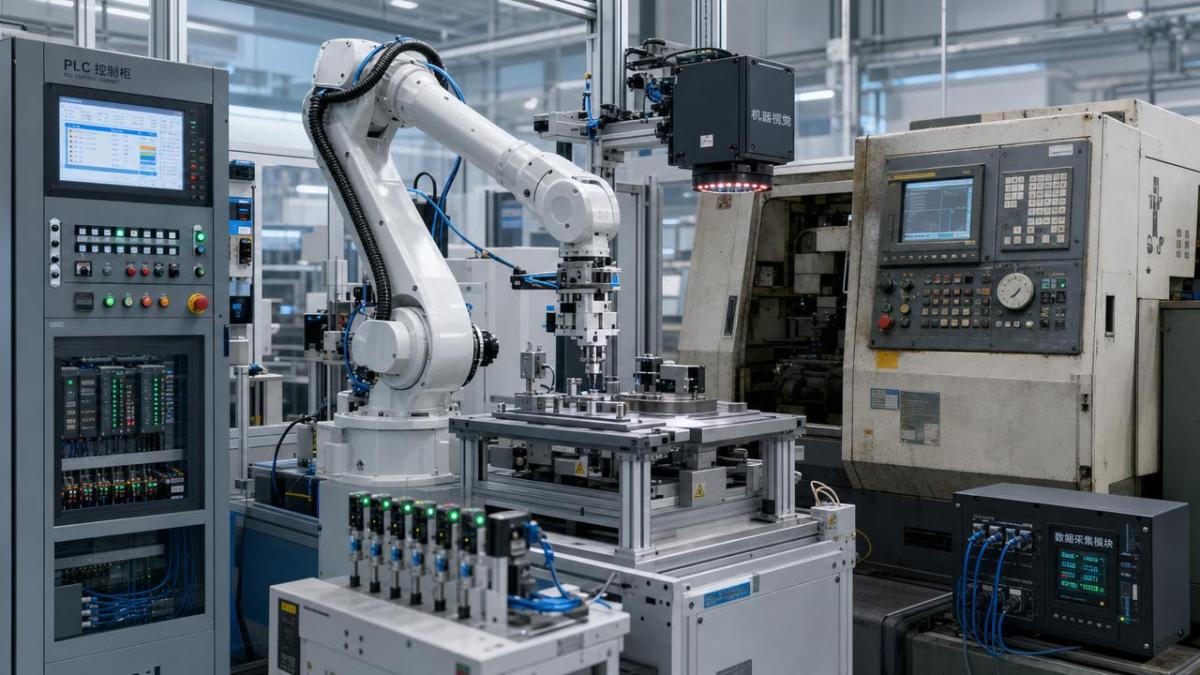
Industrial & Manufacturing automation solutions combine software, hardware, controls, and data systems that reduce manual intervention across production or operational processes. Their value depends on fit, not feature volume.
Typical components include PLCs, sensors, machine vision, robotics, MES platforms, SCADA systems, quality monitoring tools, and analytics dashboards. In regulated sectors, documentation and validation frameworks are equally important.
A demo usually shows ideal signal flow, clean interfaces, and controlled exceptions. Live operations are different. Industrial & Manufacturing automation solutions must handle noisy environments, incomplete data, changing operators, and mixed equipment generations.
This gap explains many post-demo failures. A system may look advanced but still lack robust interoperability, audit-ready records, or stable performance when throughput, maintenance cycles, and real error conditions appear together.
Why promising automation demos often fail in live environments
Most failures do not come from one dramatic flaw. They emerge from several smaller weaknesses that compound during implementation and scale-up.
- Demo data is cleaner than production data.
- Integration assumptions ignore legacy systems.
- Cycle times are tested at limited loads.
- Exception handling is underdeveloped.
- Validation, MDR, or IVDR impacts are discovered late.
- Maintenance skills and spare part realities are underestimated.
Industrial & Manufacturing automation solutions also fail when success metrics remain vague. Teams may agree on “efficiency” without defining uptime bands, acceptable false alarms, calibration drift, or recovery times after faults.
Another common issue is architectural mismatch. Cloud-heavy designs may conflict with latency-sensitive equipment. Highly customized logic may reduce future upgradeability. Standard interfaces may exist on paper but break under version differences.
In healthcare-related production and laboratory settings, the stakes are higher. If Industrial & Manufacturing automation solutions cannot preserve data integrity, chain of traceability, and repeatable quality, operational efficiency becomes irrelevant.
Common hidden failure points
Current industry signals shaping evaluation standards
Across sectors, expectations for Industrial & Manufacturing automation solutions are shifting from feature comparison toward evidence-based performance assessment. This is especially visible where quality, traceability, and lifecycle risk affect procurement decisions.
Several industry signals now influence how automation should be assessed:
- Higher demand for measurable ROI after commissioning.
- More scrutiny of interoperability across mixed infrastructures.
- Stronger focus on cybersecurity and access control.
- Growing pressure for audit-ready documentation.
- In regulated healthcare environments, closer alignment with MDR and IVDR expectations.
These trends make generic vendor claims less useful. Industrial & Manufacturing automation solutions must now be examined through repeatability, failure tolerance, calibration stability, system transparency, and serviceability over their operational life.
VSM’s benchmarking approach aligns with this shift. Converting engineering parameters into standardized technical evidence helps distinguish a compelling concept from a deployable system.
Business value depends on evidence, not impressions
When Industrial & Manufacturing automation solutions work as intended, they improve consistency, reduce manual variability, and strengthen operational visibility. But those benefits only materialize when deployment conditions match the claimed design envelope.
The strongest business value often comes from risk reduction. Verified automation can lower rework, improve throughput predictability, support preventive maintenance, and preserve quality records that stand up to internal or external review.
In healthcare manufacturing and laboratory infrastructure, value also includes confidence. Confidence comes from knowing whether a sensor remains stable, whether a robotic sequence remains repeatable, and whether data remains attributable and complete.
That is why Industrial & Manufacturing automation solutions should be evaluated as operational systems, not presentation packages. Financial logic improves when technical assumptions are stress-tested before broad implementation.
Value areas worth measuring
- Uptime under realistic workloads
- Accuracy and repeatability over time
- Integration effort across existing assets
- Deviation handling and recovery speed
- Documentation readiness for regulated use
Typical deployment scenarios where evaluation must go deeper
Not all automation environments fail for the same reasons. Evaluation criteria should reflect process sensitivity, data criticality, and integration complexity.
In each scenario, Industrial & Manufacturing automation solutions need more than functional success. They need demonstrated resilience, transparent limits, and maintainable performance under changing operational conditions.
Practical evaluation steps before full implementation
A disciplined review process reduces the risk of choosing Industrial & Manufacturing automation solutions that impress early but disappoint later.
- Define measurable acceptance criteria before any pilot begins.
- Test with real data sets, not sanitized samples.
- Map every required integration point and protocol version.
- Stress-test performance across peak loads and failure modes.
- Review documentation for validation, service, and audit readiness.
- Verify long-term support, calibration, and parts availability.
It is also useful to separate “works in principle” from “works in operation.” Many Industrial & Manufacturing automation solutions satisfy the first statement. Far fewer satisfy the second with evidence.
Independent benchmarking can add clarity here. A neutral technical review helps identify where marketing language exceeds engineering reality, especially in highly regulated or quality-critical environments.
A more reliable path forward
The failure of promising automation projects is rarely mysterious. It usually reflects inadequate verification of system limits, integration conditions, and lifecycle obligations before commitment expands.
Industrial & Manufacturing automation solutions create durable value when they are tested against reality: unstable inputs, regulatory expectations, mixed infrastructures, and sustained operational pressure. Demo quality alone cannot answer those questions.
For organizations seeking dependable outcomes, the next step is straightforward. Replace assumption-driven selection with measurable technical review, structured pilot criteria, and independent evidence that confirms long-term performance.
That approach aligns with the VSM principle of engineering truth: transforming complex automation claims into comparable, decision-ready benchmarks that support confident implementation.
Recommended News
- 2026.10.15Medical Packaging Heat Seal Testing: Seal Strength vs. Seal Integrity TestsDr. Julian Rossi (RehabTech Specialist)
- 2026.10.14Clinic Supplier Comparison: Evaluating Cost, Delivery Reliability, and SupportDr. Alistair Thorne (Senior Biomedical Engineer)
- 2026.10.13Engineering Performance Testing Services: Evaluating Test Methods and AccuracyDr. Alistair Thorne (Senior Biomedical Engineer)
The VitalSync Intelligence Brief
Receive daily deep-dives into MedTech innovations and regulatory shifts.