
Ultrasound Metrics that actually affect diagnostic confidence
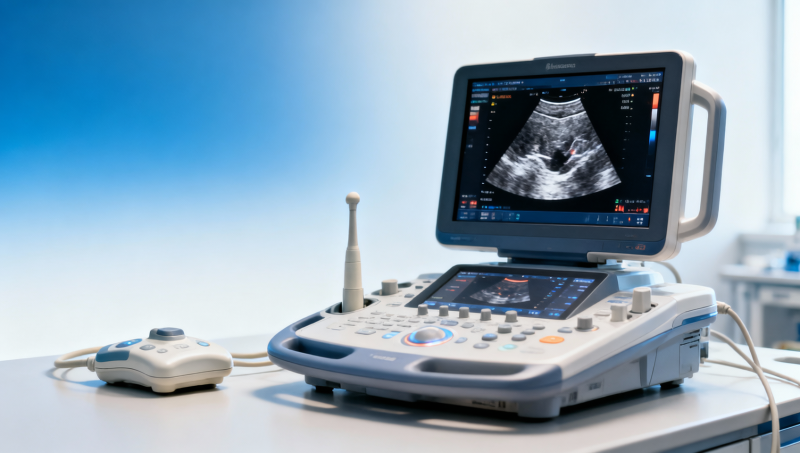
In a market crowded with claims, ultrasound metrics are what actually determine diagnostic confidence. For researchers, operators, buyers, and decision-makers, the real question is not whether a system looks advanced on paper, but whether it delivers reliable image quality, repeatable measurements, and compliance-ready performance in daily use. In practice, metrics such as transducer frequency range, penetration depth, spatial and contrast resolution, signal-to-noise ratio, Doppler sensitivity, thermal and mechanical safety indexes, uptime, and regulatory documentation matter far more than broad marketing language. This article explains which ultrasound metrics truly affect diagnostic confidence, how different stakeholders should interpret them, and how to use them in medical device assessment and procurement decisions.
Which ultrasound metrics actually change diagnostic confidence?
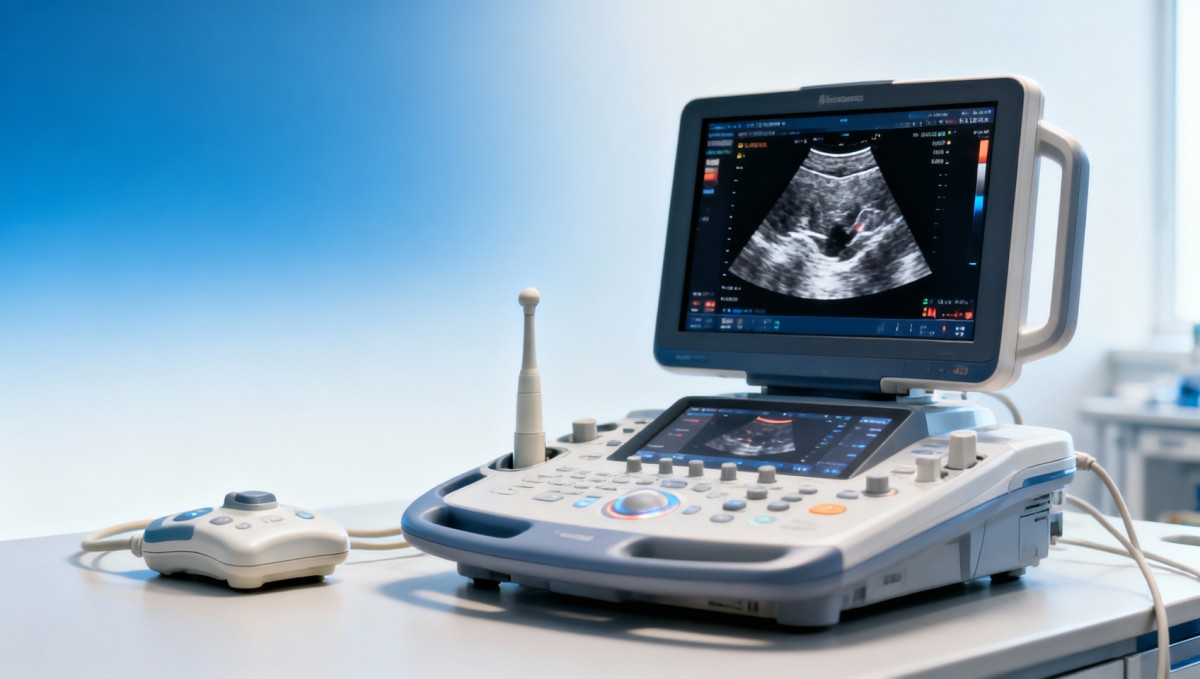
The most important answer for searchers is simple: diagnostic confidence depends on whether an ultrasound system can consistently produce clinically interpretable images for the intended use case. That means the best metrics are not the most advertised ones, but the ones that directly influence visibility, measurement accuracy, and operator trust.
The metrics that matter most usually include:
- Transducer frequency range: Higher frequencies improve detail for superficial structures, while lower frequencies improve penetration for deeper anatomy.
- Spatial resolution: Determines how clearly small adjacent structures can be distinguished.
- Contrast resolution: Affects the ability to differentiate subtle tissue differences.
- Penetration depth: Critical for abdominal, vascular, and larger-patient imaging.
- Signal-to-noise ratio (SNR): A key indicator of how much useful signal is preserved versus background noise.
- Uniformity and artifact control: Strong performance here reduces false interpretation and rescans.
- Doppler sensitivity and velocity accuracy: Essential for vascular and cardiac assessments.
- Measurement repeatability: Important when systems are used for follow-up, screening, or quantitative workflows.
If a metric does not help a clinician see more clearly, measure more reliably, or reduce uncertainty, it usually has limited impact on true diagnostic confidence.
What do operators, procurement teams, and decision-makers care about most?
Although all stakeholder groups value image quality, they evaluate ultrasound metrics through different lenses.
Operators and clinical users care most about whether a system performs well on real patients, not test phantoms alone. They want clear images in difficult scanning conditions, fast boot times, stable presets, intuitive workflows, and confidence that measurements are repeatable across shifts and users.
Information researchers and technical evaluators want to know which specifications are meaningful and which are selectively presented. They look for standardized test methods, medical equipment standards, transducer characterization, and evidence that published performance can be independently verified.
Procurement teams focus on risk reduction. They need to know whether a system can maintain performance over time, whether documentation supports healthcare compliance, whether service commitments are realistic, and whether total cost of ownership is justified by clinical utility.
Business leaders and enterprise decision-makers usually ask broader questions: Will this reduce repeat scans? Will it support more standardized diagnosis? Does it align with regulatory expectations? Can it be deployed across multiple departments without creating hidden maintenance or training burdens?
This is why a useful ultrasound evaluation framework must connect engineering metrics to practical outcomes, not just list technical features.
How should transducer frequency range be interpreted in real clinical use?
The ultrasound transducer frequency range is often one of the first specifications buyers see, but it is frequently misunderstood. Frequency alone is not a quality score. It is a trade-off variable that must be interpreted in context.
Higher-frequency probes typically provide better axial resolution, making them suitable for superficial anatomy such as thyroid, breast, musculoskeletal, or vascular applications. Lower-frequency probes allow greater depth penetration, which is critical in abdominal, obstetric, or bariatric imaging. A broad advertised range sounds attractive, but what matters more is how effectively the system maintains image quality, sensitivity, and uniformity across that range.
For practical assessment, readers should ask:
- At what frequencies is usable image quality maintained?
- Does performance degrade sharply at deeper targets?
- Are the probes optimized for the intended specialty, or is versatility being overstated?
- How consistent are measurements across probe types?
A system with a modest but clinically well-optimized frequency profile can support better diagnostic confidence than one with a wider range but weaker real-world signal handling.
Which image quality metrics are more meaningful than headline specifications?
Many ultrasound product pages emphasize broad claims such as “enhanced clarity” or “AI-powered imaging.” In medical device assessment, those phrases have limited value unless they are connected to measurable image quality outcomes.
The most meaningful image quality metrics include:
- Axial and lateral resolution: These influence the ability to distinguish structures along and across the beam path.
- Contrast-to-noise ratio (CNR): Useful for assessing visibility of lesions or tissue boundaries.
- Dynamic range: Affects how well subtle grayscale differences are represented.
- Dead zone: Important for superficial imaging because poor near-field performance can obscure critical findings.
- Geometric accuracy: Essential when measurements guide treatment planning or follow-up.
- Artifact suppression: Side lobes, reverberation, and clutter can materially reduce trust in interpretation.
For users and buyers, the question is not whether these metrics look good in isolation, but whether they remain stable under realistic settings, with different users, and across varying patient body types.
How do compliance and standards affect confidence in ultrasound performance?
Diagnostic confidence is not only a function of imaging performance. It also depends on whether that performance is backed by credible processes, validated claims, and healthcare compliance.
For procurement and enterprise assessment, regulatory and standards-related questions matter because they help separate robust systems from risky purchases. Relevant considerations may include:
- Conformity with applicable MDR or other regional regulatory frameworks
- Documented safety outputs, including thermal index and mechanical index behavior
- IEC and related medical equipment standards compliance where applicable
- Verification and validation records for imaging, software, and cybersecurity functions
- Traceable quality system controls affecting probe manufacturing and system calibration
Compliance does not guarantee superior clinical performance, but weak compliance maturity often signals hidden operational risk. In value-based procurement environments, reliable documentation, test transparency, and post-market quality controls are increasingly part of the confidence equation.
What should buyers ask to avoid being misled by marketing language?
One of the most useful ways to improve purchasing outcomes is to ask suppliers questions that force measurable answers. Instead of asking whether a system is “high resolution,” ask how resolution was measured, under what conditions, and whether the data are independently reproducible.
Useful procurement questions include:
- Which metrics were measured on phantoms, and which were validated in clinical settings?
- What is the performance variation across probes, presets, and software versions?
- How often does the system require recalibration or service to maintain image quality?
- What evidence supports Doppler accuracy, depth performance, and measurement repeatability?
- How are software upgrades validated so they do not degrade existing workflows?
- What are the documented failure modes for transducers and front-end electronics?
These questions help buyers move from feature comparison to technical integrity assessment. That shift is especially important for hospitals, imaging networks, and startups building around ultrasound-enabled workflows.
How do the right metrics support better clinical and business outcomes?
When ultrasound metrics are evaluated correctly, they create value well beyond the scan itself. Better diagnostic confidence can reduce repeat imaging, lower interpretation uncertainty, improve consistency across operators, and support more defensible clinical decisions.
For operations teams, this may mean fewer workflow interruptions and less time spent compensating for weak systems. For procurement leaders, it can mean lower lifecycle risk and stronger justification for capital investment. For executives, it supports better alignment between equipment performance, regulatory exposure, and return on investment.
In other words, the right metrics connect engineering truth to clinical trust. That is the real basis of sound medical equipment standards evaluation and modern healthcare procurement.
Final takeaway: focus on verifiable performance, not impressive claims
The ultrasound metrics that actually affect diagnostic confidence are the ones that improve visibility, measurement reliability, consistency, and safe long-term use. Transducer frequency range matters, but only in the context of penetration, resolution, and application fit. Image quality metrics such as SNR, contrast resolution, artifact control, and Doppler accuracy often tell a more meaningful story than promotional feature lists. Compliance and documentation also matter because they reduce procurement risk and strengthen trust in technical claims.
For researchers, operators, buyers, and decision-makers, the most effective approach is to evaluate ultrasound systems through a combined lens of clinical usability, engineering measurement, and regulatory credibility. When those three align, diagnostic confidence becomes far more than a marketing phrase—it becomes something measurable, actionable, and worth investing in.
Recommended News
The VitalSync Intelligence Brief
Receive daily deep-dives into MedTech innovations and regulatory shifts.