
What to Know About Sheet Metal Cutting for Ultrasound Carts
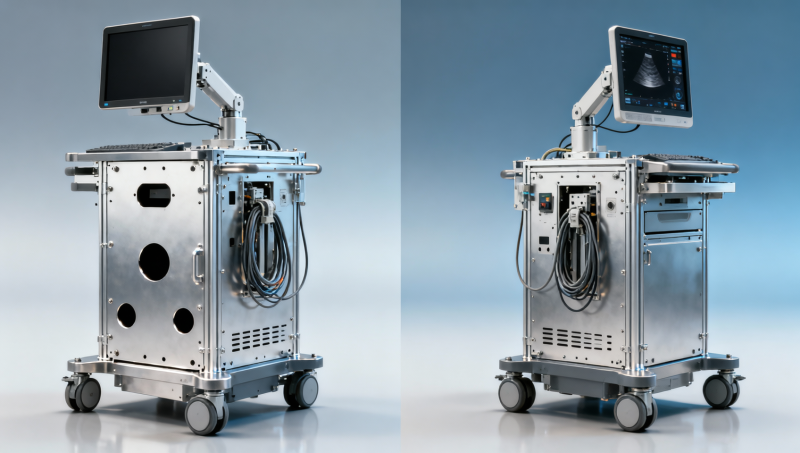
For buyers, engineers, and healthcare innovators evaluating ultrasound carts, the most important truth is simple: sheet metal cutting is not just a fabrication step—it directly affects structural accuracy, enclosure safety, finish quality, assembly consistency, and long-term reliability. In medical-grade applications, poor cutting decisions can increase sheet metal cost through rework, tolerance drift, coating failures, vibration issues, and compliance risks. A well-cut sheet metal chassis or sheet metal enclosure, by contrast, supports cleaner assembly, better cable routing, stronger panels, and a more dependable product lifecycle. This guide explains what matters most when assessing precision sheet metal fabrication for ultrasound carts and how to evaluate a sheet metal manufacturer or sheet metal supplier with confidence.
Why sheet metal cutting matters so much for ultrasound carts
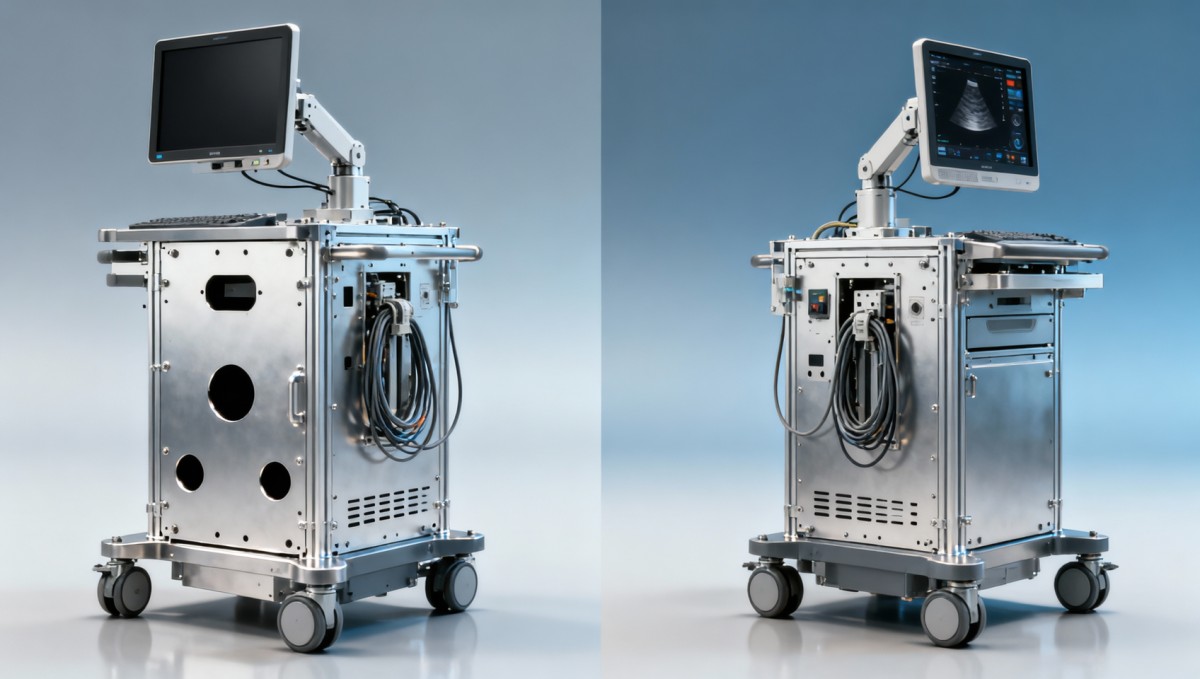
Ultrasound carts are not simple metal frames. They are mobile medical platforms that often need to support monitors, keyboards, imaging hardware, cable management systems, power modules, batteries, probes, storage compartments, and repeated cleaning in clinical environments. That means cutting quality has a direct impact on how the entire cart performs in real use.
For procurement teams and product developers, the core concern is whether the fabricated parts will translate into a stable, safe, and repeatable final assembly. If sheet metal cutting is inconsistent, common problems follow quickly:
- Misaligned mounting holes that slow assembly
- Sharp edges that create user safety concerns
- Poor fit between panels, doors, brackets, and internal supports
- Distortion that affects wheelbase alignment or monitor arm stability
- Surface defects that reduce coating quality and cleanability
- Higher scrap and rework, which raises sheet metal cost
In short, cutting quality influences not only manufacturing efficiency but also user experience, appearance, serviceability, and lifecycle value.
What buyers and engineers should evaluate first
When reviewing a supplier for a medical cart project, many teams focus first on price per part. That is understandable, but it is not the best starting point. A better first question is whether the supplier can consistently produce parts that meet the functional and regulatory demands of healthcare equipment.
The most important evaluation points usually include:
- Tolerance control: Can the supplier hold dimensions consistently across batches?
- Edge quality: Are burrs, micro-cracks, and heat-affected issues properly controlled?
- Material suitability: Can they process the required steel, stainless steel, or aluminum grades without compromising performance?
- Cut-to-bend accuracy: Do they understand how cutting interacts with downstream forming?
- Surface readiness: Are parts clean and stable enough for powder coating, passivation, or other finishing steps?
- Documentation: Can they support traceability, inspection records, and quality validation?
For enterprise decision-makers, this is where supplier value becomes clearer. A capable sheet metal manufacturer does more than cut parts. They reduce launch risk, improve assembly yield, and create a better foundation for compliance-ready hardware.
Which cutting methods are commonly used for ultrasound cart fabrication
The right cutting method depends on material type, thickness, required tolerances, cosmetic expectations, and production scale. For ultrasound carts, the most common methods are laser cutting, turret punching, and in some cases waterjet cutting.
Laser cutting is often preferred for precision sheet metal fabrication because it supports complex geometries, tight tolerances, and efficient prototyping. It is especially useful for brackets, enclosures, access panels, and structural components where repeatability matters.
Turret punching can be cost-effective for higher-volume parts with recurring hole patterns, louvers, vents, and simple forms. However, design flexibility is lower than laser cutting, and tooling constraints may affect geometry choices.
Waterjet cutting is less common for standard ultrasound cart production but may be used when heat must be minimized or when working with specific materials and thicknesses.
In many projects, the best answer is not one process alone but a process strategy. A qualified sheet metal supplier should be able to explain why a part should be laser cut, punched, or redesigned for manufacturability rather than simply quoting the drawing as-is.
How cutting quality affects durability, safety, and medical usability
For operators and end users, the visible form of an ultrasound cart matters, but the less visible details matter even more. Cutting quality shapes how the cart behaves over time in a clinical environment.
Well-executed sheet metal cutting contributes to:
- Stronger assemblies: Accurate profiles improve fit-up before welding, fastening, or final assembly
- Safer handling: Smooth, deburred edges reduce risk for clinicians and service staff
- Cleaner enclosures: Better cut consistency helps panel gaps stay controlled and easier to sanitize
- Lower vibration and noise: Stable internal mounting reduces rattle and movement during cart transport
- Longer service life: Reduced stress concentrations can improve fatigue performance in frequently moved equipment
This is particularly important for a sheet metal chassis that supports dynamic loads such as monitors, battery packs, or articulated arms. If the base structure begins with poor cut geometry, later operations cannot always correct the weakness fully.
What drives sheet metal cost in medical cart projects
Many buyers search for information on sheet metal cost because they want to compare suppliers fairly. The key is to understand that cutting cost is only one part of the total cost equation. The lowest quoted cutting price can still produce the highest overall project cost if quality failures appear downstream.
The main cost drivers include:
- Material type and thickness
- Part geometry complexity
- Tolerance requirements
- Production volume
- Cutting speed and machine capability
- Secondary operations such as deburring, bending, welding, and coating
- Inspection, validation, and documentation requirements
For healthcare products, value should be measured in total delivered performance, not just quoted part price. A better supplier may reduce hidden costs through fewer fit issues, faster assembly, more stable cosmetic quality, and lower field failure risk. For procurement teams, this is often the more meaningful ROI calculation.
How to assess a sheet metal manufacturer or sheet metal supplier
If you are sourcing parts for ultrasound carts, the strongest suppliers typically show evidence in both engineering capability and quality discipline. Ask practical questions that reveal process maturity, not just sales confidence.
Useful evaluation questions include:
- What cutting equipment is used, and how often is it calibrated?
- How are burrs, edge condition, and dimensional conformity inspected?
- What experience does the supplier have with medical devices or regulated industries?
- Can they provide sample inspection reports or first article documentation?
- How do they manage revision control and traceability?
- Can they support prototype-to-production scaling without changing quality levels?
- Do they offer design-for-manufacturing feedback on the sheet metal enclosure and chassis?
For decision-makers, one of the most important signs of a reliable partner is whether they can translate fabrication details into product-level outcomes. A strong supplier should be able to explain how a design choice affects rigidity, coating adhesion, cable access, serviceability, or assembly time.
Design considerations that improve cutting results and downstream assembly
Not every sheet metal problem starts on the shop floor. Many begin at the design stage. Ultrasound carts often combine cosmetic requirements with dense internal packaging, and this makes manufacturability especially important.
Design teams can improve results by focusing on:
- Hole sizes and spacing appropriate for the selected cutting process
- Corner radii that reduce stress concentration and improve finish quality
- Consistent datum strategy for mounting features
- Clear bend allowances and realistic flange relationships
- Vent and cable-routing patterns that are functional but still manufacturable
- Panel designs that support easy cleaning and minimal debris traps
For sheet metal enclosure development, small design adjustments can significantly improve yield and lower cost without reducing performance. This is why early collaboration between the OEM, engineering team, and fabrication partner is so valuable.
What “medical-grade” should really mean in fabrication decisions
In practice, medical-grade sheet metal fabrication should mean more than a polished appearance. It should reflect disciplined control over process capability, material handling, cleanliness, repeatability, and quality records.
For ultrasound carts, that usually includes attention to:
- Surface quality suitable for cleaning and disinfection protocols
- Consistent dimensional accuracy for repeat assembly
- Reliable finishes and corrosion resistance where needed
- Mechanical stability under mobility and accessory loads
- Production documentation that supports supplier qualification
For organizations operating under stricter procurement review, technical integrity matters more than marketing language. The right sheet metal manufacturer should be prepared to demonstrate process control with evidence, not assumptions.
Final takeaway for buyers, operators, and healthcare innovators
When evaluating ultrasound carts, sheet metal cutting deserves much closer attention than it often receives. It affects the quality of the sheet metal chassis, the fit and cleanability of the sheet metal enclosure, the consistency of precision sheet metal fabrication, and the true lifecycle impact of sheet metal cost.
The best sourcing decision is rarely the one with the lowest initial quote. It is the one that delivers accurate parts, stable assembly, safe edges, durable performance, and dependable production control. For buyers, engineers, and healthcare leaders, that means looking beyond generic fabrication claims and asking how cutting quality will influence real-world clinical use, compliance readiness, and long-term reliability.
If a supplier can clearly connect cutting methods, tolerance control, material behavior, and downstream quality outcomes, you are likely evaluating a partner capable of supporting serious medical hardware—not just producing metal parts.
- laser cutting
- waterjet cutting
- EMS
- ESS
- medical devices
- PPE
- procurement
- AR
- metal fabrication
- material handling
- sheet metal
- sheet metal fabrication
- sheet metal cutting
- sheet metal enclosure
- sheet metal chassis
- sheet metal supplier
- sheet metal manufacturer
- sheet metal cost
- technical integrity
- long-term reliability
- healthcare equipment
- Packaging
Recommended News
- 2026.04.20What Sheet Metal Fabrication Buyers Should Ask in 2026Dr. Julian Rossi (RehabTech Specialist)
- 2026.04.20Are Sheet Metal Parts Worth It for Mobility DevicesSarah Jenkins (Laboratory Infrastructure Consultant)
- 2026.04.20How to Source Sheet Metal Enclosures Without DelaysDr. Hideo Tanaka (Imaging Systems Analyst)
The VitalSync Intelligence Brief
Receive daily deep-dives into MedTech innovations and regulatory shifts.