
Are Sheet Metal Parts Worth It for Mobility Devices
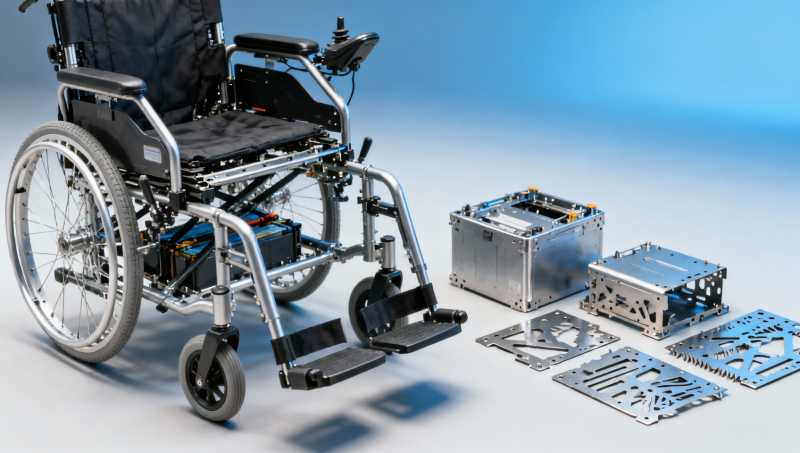
Are sheet metal parts worth it for mobility devices when performance, durability, and cost all matter? For buyers, operators, and healthcare innovators, the answer depends on more than sheet metal price alone. From sheet metal chassis, sheet metal housing, and sheet metal bracket design to sheet metal fabrication, sheet metal bending, and supplier quality, every detail affects safety, reliability, and lifecycle value. This article explores how to evaluate sheet metal cost, manufacturing precision, and sourcing decisions with confidence.
In mobility devices such as powered wheelchairs, patient transfer systems, rehabilitation carts, walkers, and hospital transport units, sheet metal parts often serve as the structural backbone. They affect load stability, corrosion resistance, serviceability, and compliance planning. For procurement teams and technical evaluators, the question is not whether sheet metal is universally better than plastic or cast components, but whether a specific sheet metal design delivers the right balance of strength, manufacturability, and total lifecycle value.
That is especially important in healthcare supply chains, where product claims must be translated into measurable engineering criteria. A low initial quote can become expensive if brackets deform after 12 months, housings interfere with sensor integration, or a poor finishing process creates cleaning challenges in clinical settings. Careful selection requires attention to material gauge, bend radii, tolerance control, joining methods, coating systems, and supplier process discipline.
Why Sheet Metal Parts Matter in Mobility Device Engineering
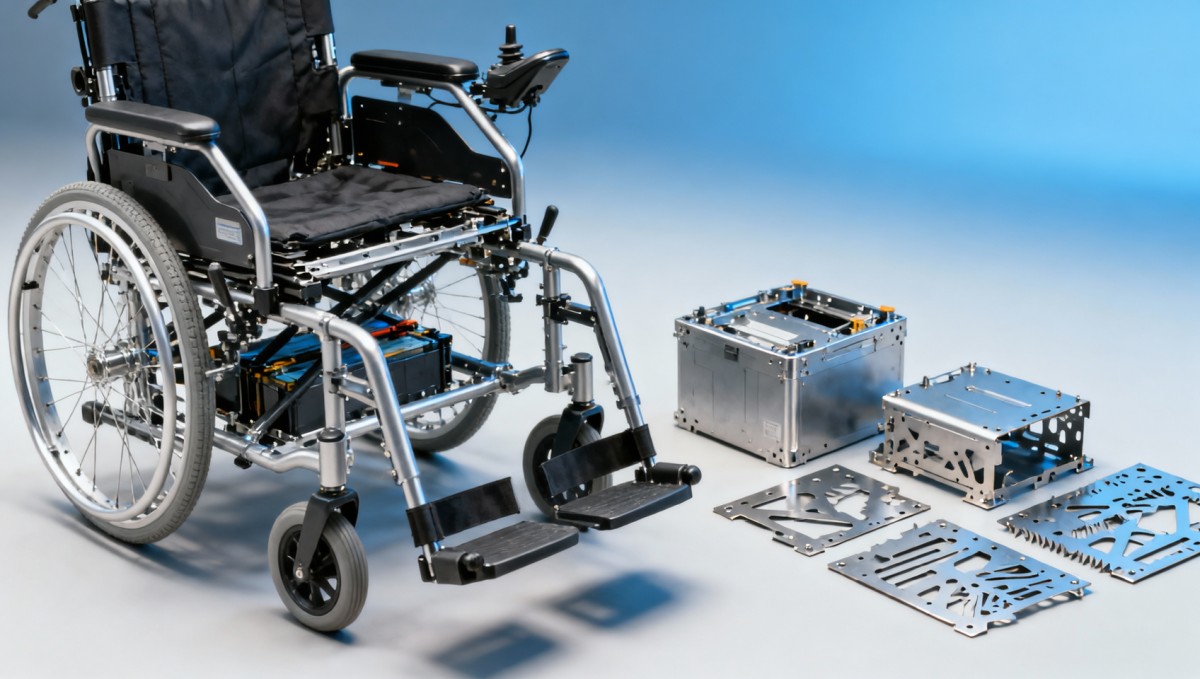
Mobility devices operate under repeated mechanical stress. A sheet metal chassis may carry static loads of 100–180 kg in standard user applications, while dynamic loading during ramps, turns, curb transitions, or transfers can produce substantially higher stress concentrations at welds, bends, and mounting points. In these conditions, sheet metal parts are often valued because they combine predictable structural behavior with scalable fabrication methods.
Compared with molded plastic, sheet metal housing and bracket assemblies can provide better rigidity, more stable fastening interfaces, and improved dimensional consistency in medium-volume production. Compared with some machined solid parts, sheet metal fabrication can reduce raw material waste and shorten production cycles for enclosures, battery trays, actuator mounts, footrest assemblies, and control box supports. That makes sheet metal particularly attractive where design updates occur every 6–18 months.
For operators and maintenance teams, service access is another key issue. A well-designed sheet metal cover can allow quick removal for battery replacement, cable inspection, or controller access using common fasteners. Poorly designed assemblies, however, may create sharp edges, difficult cleaning zones, or alignment drift after repeated servicing. The value of sheet metal parts therefore depends not only on material strength but also on how they support real clinical and field use.
In regulated healthcare environments, surface integrity and cleanability also matter. Powder-coated steel, zinc-plated steel, aluminum, and stainless steel each offer different trade-offs in disinfection compatibility, corrosion performance, and weight. A wheelchair used in home care may tolerate a different finish than a mobility platform used in a rehabilitation clinic with frequent cleaning cycles of 1–3 times per day.
Core value areas for sheet metal components
- Structural strength for brackets, frames, housings, and reinforcement plates under repeated loading.
- Design flexibility for holes, slots, ventilation patterns, cable routing, and modular fastener locations.
- Better repairability than many one-piece molded components, especially in low- to mid-volume fleets.
- Efficient prototyping through laser cutting, CNC punching, and sheet metal bending before tooling-heavy scale-up.
How to Compare Sheet Metal Against Other Material Options
No single material wins in every mobility device application. The real decision is application-specific. A battery enclosure may favor sheet metal for impact resistance and electromagnetic shielding support, while a cosmetic trim panel may be better in polymer. Procurement and engineering teams should compare parts by function, expected duty cycle, required tolerances, and sanitation exposure rather than headline material cost.
For example, mild steel sheet metal parts can offer attractive cost efficiency and good stiffness, but they may require robust finishing to perform in humid environments. Aluminum can reduce system weight by 20%–35% in certain assemblies, but it may behave differently under repeated fastening, thread wear, and local denting. Stainless steel improves corrosion resistance but usually raises both raw material and fabrication cost, especially where multiple bends or complex welds are required.
When buyers evaluate “worth,” they should include more than price per part. Consider replacement intervals, field failure risk, assembly time, packaging protection needs, and supplier capability. A cheaper material can lose value quickly if it drives warranty claims, cleaning failures, or inconsistent fit-up at final assembly.
Material and process comparison for common mobility device parts
The table below compares common options used in mobility devices, with attention to weight, fabrication behavior, and practical sourcing implications.
The key conclusion is that sheet metal parts are usually most worthwhile when the application requires a repeatable structural function, moderate-to-high durability, and design adaptability without committing to high tooling cost too early. That is why they remain common in support frames, internal housings, access panels, and safety-critical mounting assemblies.
A practical selection rule
If the part must carry load, survive frequent service access, hold tight dimensional relationships, and support production changes in the first 2–3 generations of the product, sheet metal is often a strong candidate. If the part is purely cosmetic and annual volume is high enough to justify tooling amortization, molded alternatives may become more competitive.
The Cost Question: What Buyers Should Really Measure
Sheet metal cost is often discussed too narrowly. Unit price is only one layer. In mobility devices, the total cost picture includes design complexity, material grade, thickness, bend count, welding steps, finishing method, inspection level, packaging, and long-term service performance. A bracket with 3 bends, 2 PEM inserts, and one powder-coat finish may cost very differently from a visually similar bracket that requires ±0.2 mm tolerance, threaded mounting accuracy, and cosmetic external surfaces.
Low-volume MedTech programs often face a trade-off between customization and manufacturing efficiency. Prototype and pilot builds of 20–200 units may favor laser-cut and CNC-bent sheet metal because tooling investment remains manageable. Once annual demand rises into the 2,000–10,000 unit range, procurement teams can revisit process optimization, nesting efficiency, and design simplification to reduce cost without compromising function.
Another hidden cost is failure-driven redesign. If a sheet metal housing resonates, flexes around fasteners, or traps fluids during cleaning, the remediation cost can exceed any early savings. In healthcare procurement, the better question is often: what is the cost per reliable service year, not just the cost per delivered part?
Cost drivers that most affect value
- Material thickness and alloy choice, such as 1.2 mm versus 2.0 mm steel or aluminum grade selection.
- Fabrication complexity, including number of bends, tight radii, weld seams, countersinks, and hardware insertion.
- Tolerance requirements, especially for actuator mounts, wheel alignment supports, and battery fixing points.
- Surface finishing and secondary operations, from powder coating to passivation or edge deburring.
- Supplier quality systems, first article inspection, and batch traceability expectations.
A lifecycle-oriented procurement view
The table below helps buyers compare price-focused sourcing with lifecycle-focused sourcing for mobility device sheet metal parts.
For most serious buyers, the table shows why sheet metal parts can be worth the investment even when the quote is not the lowest. Reliable fit, controlled finishing, and stronger supplier collaboration often generate more value than a small piece-price reduction.
Design, Fabrication, and Quality Factors That Determine Performance
The performance of sheet metal parts in mobility devices is heavily shaped by design for manufacturability. An excellent material choice can still fail if bend relief is poor, hole-to-edge spacing is too tight, or weld distortion is ignored. Design decisions made during the first 3–5 engineering reviews often decide whether a part remains stable in production.
Sheet metal bending is one of the most important variables. Tight bend radii may increase cracking risk in some materials and thicknesses. Poor bend sequence planning can also create dimensional stack-up that affects actuator alignment, panel closure, or wheel mount positioning. For mobility devices that require smooth operation and low vibration, even a small bracket deviation can create practical issues over time.
Fabrication quality also includes deburring, corner treatment, hardware insertion, weld consistency, and coating adhesion. These details matter because users and operators interact physically with the device every day. A sharp edge, loose insert, or flaking finish is more than a cosmetic problem; it can become a safety or hygiene issue.
From a benchmarking perspective, buyers should ask for measurable process indicators rather than broad quality promises. Typical review points include dimensional tolerance ranges, flatness checks, coating thickness windows, weld appearance criteria, and first article approval procedures. For higher-risk parts, sampling plans and fatigue-oriented design reviews may also be justified.
Technical checkpoints before approving a supplier
- Confirm material specification, thickness tolerance, and finish compatibility with cleaning chemicals and use environment.
- Review bend allowances, minimum internal radii, and forming feasibility for each critical geometry feature.
- Define critical dimensions, such as mounting hole positions, bracket perpendicularity, and enclosure interface alignment.
- Verify edge quality, burr control, and operator safety on touch surfaces and service access zones.
- Establish incoming inspection and first article documentation for pilot and production lots.
Typical engineering ranges worth discussing
While exact values depend on device function and supplier capability, many buyers review sheet thickness in the 1.0–3.0 mm range for brackets and housings, cosmetic coating thickness in the approximate 60–100 micron range for powder-coated surfaces, and dimensional tolerances from ±0.1 mm to ±0.5 mm depending on the feature. These are not universal targets, but they help frame meaningful technical discussions.
The deeper point is simple: sheet metal parts are worth it only when design intent and manufacturing controls are aligned. If either side is weak, durability and sourcing efficiency can deteriorate quickly.
Procurement Strategy, Risk Control, and Supplier Evaluation
For procurement leaders and business decision-makers, supplier selection should go beyond RFQ comparison. A mobility device supply chain may involve strict launch timelines, regulatory documentation expectations, and post-market service obligations. In that context, a sheet metal supplier must be evaluated for process maturity, responsiveness, engineering communication, and consistency across batches delivered over 12, 24, or 36 months.
One frequent mistake is selecting a supplier based only on prototype performance. A vendor may produce 10 excellent parts manually, yet struggle with repeatability at 500 or 5,000 units. Procurement teams should ask how the supplier handles fixture control, in-process inspection, revision management, packaging protection, and nonconformance reporting. These factors directly affect the true reliability of sheet metal parts in mobility device programs.
Risk control is especially important when parts connect to powered subsystems, seat mechanisms, braking assemblies, or patient-support interfaces. In such cases, any dimensional drift or finishing defect can affect not just aesthetics but operational safety. Structured supplier qualification reduces that risk and improves confidence during procurement decisions.
Supplier evaluation matrix for mobility device sheet metal sourcing
The matrix below provides a practical framework for comparing suppliers beyond quoted price.
A disciplined evaluation model improves sourcing confidence because it turns abstract quality claims into concrete decision criteria. This is precisely where technical benchmarking adds value: it helps procurement teams compare suppliers using engineering evidence rather than marketing language.
Common sourcing red flags
- Quotes that omit material specification details, finish requirements, or inspection assumptions.
- Suppliers unable to explain bend compensation, weld distortion control, or fixture strategy.
- Lead times that appear unusually short without clear capacity planning or process transparency.
- Inconsistent response to revision changes, sample approvals, or packaging requirements.
When Sheet Metal Parts Are Worth It—and When They Are Not
Sheet metal parts are usually worth it for mobility devices when the application demands structural reliability, moderate production flexibility, and a practical path from prototype to production. They are especially useful for internal supports, equipment housings, actuator mounts, chassis modules, and service-access panels where stiffness and repeatability matter. In many of these cases, the value emerges over a 3–5 year service life rather than on the first purchase order.
They may be less compelling when a part is highly cosmetic, carries little or no load, and is expected to run at high volume with stable design geometry for several years. Under those conditions, tooling-intensive polymer solutions can become competitive. Similarly, if weight reduction is the single dominant objective and the load case allows it, composite or plastic alternatives may outperform conventional steel sheet metal on a system basis.
The decision should therefore be made part by part, not by ideology. The best mobility device programs often use a mixed-material strategy: sheet metal for structural and service-critical zones, polymers for user-facing covers, and machined or cast parts only where geometry or load behavior requires them. That approach balances cost, usability, and manufacturing realism.
FAQ
How long is the typical lead time for custom sheet metal parts?
For simple prototypes, lead time may be 7–15 business days. For pilot batches with coating, hardware insertion, and inspection documentation, 2–4 weeks is more typical. Production timing depends on complexity, finish, and supplier loading, so it is wise to confirm both prototype and repeat-order lead times early.
Which metrics matter most during procurement?
At minimum, review 4 areas: dimensional accuracy, finish quality, mechanical durability, and supplier repeatability. For higher-risk applications, also check packaging protection, first article reporting, and response time for deviations or engineering changes.
Can sheet metal reduce maintenance cost?
Yes, if the part is designed for access and durability. A removable sheet metal housing with standard fasteners can shorten service time, while a robust bracket design can reduce alignment drift and replacement frequency. The savings come from fewer failures and faster field maintenance, not from material choice alone.
What is the most common mistake in sheet metal sourcing?
Treating sheet metal as a commodity without defining the engineering requirements. If tolerances, coating needs, edge safety, and inspection rules are vague, quotes may look attractive but delivered performance can vary widely.
For mobility devices, sheet metal parts are worth it when they are chosen with a clear understanding of function, stress, manufacturability, cleanability, and supplier control. The strongest outcomes come from disciplined evaluation of sheet metal chassis, housings, and brackets as engineered components rather than interchangeable commodities. For procurement teams, operators, and healthcare innovators, that means comparing lifecycle value, not just unit cost.
VitalSync Metrics supports this decision process by translating manufacturing variables into practical technical benchmarks for healthcare and MedTech sourcing. If you need a more confident way to assess sheet metal fabrication quality, compare suppliers, or define decision-ready specifications for mobility device components, contact us to discuss your application, request a tailored evaluation framework, or learn more about evidence-based sourcing solutions.
- laser cutting
- EMS
- ESS
- PPE
- wheelchairs
- EdTech
- procurement
- AR
- metal fabrication
- sheet metal
- supply chain
- sheet metal fabrication
- sheet metal bending
- sheet metal parts
- sheet metal bracket
- sheet metal housing
- sheet metal chassis
- sheet metal supplier
- sheet metal price
- sheet metal cost
- sheet metal components
- Cement
- benchmarking
- healthcare procurement
- technical benchmarking
- supply chain
- sourcing confidence
- healthcare supply chain
- Packaging
Recommended News
- 2026.04.20What Sheet Metal Fabrication Buyers Should Ask in 2026Dr. Julian Rossi (RehabTech Specialist)
- 2026.04.20Are Sheet Metal Parts Worth It for Mobility DevicesSarah Jenkins (Laboratory Infrastructure Consultant)
- 2026.04.20How to Source Sheet Metal Enclosures Without DelaysDr. Hideo Tanaka (Imaging Systems Analyst)
The VitalSync Intelligence Brief
Receive daily deep-dives into MedTech innovations and regulatory shifts.