
How to Avoid Sheet Metal Bracket Failures in Mobility Aids
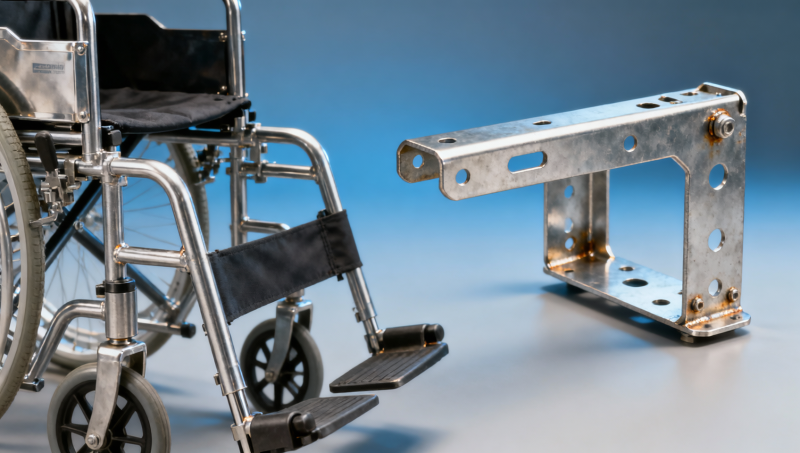
Sheet metal bracket failures in mobility aids are rarely random. In most cases, they trace back to a small group of preventable issues: poor load-path design, incorrect material choice, weak sheet metal bending radii, inconsistent sheet metal welding, and inadequate validation under real-world use. For operators, procurement teams, and product developers, the practical takeaway is clear: reducing failure risk starts long before field use. It begins with how sheet metal parts are designed, fabricated, inspected, and sourced from a capable sheet metal manufacturer or sheet metal supplier.
For mobility aids such as walkers, wheelchairs, transfer supports, and assistive frames, a bracket is a small component with outsized safety impact. If it cracks, deforms, loosens, or corrodes, the result can be user injury, downtime, warranty claims, and procurement risk. This guide explains what usually causes these failures, how to evaluate bracket quality, and what questions to ask when balancing reliability against sheet metal cost and sheet metal price.
Why do sheet metal brackets fail in mobility aids in the first place?
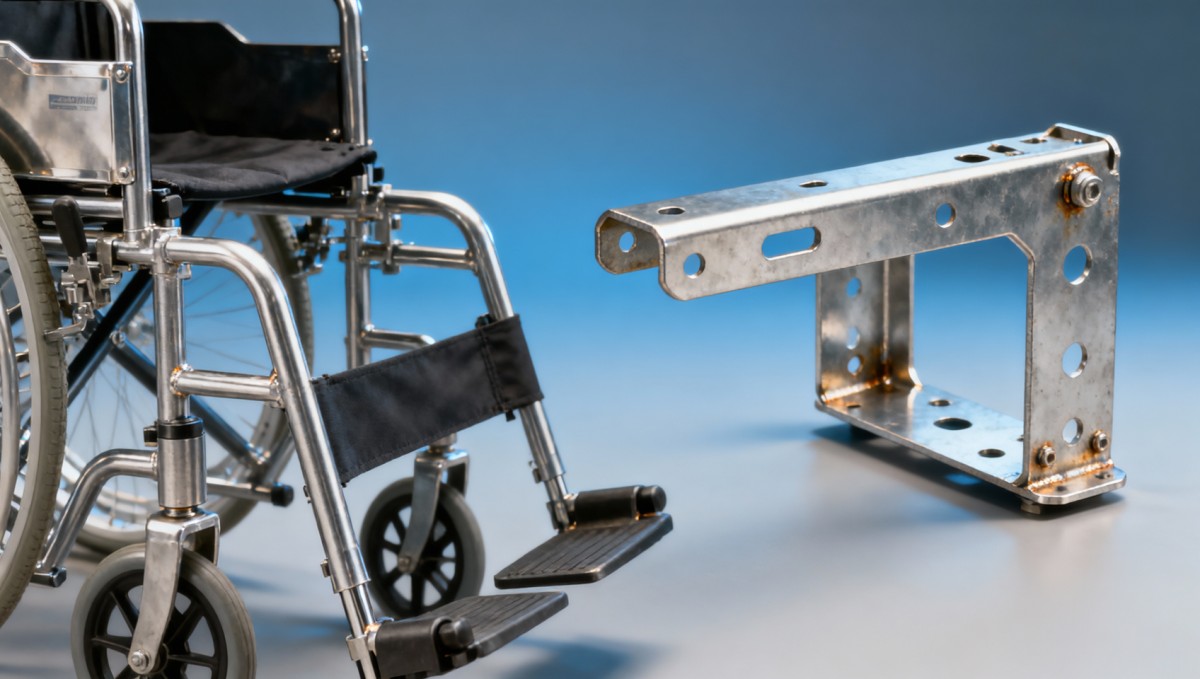
The core search intent behind this topic is not theoretical. Most readers want to know how to prevent bracket breakage, how to identify risk before purchase or production, and how to judge whether a part is robust enough for clinical or daily-use environments. That means the most useful discussion is practical: failure modes, warning signs, design controls, supplier evaluation, and lifecycle implications.
In mobility aids, brackets often connect frames, handles, supports, wheels, seat structures, or adjustment mechanisms. These parts may appear simple, but they experience repeated loading, shock, vibration, off-axis force, cleaning chemical exposure, and accidental misuse. A bracket can fail even when static loads seem acceptable because real usage introduces fatigue and stress concentration.
Common failure modes include:
- Fatigue cracking: Repeated load cycles initiate cracks near bends, holes, weld toes, or corners.
- Permanent deformation: The bracket bends or twists because thickness, geometry, or material strength is insufficient.
- Weld failure: Poor penetration, undercut, porosity, or poor joint design causes separation.
- Fastener-related damage: Hole elongation, tearing, or loosening around bolted areas.
- Corrosion-assisted failure: Stainless selection, coating quality, or cleaning compatibility is inadequate.
- Manufacturing-induced weakness: Burrs, microcracks, over-bending, or heat-affected distortion reduce durability.
For decision-makers, the important insight is that bracket failure often reflects a systems problem, not a single bad part. Material, geometry, fabrication process, finishing, assembly, and expected use conditions all interact.
Which design weaknesses create the highest failure risk?
If a mobility aid bracket fails too early, design geometry is often a bigger issue than raw material strength alone. A thick metal part can still fail quickly if stress is concentrated in the wrong place.
The highest-risk design weaknesses typically include:
- Sharp internal corners: These act as crack starters, especially after sheet metal bending.
- Holes too close to bend lines or edges: This reduces local strength and increases tearing risk.
- Insufficient bend radius: Overly tight bends can thin or embrittle the material at critical points.
- Unsupported cantilever loading: Brackets that carry load too far from the frame see high bending moments.
- Asymmetric loading paths: Real users do not always apply force evenly, so off-axis loads must be considered.
- Thin sections near welds or slots: These become vulnerable under cyclic use.
For engineers and technical buyers, good practice is to ask not only, “What load can this bracket hold once?” but also, “Where does the stress flow after 100,000 cycles, accidental impacts, and uneven user handling?” In healthcare and assistive equipment, durability under repeated use matters more than single-event strength claims.
A well-designed bracket usually shows several characteristics: smooth load transition, adequate bend radii, reinforced mounting areas, logical hole placement, and geometry that avoids excessive stress concentration. These are simple signals that often separate a robust sheet metal part from one that only looks acceptable on paper.
How do material choice and thickness affect long-term durability?
Many buyers assume stronger material automatically means safer performance. In reality, material selection is a balance of strength, ductility, corrosion resistance, manufacturability, weight, and cost.
In mobility aids, common bracket materials may include carbon steel, stainless steel, and aluminum alloys. Each has trade-offs:
- Carbon steel: Often cost-effective and strong, but requires reliable corrosion protection.
- Stainless steel: Better corrosion resistance and good hygiene compatibility, but grade selection and forming behavior matter.
- Aluminum: Lightweight and corrosion-resistant, but fatigue behavior and local deformation require careful design.
Material thickness also needs context. Increasing thickness can improve stiffness and reduce deformation, but it may also raise weight, increase sheet metal cost, complicate sheet metal bending, and affect assembly tolerances. The correct choice depends on the load case, bracket geometry, expected service environment, and cleaning exposure.
For procurement teams, one of the most useful questions is: Was the material selected because it is appropriate for fatigue, corrosion, and fabrication requirements, or simply because it was available and cheap? A low sheet metal price at purchase can become expensive if the bracket requires replacement, causes field failures, or leads to product reputation damage.
In medical-adjacent and mobility-related applications, the finish system also matters. Surface treatment quality can influence corrosion resistance, cleanability, and crack initiation risk. Poor coating adhesion, incomplete passivation, or damaged finish around edges can undermine an otherwise decent design.
What role do sheet metal fabrication, bending, and welding play in bracket reliability?
Even a sound design can fail if manufacturing execution is inconsistent. This is where sheet metal fabrication quality becomes critical. Buyers and technical teams should evaluate not just the drawing, but the process capability behind it.
Sheet metal bending affects reliability in several ways. If bend radius is too tight for the chosen material, the outer surface can thin excessively or develop microcracks. If bend angles vary too much from part to part, assembly fit and load distribution change. Repeated dimensional inconsistency may shift forces onto welds or fasteners in unintended ways.
Sheet metal welding is another major risk point. Welding can strengthen the structure, but it can also introduce residual stress, distortion, heat-affected-zone weakness, and variability if not properly controlled. On a bracket used in a mobility aid, poor weld quality may not fail immediately. It may instead degrade slowly under cyclic use until a visible crack appears.
Reliable fabrication usually includes:
- Controlled cutting quality with minimal edge damage and burrs
- Repeatable bend radii and angle tolerances
- Weld procedures suited to material grade and thickness
- Fixtures that reduce distortion and misalignment
- Post-fabrication inspection for cracks, undercut, warpage, and dimensional drift
For users comparing suppliers, this is why the phrase “made to drawing” is not enough. Two sheet metal manufacturers can produce the same nominal geometry with very different fatigue life depending on process discipline.
How can buyers and operators identify weak brackets before failure happens?
Not every reader has access to finite element analysis or metallurgical testing, so practical screening criteria matter. Whether you are a procurement manager, service technician, or product evaluator, several visible and document-based checks can reduce risk.
Look for these warning signs:
- Cracks forming near bends, welds, or fastener holes
- Wrinkling, thinning, or surface distress at tight bends
- Uneven weld beads, spatter, visible porosity, or obvious rework
- Misalignment during assembly, suggesting dimensional inconsistency
- Edge burrs or rough cut surfaces that indicate weak process control
- Coating defects, rust spots, or discoloration after cleaning exposure
- Loosening fasteners or elongated holes after limited use
Ask suppliers for evidence, not just claims. Useful documentation can include material certifications, welding procedure records where relevant, dimensional inspection reports, salt spray or corrosion test data, fatigue or load-cycle validation, and traceability information. For enterprise decision-makers, these records are far more valuable than generic statements about “high quality.”
Operators should also report early symptoms such as wobble, creaking, alignment shift, or recurring fastener loosening. These are often precursors to bracket fatigue rather than minor maintenance issues.
What should procurement teams ask a sheet metal manufacturer or sheet metal supplier?
For procurement, the key concern is not just unit price but lifecycle confidence. A capable sheet metal supplier should be able to explain how the part is made, what risks were considered, and how consistency is maintained over time.
Useful qualification questions include:
- What material grade and thickness were selected, and why?
- What bend radius rules are used for this material and thickness?
- How is sheet metal welding controlled and inspected, if welding is involved?
- What fatigue, static load, or abuse testing has been performed?
- How are high-stress features such as holes, bends, and welded joints validated?
- What dimensional tolerances are critical to load distribution?
- How is corrosion resistance verified for cleaning and service environments?
- What lot traceability and nonconformance controls are in place?
This kind of questioning helps distinguish a transactional fabricator from a technically competent manufacturing partner. In healthcare-related supply chains, that distinction matters because failures affect safety, service continuity, and brand trust.
For VSM-style evaluation thinking, the focus should remain on measurable engineering truth: load retention, fatigue resistance, process repeatability, and documented compliance logic. Procurement confidence comes from evidence-backed performance, not polished brochures.
How do you balance sheet metal cost with reliability and safety?
One of the most common business mistakes is optimizing around the lowest sheet metal price without accounting for lifecycle risk. In mobility aids, a bracket is inexpensive compared with the total cost of failure. A single field issue can trigger service calls, replacements, clinical disruption, user dissatisfaction, and potential liability.
When evaluating sheet metal cost, consider:
- Failure cost: Replacement, downtime, warranty, and reputational damage
- Inspection cost: Extra incoming checks required for unreliable suppliers
- Maintenance burden: Frequent tightening, replacement, or adjustment
- User safety exposure: Risk of falls, instability, or interrupted care
- Procurement friction: Time spent resolving quality escapes and supply issues
In many cases, modest investment in better design review, more suitable material, or higher process capability lowers total ownership cost. The goal is not premium specification for its own sake. The goal is to pay for the level of durability the use case actually demands.
A smart procurement decision therefore asks: What bracket specification minimizes total risk-adjusted cost over the product lifecycle? That is a better question than simply chasing the lowest quoted price.
A practical framework for reducing bracket failure risk
If your organization is reviewing new mobility aids or redesigning existing ones, a simple framework can help:
- Map the real load case: Include uneven force, shock, repeated cycles, and misuse scenarios.
- Review geometry: Focus on stress concentration zones, hole placement, and bend design.
- Verify material logic: Check strength, fatigue suitability, corrosion resistance, and cleaning compatibility.
- Audit fabrication controls: Evaluate cutting, sheet metal bending, sheet metal welding, and finishing consistency.
- Demand test evidence: Use fatigue, overload, and environmental validation where relevant.
- Monitor field signals: Capture early service data to identify emerging weak points.
- Source based on capability: Choose a sheet metal manufacturer that can demonstrate repeatability, not just low price.
This approach aligns well with technical benchmarking and evidence-based sourcing. It helps information researchers understand the topic, gives operators practical warning signs, supports procurement due diligence, and provides enterprise leaders with a clearer basis for risk-informed decisions.
In summary, avoiding sheet metal bracket failures in mobility aids is less about one dramatic fix and more about disciplined engineering choices across the full chain: design, material, fabrication, validation, and supplier control. The most reliable brackets are usually not the cheapest-looking or the heaviest, but the ones whose performance has been thought through and verified. For buyers and technical teams, the safest path is to evaluate sheet metal parts through real durability evidence, process capability, and lifecycle impact—not just sheet metal cost or headline sheet metal price.
- surface treatment
- EMS
- ESS
- PPE
- mobility aids
- wheelchairs
- procurement
- AR
- metal fabrication
- sheet metal
- supply chain
- sheet metal fabrication
- sheet metal bending
- sheet metal welding
- sheet metal parts
- sheet metal bracket
- sheet metal supplier
- sheet metal manufacturer
- sheet metal price
- sheet metal cost
- Cement
- benchmarking
- technical benchmarking
- supply chain
- engineering truth
Recommended News
- 2026.04.20What Sheet Metal Fabrication Buyers Should Ask in 2026Dr. Julian Rossi (RehabTech Specialist)
- 2026.04.20Are Sheet Metal Parts Worth It for Mobility DevicesSarah Jenkins (Laboratory Infrastructure Consultant)
- 2026.04.20How to Source Sheet Metal Enclosures Without DelaysDr. Hideo Tanaka (Imaging Systems Analyst)
The VitalSync Intelligence Brief
Receive daily deep-dives into MedTech innovations and regulatory shifts.