
Ultrasound transducer frequency range affects more than image depth
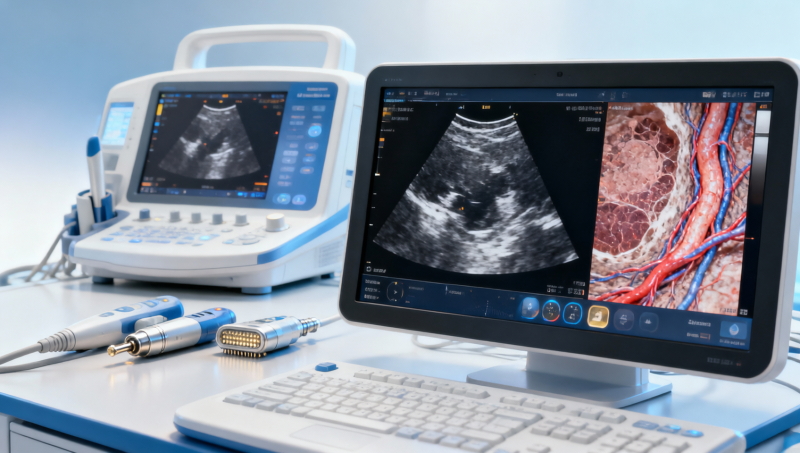
The ultrasound transducer frequency range shapes far more than image depth—it directly influences resolution, workflow confidence, and Ultrasound Metrics used in medical device assessment. For procurement teams, operators, and healthcare leaders navigating medical equipment standards, healthcare compliance, and MDR certification, understanding this parameter is essential to choosing systems that deliver clinically reliable, certifiable, and cost-effective performance.
In practice, frequency selection affects lesion visibility, vascular detail, penetration in larger patients, scan repeat rates, and even the defensibility of a purchasing decision during technical review. A 3–5 MHz convex probe and a 10–18 MHz linear probe may both be “ultrasound transducers,” yet they support very different clinical tasks, acceptance criteria, and workflow expectations.
For organizations comparing platforms across outpatient imaging, emergency care, women’s health, point-of-care ultrasound, and lab validation environments, frequency range should be treated as a strategic specification rather than a line-item checkbox. This article explains what the range really means, where buyers and users often misjudge it, and how a data-driven benchmarking approach supports safer, more economical procurement.
Why frequency range matters beyond penetration depth
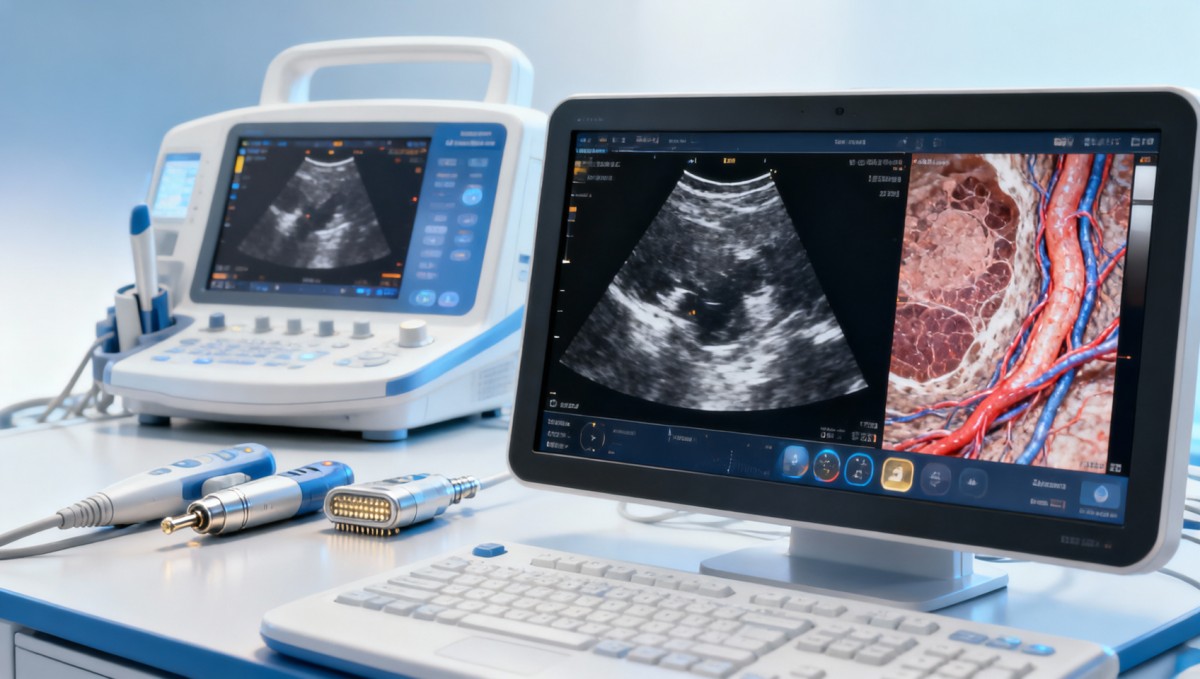
A common simplification says low frequency gives deeper penetration while high frequency gives better resolution. That statement is directionally correct, but incomplete. In real clinical use, the usable frequency band influences axial resolution, lateral detail, speckle behavior, Doppler sensitivity, and the confidence with which an operator can answer a diagnostic question in 30 seconds instead of 5 minutes.
For example, a transducer operating at 2–5 MHz may be appropriate for abdominal or obstetric depth requirements, while 7–15 MHz is more suitable for superficial vascular, musculoskeletal, or small-parts assessment. However, the nominal range alone is not enough. Beamforming quality, bandwidth stability, and signal-to-noise ratio determine whether the upper and lower ends of the range are clinically usable or only theoretically available.
This distinction matters to both users and procurement teams. A probe advertised as “broadband” may span 4–12 MHz, but if image uniformity degrades markedly above 10 MHz, the effective value of that upper range drops. In benchmarking environments such as those supported by VitalSync Metrics, this is why frequency claims should be reviewed alongside acoustic output consistency, grayscale performance, and repeatability under standardized test conditions.
From an operational perspective, frequency range also changes scanning behavior. In busy settings, operators rely on presets that must perform well across variable body habitus. If a system requires repeated manual adjustment because the transducer does not maintain stable imaging over a practical 2–3 MHz working band, workflow slows down and scan variability increases. Those effects may not appear on a brochure, but they directly influence utilization, training burden, and user satisfaction.
Clinical and technical effects linked to frequency
The table below summarizes how different frequency bands commonly influence image behavior and decision-making in healthcare settings. These are typical ranges used for planning and comparison, not rigid rules for every device.
The key takeaway is that frequency range alters diagnostic confidence, not just measurable depth. A good purchasing review should therefore connect frequency to exam mix, patient population, and the real-world imaging thresholds required by the department.
What operators notice first
- Sharper borders in superficial anatomy when moving from roughly 7 MHz to 12 MHz or higher.
- More reliable visualization of needle paths during line placement and regional anesthesia.
- Reduced repeat scanning when presets and probe bandwidth align with the actual clinical task.
- Greater consistency between experienced users and newly trained staff over the first 4–8 weeks of adoption.
How frequency range affects procurement, compliance, and device evaluation
For procurement personnel, frequency range should be assessed as a verification topic, not just a specification entry. Buyers often compare catalog values without examining whether performance remains stable across the advertised band. In value-based procurement, the question is not “Does this probe reach 15 MHz?” but “At 15 MHz, does it deliver clinically meaningful image quality under controlled and repeatable conditions?”
This is especially important in regulated environments shaped by MDR and broader medical equipment documentation requirements. Technical files, acceptance reports, and service records should align around measurable attributes. Frequency-related performance can influence whether an imaging system meets departmental expectations for lesion conspicuity, vascular wall delineation, and reproducibility during audits, validations, or capital planning reviews.
Independent benchmarking adds value because it separates claimed capability from demonstrated performance. A data-driven laboratory can evaluate image consistency across phantom targets, review sensitivity at multiple depths, and compare signal behavior before and after stress use cycles. For organizations standardizing fleets across 3–10 sites, this approach reduces the risk of buying technically inconsistent transducer sets that later increase downtime or retraining costs.
Frequency range also influences total cost of ownership. If a hospital attempts to cover four distinct use cases with only one “universal” probe, image compromise may increase exam times or require secondary scans. Conversely, overbuying highly specialized high-frequency probes for low-volume applications can weaken ROI. The goal is alignment: the right frequency coverage for the highest-priority workloads, validated with objective metrics.
Procurement criteria that should accompany frequency review
The following framework helps teams evaluate ultrasound transducer frequency range in a way that supports compliance, service planning, and purchasing discipline.
A disciplined review process links engineering evidence to procurement outcomes. It also creates a common language between sonographers, biomedical engineering teams, and executive decision-makers who need defensible capital expenditure rationale.
A practical 5-step review path
- Define the top 3–5 exam categories that drive at least 80% of scanning volume.
- Map each category to realistic depth and detail requirements, not marketing language.
- Request test evidence for image quality across the stated frequency range.
- Compare service intervals, probe durability, and replacement lead times, often 2–6 weeks depending on region.
- Document acceptance thresholds before contract award, including repeatability and image consistency checks.
Choosing the right frequency range for different healthcare workflows
The correct ultrasound transducer frequency range depends on workflow mix, not simply the broadest advertised span. Emergency departments may prioritize fast abdominal and cardiac-adjacent assessment, while vascular labs require higher sensitivity in superficial vessels. Women’s health, MSK, procedural guidance, and outpatient diagnostics each place different weight on penetration, detail, ergonomics, and probe switching frequency.
For operators, the practical question is whether one platform can support routine tasks without compromising first-pass confidence. In many facilities, a two-probe strategy covers the majority of demand: one lower-frequency curvilinear or phased-array option for deep imaging and one higher-frequency linear probe for superficial work. This often provides better efficiency than relying on a single compromise transducer.
For buyers, the challenge is balancing versatility against budget and maintenance exposure. A wider inventory of probes may improve task fit, but it also increases replacement risk and training demands. The optimal setup is usually determined by scan volume distribution, expected user skill level, and whether the system is deployed in one department or across multiple care settings.
This is where structured benchmarking supports rational selection. Instead of choosing the broadest headline frequency, decision-makers can assess which frequency windows produce reliable images in the exact scenarios they will face most often over the next 3–5 years.
Typical matching of frequency range to workflow
The matrix below helps connect imaging tasks with realistic transducer priorities for planning, budgeting, and standardization discussions.
The table shows why no single range is universally “best.” The best range is the one that delivers repeatable diagnostic utility for your most frequent and highest-risk exams.
Common selection mistakes
- Choosing maximum advertised frequency without checking whether superficial detail remains uniform across the field.
- Assuming one broadband probe can replace two task-specific probes in all departments.
- Ignoring operator training time, which can add 2–6 weeks before new workflows stabilize.
- Evaluating image quality only on ideal patients instead of mixed body habitus and real clinical pace.
Benchmarking, risk control, and implementation guidance for decision-makers
A technically sound purchase does not end with model selection. The implementation stage determines whether the promised ultrasound transducer frequency range translates into durable clinical value. Hospitals, imaging groups, and MedTech developers should define baseline testing, user onboarding, and periodic performance review before deployment begins.
One effective approach is to establish pre-acceptance and post-installation checkpoints. During acceptance, teams can record phantom images, note frequency-specific behavior, and document any limitations at key depths such as 2 cm, 5 cm, and 10 cm. After 30–90 days of use, those same checks can be repeated to determine whether image consistency, probe handling, and workflow performance match expectations.
Risk control should also cover cable integrity, connector wear, disinfection compatibility, and thermal or mechanical stress over time. A transducer may satisfy imaging needs initially but become a weak asset if repeated handling causes early degradation. This is why lifecycle reliability should be considered alongside frequency range, especially in high-throughput settings scanning dozens of patients per day.
For organizations working across procurement, clinical engineering, and executive leadership, independent technical interpretation is particularly valuable. It turns raw parameters into actionable sourcing guidance and helps distinguish between acceptable performance variance and a true compliance or reliability concern.
Implementation checkpoints for a lower-risk rollout
The checklist below is useful for healthcare providers and MedTech stakeholders who want frequency-related performance documented from purchase through routine operation.
- Set 4 core acceptance criteria: usable frequency coverage, image uniformity, penetration consistency, and handling ergonomics.
- Capture baseline test images and service notes within the first 7 days after installation.
- Train operators on probe-task matching so high-frequency and low-frequency use is not improvised under pressure.
- Schedule a re-evaluation every 6–12 months, or sooner for high-volume departments.
- Maintain a replacement and repair plan that considers lead times, spare inventory, and exam criticality.
FAQ for buyers, users, and technical reviewers
How much frequency range is enough for a general hospital? Many hospitals cover core demand with a two- or three-probe strategy, often spanning roughly 2–18 MHz across the total probe set. The correct mix depends on the top exam categories and depth requirements, not on the largest single probe specification.
Can one broadband probe replace multiple dedicated probes? Sometimes, but only if the clinically usable bandwidth is verified. In mixed-use environments, a universal probe may reduce switching but also compromise detail or penetration at the extremes. Testing under realistic workloads is essential.
What should procurement teams ask vendors to provide? Ask for evidence of performance across the claimed range, not just a frequency label. Useful materials include phantom-based image sets, service interval expectations, compatibility details, and clearly defined acceptance criteria.
How often should frequency-related performance be reviewed? In many institutions, a 6–12 month check is appropriate, with earlier review after intensive use, suspected image drift, or major workflow changes. High-volume sites may justify tighter intervals.
The ultrasound transducer frequency range affects far more than scan depth. It shapes image resolution, workflow stability, training efficiency, acceptance testing, and long-term procurement value. When healthcare organizations evaluate frequency as a measurable performance factor rather than a marketing claim, they make stronger decisions across clinical operations, compliance, and capital planning.
VitalSync Metrics supports this shift with independent, engineering-led benchmarking that helps buyers, operators, and decision-makers compare what devices promise against what they actually deliver. If you need a clearer framework for ultrasound device assessment, technical benchmarking, or procurement validation, contact us to discuss your application profile, request a tailored evaluation path, or learn more about practical MedTech performance benchmarking solutions.
- EMS
- ESS
- PPE
- EdTech
- procurement
- AR
- Cement
- benchmarking
- MDR certification
- value-based procurement
- medical device assessment
- medical equipment standards
- medical equipment
- technical benchmarking
- signal-to-noise ratio
- data-driven
- biomedical engineering
- healthcare compliance
- Ultrasound Metrics
- ultrasound transducer frequency range
Recommended News
- 2026.04.23Low-Altitude Economy Enters Scale-Up Year: eVTOL Infrastructure & Vital Sign SensingLydia Vancini (Regulatory Compliance Lead)
- 2026.04.23Lianyirong, ABC Shanghai Dongfang Hub Branch Close Two e-NI TransactionsDr. Hideo Tanaka (Imaging Systems Analyst)
- 2026.04.23China’s April 2026 LPR Set at 3.0% (1Y) and 3.5% (5Y+): Implications for Medical Device Export Financing
The VitalSync Intelligence Brief
Receive daily deep-dives into MedTech innovations and regulatory shifts.