
How Precise Sheet Metal Bending Helps Centrifuge Housings
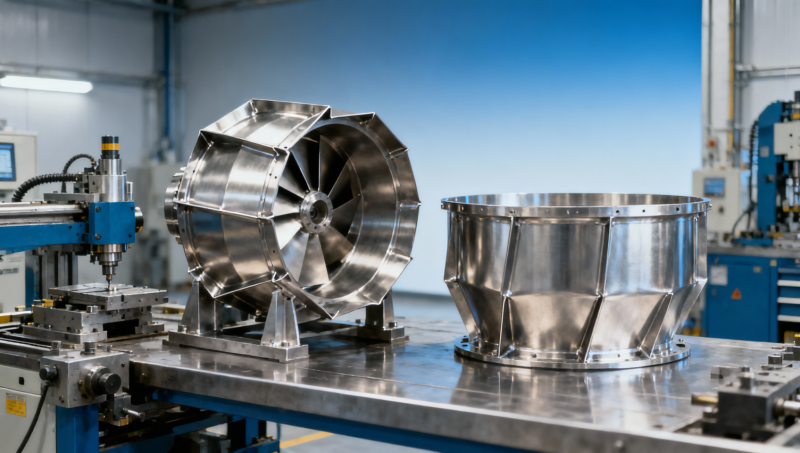
In high-speed centrifuge systems, precise sheet metal bending is not a cosmetic detail. It directly affects housing stiffness, rotor alignment stability, vibration behavior, safety containment, noise control, service life, and even regulatory confidence. For procurement teams, engineers, and decision-makers comparing a sheet metal manufacturer or sheet metal supplier, the real question is simple: can the housing be formed with enough consistency to protect performance under repeated mechanical stress? In most cases, better bending accuracy leads to lower lifecycle risk, fewer fit-up problems, and more predictable total sheet metal cost.
Why bending precision matters more than many buyers expect
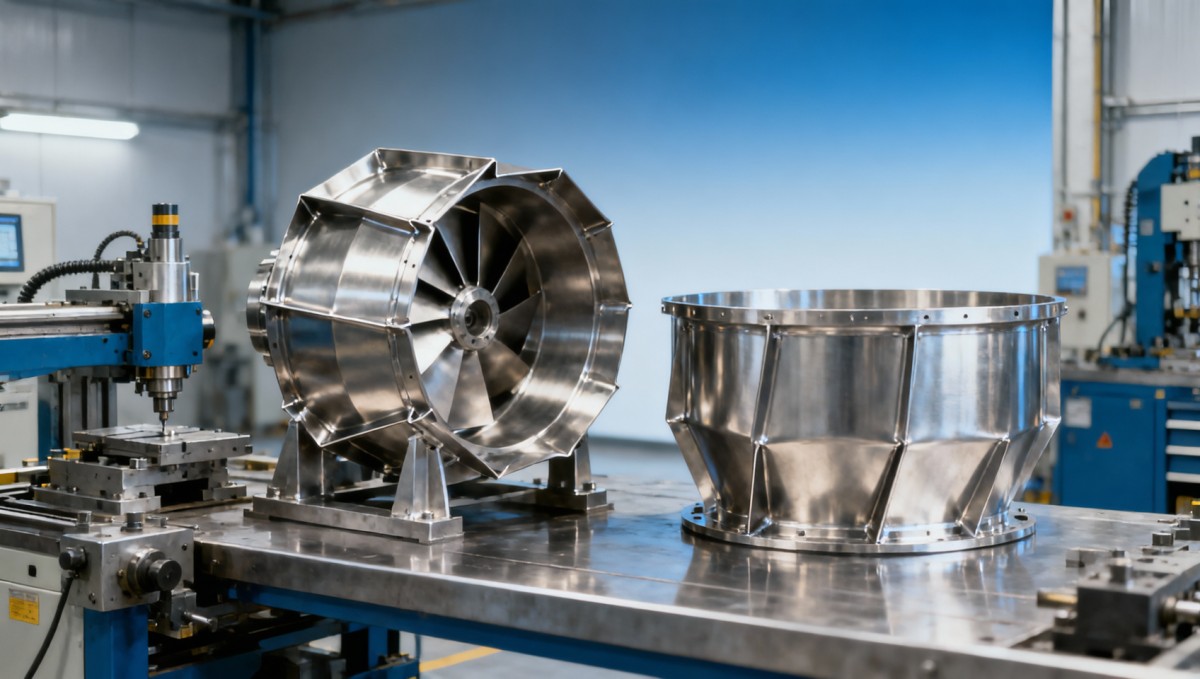
A centrifuge housing is more than an outer shell. It is part of the machine’s structural and safety system. In high-speed operation, even small geometric deviations in a sheet metal enclosure can contribute to vibration amplification, panel resonance, poor sealing, inconsistent door fit, and difficult assembly. If bends are inaccurate, the finished housing may require rework, force-fit assembly, or compensation through added brackets and fasteners. That increases manufacturing variability and can weaken long-term reliability.
Precise sheet metal fabrication helps control these risks in several ways:
- Dimensional consistency: Accurate bend angles and flange lengths improve part-to-part repeatability and support tighter assembly tolerances.
- Structural stiffness: Correctly formed bends create predictable reinforcement, helping the housing resist deflection and fatigue.
- Vibration behavior: Stable geometry helps reduce rattling, local flexing, and unwanted resonance during operation.
- Safety performance: Better fit between panels, frames, doors, and mounts supports containment design and reliable guarding.
- Cleaner integration: Precision bending improves alignment for sensors, latches, hinges, cable routes, and internal components.
For end users and operators, this means a machine that feels more stable, quieter, and easier to maintain. For buyers and enterprise decision-makers, it means fewer downstream quality escapes and better confidence that the enclosure matches the performance claims of the full centrifuge system.
What can go wrong when sheet metal bending is not controlled well
When bending quality is inconsistent, the resulting problems often appear outside the fabrication department. A procurement team may only see rising sheet metal cost or delayed delivery, while the root cause is poor forming control. In centrifuge housings, the most common consequences include:
- Misalignment during final assembly: Holes, brackets, and mating panels no longer line up correctly.
- Door and access panel issues: Poor bend accuracy can affect latch engagement, gasket compression, and user safety perception.
- Higher vibration and noise: Uneven panel geometry can create weak points that respond badly under dynamic loading.
- Surface quality problems: Cracking, excessive springback, tooling marks, and edge distortion can reduce both aesthetics and durability.
- More hidden costs: Rework, scrap, assembly delays, extra fixtures, and field service claims often outweigh any low initial quote.
This is why evaluating a sheet metal supplier based on piece price alone is risky. In medical and laboratory equipment, poor dimensional control can trigger broader concerns around validation, documentation, and long-term product consistency.
How precise forming improves centrifuge housing reliability and safety
Reliable centrifuge housing performance depends on the interaction between material selection, bend design, and process capability. Precision bending supports reliability not by one single feature, but by enabling the full enclosure system to behave as designed.
1. Better load distribution
Bends are natural reinforcement features in sheet metal housing structures. When formed correctly, they increase rigidity without excessive weight. This is especially valuable in centrifuge designs where the housing must tolerate continuous operational loading and occasional imbalance events.
2. Reduced fatigue risk
Poorly controlled bends may introduce stress concentration, microcracking, or inconsistent residual stress. Over time, repeated vibration can turn these weak points into fatigue failures. Precision bending, matched to the right radius and material properties, helps preserve mechanical integrity.
3. More reliable sealing and contamination control
In laboratory and healthcare environments, enclosure fit matters. Accurate bends improve panel interfaces, access door closure, and gasket compression. That supports cleaning, hygiene, and controlled internal conditions.
4. Improved integration with shielding and internal assemblies
Centrifuge housings often include mounts for motors, dampers, electronics, and safety components. If the outer and inner sheet metal enclosure geometry is inconsistent, the integration stack becomes unstable. Precise bending makes the entire assembly easier to validate and reproduce.
5. Stronger confidence in compliance-oriented manufacturing
While sheet metal bending alone does not guarantee MDR/IVDR compliance, controlled fabrication is part of a broader quality culture. For regulated sectors, process repeatability, inspection records, and documented tolerances matter.
What procurement teams should check when comparing a sheet metal manufacturer
For buyers, the most useful question is not “Can this supplier bend metal?” but “Can this supplier repeatedly produce centrifuge housing parts within functional tolerance, at scale, with documented control?” A strong evaluation should include the following points:
- Bend tolerance capability: Ask for realistic angle, flange, and positional tolerances on the actual material thickness and geometry you need.
- Material experience: Stainless steel, coated steel, and aluminum all respond differently to forming. The supplier should understand springback, grain direction, and finish protection.
- Tooling and machine capability: CNC press brakes, suitable tooling libraries, and process simulation improve consistency for complex sheet metal fabrication.
- First article and in-process inspection: Look for angle verification, dimensional checks, and documented control plans.
- Assembly awareness: The best sheet metal manufacturer understands not only bending, but also how formed parts behave in final assembly.
- Change control discipline: Small design or material changes can alter bend results. A capable supplier should manage revisions carefully.
- Quality documentation: For MedTech-adjacent applications, traceability and inspection reporting can be as important as the parts themselves.
For enterprise decision-makers, this assessment helps separate low-price vendors from true risk-reduction partners.
How to think about total sheet metal cost instead of unit price alone
In sourcing discussions, sheet metal cost is often framed around quotation comparisons. But for centrifuge housings, the meaningful cost is total delivered value across the product lifecycle. Precision bending can appear more expensive upfront, yet reduce overall cost in several important ways:
- Lower scrap and rework during production
- Faster assembly with less manual adjustment
- Fewer field failures and service interventions
- Better consistency across production lots
- Reduced risk of validation delays or quality investigations
- Longer service life of the equipment enclosure
This matters particularly for hospital procurement directors, laboratory planners, and MedTech companies trying to balance performance claims with commercial discipline. A lower quote from an inconsistent sheet metal supplier may create hidden operational costs far above the initial savings.
Questions engineers and buyers should ask before approving a supplier
If your team is reviewing sheet metal housing or sheet metal enclosure suppliers for centrifuge systems, these questions can quickly reveal capability:
- What bend accuracy can you hold on this specific part geometry and material?
- How do you compensate for springback and lot-to-lot material variation?
- Can you share examples of vibration-sensitive or safety-critical enclosures you have produced?
- What inspection data is recorded for first article and production runs?
- How do you prevent surface damage on visible or hygienic panels?
- How do your forming processes support downstream welding, fastening, coating, or final assembly?
- What is your process if a tolerance stack-up issue appears during customer assembly?
These questions help target what truly matters: repeatability, functional fit, and risk control.
Conclusion: precise bending is a performance decision, not just a fabrication detail
Precise sheet metal bending helps centrifuge housings do what they are supposed to do: stay rigid, fit correctly, resist vibration, support safety, and remain reliable over time. For users and operators, that translates into better machine stability and fewer problems in daily use. For procurement professionals and business leaders, it means a clearer way to evaluate a sheet metal manufacturer beyond quoted price. And for engineering teams, it reinforces a simple principle: in high-speed equipment, enclosure accuracy is part of system performance.
When assessing a sheet metal supplier, the smartest decision is to look beyond basic fabrication claims and examine whether the supplier can deliver controlled, repeatable forming aligned with the real demands of centrifuge applications. In that context, precise bending is not a minor production step. It is a measurable contributor to reliability, compliance confidence, and long-term value.
Recommended News
- 2026.04.20What Sheet Metal Fabrication Buyers Should Ask in 2026Dr. Julian Rossi (RehabTech Specialist)
- 2026.04.20Are Sheet Metal Parts Worth It for Mobility DevicesSarah Jenkins (Laboratory Infrastructure Consultant)
- 2026.04.20How to Source Sheet Metal Enclosures Without DelaysDr. Hideo Tanaka (Imaging Systems Analyst)
The VitalSync Intelligence Brief
Receive daily deep-dives into MedTech innovations and regulatory shifts.