
Hospital equipment standards rarely match real usage conditions
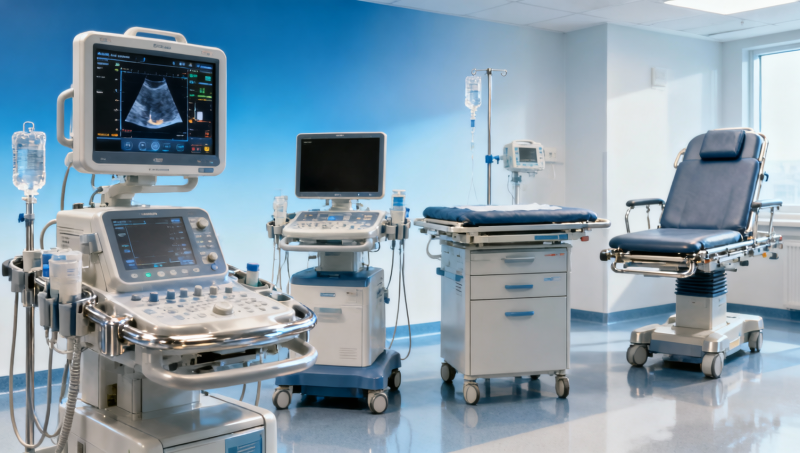
Hospital equipment standards are essential, but they do not automatically guarantee reliable performance in real wards, labs, imaging rooms, or rehabilitation settings. For procurement teams, operators, and healthcare leaders, the real issue is simple: a device can be fully documented, certified, and technically compliant, yet still underperform when exposed to daily workflow pressure, cleaning cycles, fluctuating power quality, operator variability, patient diversity, and sustained utilization. That is why comparing medical equipment standards, healthcare compliance, and medical device certification is only the starting point. Better decisions come from understanding how equipment behaves under actual use conditions and whether performance claims remain stable outside controlled test environments.
For readers evaluating Physical Therapy Tech, Ultrasound Metrics, or Surgical & Clinical Tech, the practical takeaway is this: standards define a minimum framework, but procurement risk lives in the gap between laboratory validation and hospital reality. Evidence-based assessment helps close that gap by translating technical claims into measurable operational outcomes.
Why compliant hospital equipment still fails under real usage conditions
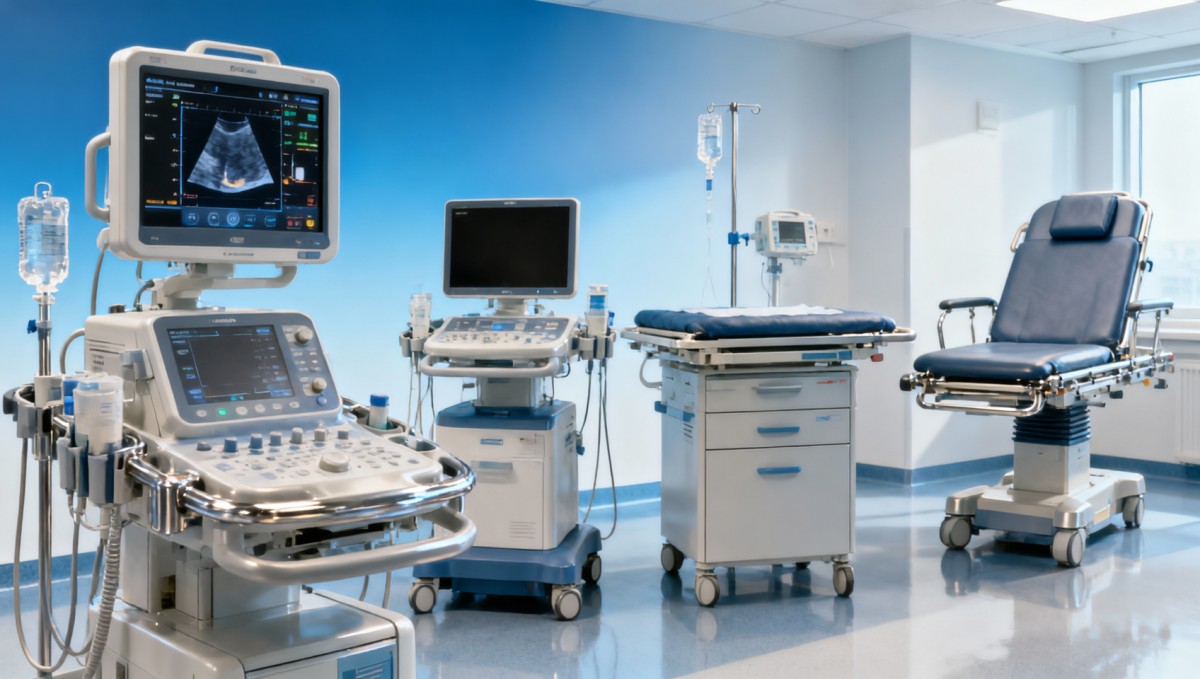
The core search intent behind this topic is not academic curiosity. Most readers want to know why equipment that meets official standards can still create safety, usability, maintenance, or ROI problems after purchase. That concern is valid, because many hospital equipment standards are designed around controlled testing protocols rather than dynamic clinical environments.
In practice, real usage conditions introduce variables that standards may only partially address:
- Continuous operation loads: devices may be tested for compliance but not for sustained high-throughput use in busy departments.
- Operator variation: performance often depends on user skill, training quality, and workflow consistency.
- Environmental stress: temperature fluctuation, humidity, transportation vibration, repeated disinfection, and unstable power supply can affect output accuracy and material durability.
- Patient diversity: body types, mobility limitations, comorbidities, and atypical anatomical conditions may expose limitations not obvious in standard validation datasets.
- System integration: devices that perform well alone may produce issues when connected to hospital IT systems, accessories, consumables, or third-party platforms.
So when people ask why hospital equipment standards rarely match real usage conditions, the most accurate answer is this: standards confirm baseline conformity, but they do not fully simulate the complexity, variability, and cumulative stress of real healthcare delivery.
What buyers, operators, and decision-makers are actually trying to understand
Although these audience groups have different responsibilities, their concerns overlap more than they appear.
Information researchers want credible ways to separate marketing language from measurable evidence. They are looking for practical evaluation criteria, not generic claims about innovation.
Operators and end users care about whether the equipment is dependable during long shifts, easy to calibrate, simple to clean, intuitive to use, and resilient to common errors. If a system slows workflow or produces inconsistent readings, certification alone offers little comfort.
Procurement professionals want to reduce lifecycle risk. Their focus is not only upfront price, but also service intervals, spare-part availability, performance drift, consumable dependency, interoperability, downtime exposure, and warranty realism.
Business leaders and enterprise decision-makers are usually asking higher-level questions: Will this equipment support value-based procurement goals? Will it reduce operational inefficiency? Is the supplier technically credible? Can this purchase stand up to regulatory scrutiny, internal audit, and long-term utilization targets?
For all of them, the real decision point is the same: Does the equipment deliver repeatable clinical-grade performance in the environment where it will actually be used?
Where the biggest mismatch happens between standards and clinical reality
The mismatch usually appears in a few recurring areas.
1. Performance is validated under ideal conditions, not stressed conditions
A device may pass bench testing but show drift or instability during repeated daily operation. For example, ultrasound systems may meet technical specifications in controlled assessment, yet image quality consistency can vary under heavy usage, probe wear, or uneven maintenance routines.
2. Certification does not equal workflow fitness
Medical device certification and regulatory approval are critical, but they do not prove that a device fits a specific hospital workflow. A surgical or rehabilitation device may be compliant and safe, yet still create bottlenecks because setup time, training burden, software complexity, or accessory management were underestimated.
3. Durability claims may not reflect cleaning and handling reality
In hospitals, repeated disinfection, movement between rooms, cable stress, docking cycles, and accidental impacts can quickly expose weak points. Material fatigue, connector wear, and enclosure degradation often become visible only after months of normal use.
4. Interoperability is often weaker than expected
Digital integration is now central to healthcare operations. Yet many procurement issues emerge not from the core device itself, but from weak compatibility with EHR systems, middleware, PACS environments, laboratory workflows, or network security requirements.
5. Maintenance assumptions are too optimistic
Suppliers may present maintenance intervals based on ideal service conditions. In reality, local technician availability, parts lead times, calibration frequency, and utilization intensity can significantly increase the total cost of ownership.
How to assess equipment beyond specification sheets
If standards are not enough, what should buyers and evaluators do instead? The answer is not to ignore compliance, but to add a more rigorous layer of real-world technical verification.
A useful assessment framework should include:
- Stress-condition testing: evaluate output stability under prolonged or repeated use, not only initial performance.
- Usability validation: observe how different operator profiles interact with the device in realistic workflow scenarios.
- Environmental tolerance review: assess resilience to transport, disinfection cycles, temperature variation, humidity, and power fluctuations.
- Integration testing: confirm compatibility with data systems, peripherals, accessories, and reporting structures already in use.
- Failure-mode analysis: identify predictable points of breakdown, performance drift, calibration loss, or consumable dependency.
- Lifecycle cost modeling: include service, training, downtime, spare parts, software updates, and decommissioning factors.
This is where independent benchmarking becomes especially valuable. A data-driven assessment process can translate supplier claims into comparable evidence. Instead of asking whether a product is “advanced,” buyers can ask whether signal quality, accuracy retention, fatigue resistance, or output consistency remain acceptable across realistic use scenarios.
What this means for Physical Therapy Tech, Ultrasound Metrics, and Surgical & Clinical Tech
Different equipment categories expose different risk patterns, so real-world assessment should be tailored.
Physical Therapy Tech
Devices used in rehabilitation often face high patient turnover, repeated contact, varied body mechanics, and frequent manual adjustments. Standards matter, but procurement teams should pay close attention to mechanical endurance, ease of sanitization, calibration stability, and whether the system supports therapists without slowing treatment flow.
Ultrasound Metrics
For ultrasound, baseline specifications such as resolution and imaging modes are not enough. Hospitals should evaluate probe durability, image consistency over time, sensitivity under varied scanning conditions, software responsiveness, and the effect of repeated cleaning on long-term reliability.
Surgical & Clinical Tech
In surgical and broader clinical environments, the stakes are even higher. Procurement decisions should include not only compliance documentation, but also setup reliability, alarm clarity, compatibility with surrounding systems, sterilization resilience, and the speed at which staff can recover from routine errors without compromising safety.
Across all three categories, the lesson is consistent: the most meaningful comparison is not standards versus standards, but claimed performance versus observed performance under expected use conditions.
How smarter procurement reduces risk and improves long-term value
When organizations rely too heavily on brochure specifications or minimum compliance language, they often end up paying for avoidable inefficiency later. Smarter procurement shifts evaluation from “Does it qualify?” to “Will it perform reliably in our environment, at our workload, with our people and systems?”
That shift produces several business advantages:
- Lower risk of early failure or unexpected downtime
- More accurate total cost of ownership forecasting
- Stronger alignment with value-based procurement goals
- Better support for internal compliance and audit readiness
- Higher confidence when comparing established suppliers and MedTech startups
- Improved patient safety and workflow continuity
For organizations operating in a market shaped by MDR/IVDR expectations, digital integration demands, and growing scrutiny of clinical performance claims, technical integrity is no longer a secondary issue. It is a procurement priority.
Conclusion: standards are necessary, but evidence is what makes procurement safer
Hospital equipment standards remain essential because they establish a regulatory and technical baseline. But they rarely capture the full complexity of actual hospital usage. Clinical environments are noisy, variable, fast-moving, and operationally demanding. That is exactly where the gap between compliance and performance becomes visible.
The most effective response is not to dismiss standards, but to go beyond them. Buyers, operators, researchers, and decision-makers need evidence that reflects real conditions: sustained use, operator variability, cleaning impact, integration behavior, service demands, and measurable output stability. That is how medical equipment standards, healthcare compliance, and medical device certification become more than paperwork—they become part of a stronger, evidence-based procurement strategy.
In short, if a device performs well only under ideal test conditions, it is not truly low-risk. In modern healthcare, safer sourcing depends on verifying what equipment does in reality, not just what it claims on paper.
- EMS
- ESS
- PPE
- EdTech
- procurement
- network security
- AR
- material fatigue
- system integration
- benchmarking
- value-based procurement
- hospital equipment standards
- medical equipment standards
- technical integrity
- medical equipment
- material fatigue
- digital integration
- long-term reliability
- data-driven
- technical verification
- clinical performance
- medical device certification
- healthcare compliance
- Ultrasound Metrics
- Physical Therapy Tech
Recommended News
- 2026.04.23Low-Altitude Economy Enters Scale-Up Year: eVTOL Infrastructure & Vital Sign SensingLydia Vancini (Regulatory Compliance Lead)
- 2026.04.23Lianyirong, ABC Shanghai Dongfang Hub Branch Close Two e-NI TransactionsDr. Hideo Tanaka (Imaging Systems Analyst)
- 2026.04.23China’s April 2026 LPR Set at 3.0% (1Y) and 3.5% (5Y+): Implications for Medical Device Export Financing
The VitalSync Intelligence Brief
Receive daily deep-dives into MedTech innovations and regulatory shifts.