
Material Biocompatibility Failures That Can Delay Device Approval
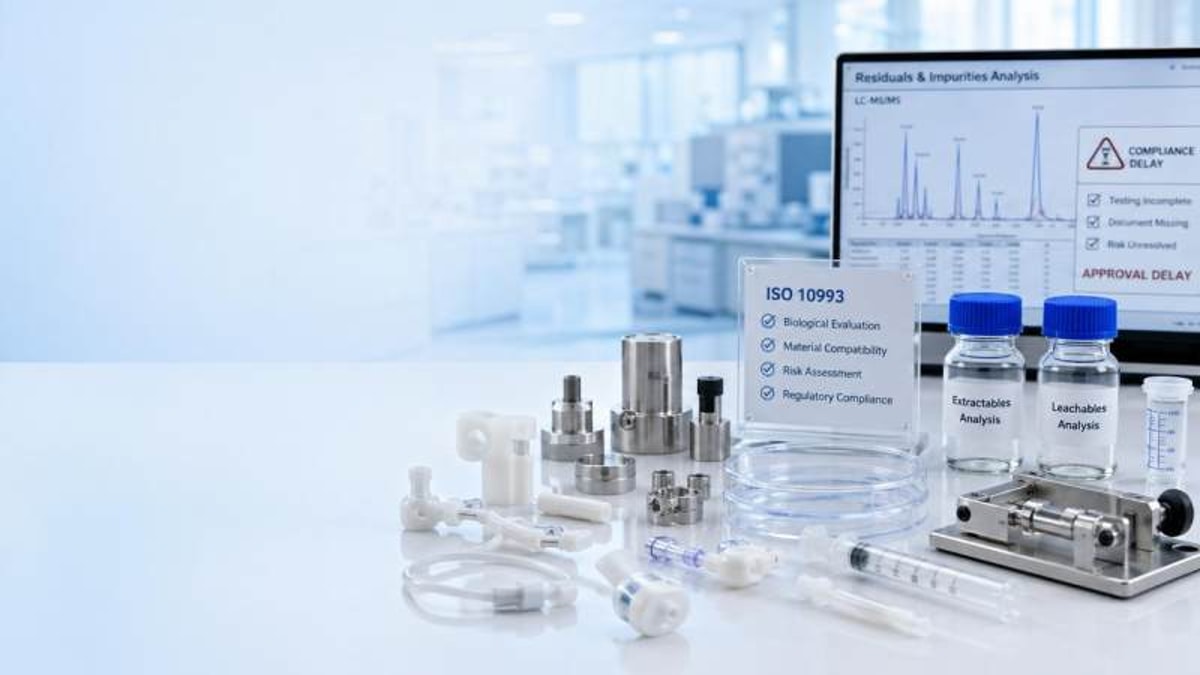
Material Biocompatibility failures are among the most overlooked risks in medical device development, yet they can trigger costly testing setbacks, regulatory scrutiny, and approval delays. For quality control and safety managers, understanding how material selection, processing residues, and real-world use conditions affect biological response is essential to preventing nonconformities and protecting market timelines.
Why do Material Biocompatibility issues delay approval more often than teams expect?
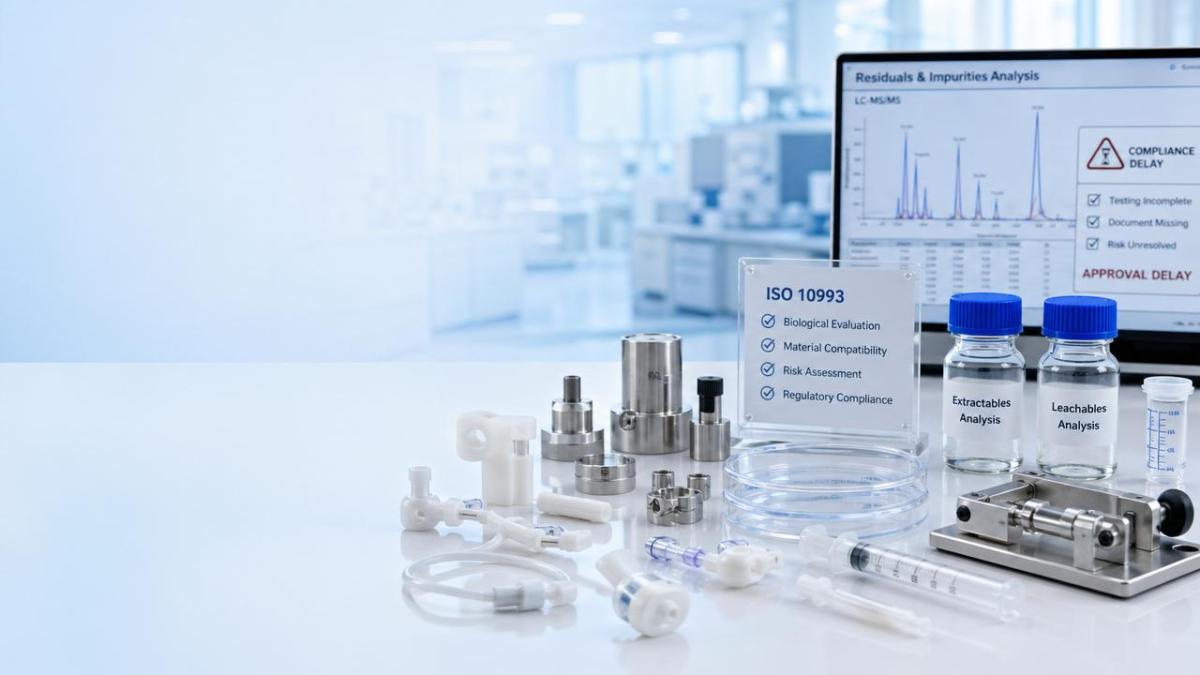
In regulated healthcare supply chains, Material Biocompatibility is not a single test result. It is a risk-based conclusion built from material composition, manufacturing controls, intended patient contact, exposure duration, sterilization method, and post-processing stability. A device can pass functional verification and still fail biological evaluation if the material profile changes after molding, coating, bonding, cleaning, or aging.
For quality control and safety managers, the real problem is timing. Many teams discover biocompatibility gaps only after design freeze, pilot production, or formal verification. At that stage, a single failed endpoint can add 4–12 weeks for root-cause work, extractables review, process correction, and repeat testing. In more complex devices, the delay may stretch across 2–3 validation cycles.
The approval impact becomes sharper under MDR/IVDR-aligned documentation expectations, where regulators and notified bodies look beyond declarations from raw material suppliers. They often expect evidence that the finished device, not just the nominal resin or alloy, remains suitable for its intended clinical use. That means Material Biocompatibility must be managed as a system-level control, not a purchasing checkbox.
VitalSync Metrics (VSM) addresses this gap by converting scattered engineering variables into comparable technical evidence. For procurement, QC, and safety teams, that matters because the approval risk usually sits between departments: supplier claims, process residues, packaging interactions, and use-environment stress are often reviewed separately even though biological response is cumulative.
The 4 failure pathways that repeatedly create approval friction
- Material mismatch: the selected polymer, metal, adhesive, or coating suits mechanical needs but lacks sufficient support for the intended contact category, such as prolonged skin contact, mucosal contact, or circulating blood pathway exposure.
- Process contamination: mold-release agents, machining fluids, detergents, inks, and bonding residues remain on the finished part and alter cytotoxicity or irritation outcomes.
- Sterilization interaction: EtO, gamma, e-beam, or steam can change surface chemistry, residual levels, colorants, or additive behavior, especially after 1–3 sterilization validation runs.
- Use-condition drift: temperature cycling, wear, sweat exposure, lipids, cleaning chemicals, or repeated flexing create degradation products that were not represented in the initial assessment.
These pathways are common across wearables, disposables, implant-adjacent components, diagnostic consumables, and laboratory-contact surfaces. They also explain why a supplier statement alone rarely protects approval timelines.
Where do quality and safety managers usually miss Material Biocompatibility risk?
The most frequent blind spot is assuming that a known raw material grade automatically represents the biological behavior of the finished device. In reality, Material Biocompatibility can shift after compounding, pigmentation, laser marking, overmolding, plasma treatment, or adhesive lamination. Even a small process change can require a new risk review.
A second blind spot appears in change control. QC teams often manage dimensional deviations, cosmetic defects, and packaging damage with clear thresholds, yet supplier substitutions for additives, liners, or cleaning agents may move through purchasing or operations without full biological impact screening. That is especially risky during 6–12 month cost-reduction programs or dual-sourcing initiatives.
A third issue is incomplete linkage between ISO 10993 biological evaluation planning and production reality. The evaluation plan may classify contact duration correctly, but the technical file may not sufficiently explain process residues, worst-case surface area, degradation exposure, or reprocessing effects. Regulators tend to focus on these gaps because they affect whether test results are representative.
VSM’s benchmarking model is useful here because it aligns sourcing data, process parameters, and performance evidence in one review path. That helps safety managers identify whether the risk originates from the material itself, a processing artifact, or an unvalidated supplier change.
High-risk checkpoints before formal submission
Before moving to final verification, teams should document a short but disciplined review at 5 key checkpoints. The table below helps frame a practical Material Biocompatibility screen for cross-functional approval meetings.
This review does not replace formal biological evaluation, but it reduces the chance of discovering an avoidable Material Biocompatibility failure after samples are already booked into an external lab. In practice, this can save one full retest loop and preserve submission sequencing.
What changes deserve immediate escalation?
Changes often underestimated in internal reviews
- Switching from one adhesive family to another, even when bond strength remains within specification.
- Adding antimicrobial agents, color concentrates, or UV stabilizers to improve marketability or shelf presentation.
- Changing packaging films or inserts that contact the device for 6–24 months during shelf life.
- Moving from manual cleaning to automated cleaning with different chemistry or rinse validation limits.
These shifts can appear operationally minor, yet they can change extractables profiles enough to reopen the Material Biocompatibility discussion.
How should procurement and engineering compare materials before they become a compliance problem?
When procurement teams compare candidate materials, unit price should not be the first filter. A lower-cost option that increases biological testing uncertainty, sterilization sensitivity, or supplier variability can create higher total cost within 8–16 weeks. The stronger approach is a weighted review of biological fit, process robustness, supply continuity, and documentation quality.
This is especially important in mixed healthcare portfolios where one organization may source components for wearables, diagnostics, and device-adjacent lab systems at the same time. Material Biocompatibility expectations differ by contact route and duration, so one “approved” material family rarely fits every application without qualification work.
The comparison below gives QC and safety managers a practical selection lens. It is not a ranking of materials, but a guide to where approval delays usually originate.
For procurement, this means the best material is often the one with fewer unknowns rather than the lowest unit cost. For safety teams, it means selection decisions should be reviewed against probable testing burden, not only design intent.
A 3-step selection method for time-sensitive programs
- Screen 3–5 candidate materials against intended contact route, sterilization, and expected shelf-life exposure before final design lock.
- Request process-specific evidence, not only generic material claims, including adhesive use, surface treatment, and cleaning chemistry.
- Map each candidate to requalification effort if a supplier or formulation change occurs within the next 12–24 months.
This method supports faster internal decisions without oversimplifying Material Biocompatibility risk.
What standards and evidence usually matter during review?
Most teams know ISO 10993 is central to biological evaluation, but approval delays often come from weak evidence linkage rather than from the absence of a standard name. Reviewers want to see that endpoint selection, chemical characterization, toxicological reasoning, and representative sample preparation are all connected to the final marketed device.
For devices placed under MDR/IVDR-related expectations, the material file must often support more than baseline test completion. It should explain intended contact category, duration, manufacturing residues, sterilization state, and justification for any omitted endpoints. If a device changes during scale-up, that rationale may need updating within the technical documentation set.
In practical terms, quality and safety managers should think in 3 evidence layers: material identity, finished-device representativeness, and ongoing change control. If one layer is weak, Material Biocompatibility questions can reopen during review even when prior testing exists.
Evidence package elements that reduce questions later
- A clear bill of materials linked to patient-contacting and indirect-contacting parts, with special attention to coatings, primers, and colorants.
- A process map showing where residues can be introduced, removed, or transformed, including cleaning and sterilization stages.
- A biological evaluation rationale that explains why the selected test plan reflects contact duration and realistic worst-case use.
- A change control procedure defining which supplier, process, or packaging changes trigger reassessment within 5–10 working days.
VSM’s role in this process is to turn fragmented material and process data into benchmarkable technical narratives. That helps procurement and compliance teams ask more precise questions before they commit to a supply path that looks stable on paper but is weak in biological evidence.
How long should teams plan for reassessment?
Typical planning windows
A targeted internal material-impact review may take 5–10 working days if data are complete. External testing readiness often needs 2–4 weeks when sample selection, sterilization state, and documentation alignment are still being resolved. If a failed endpoint requires root-cause investigation and repeat preparation, the delay can expand beyond a single quarter.
That is why early evidence discipline is less expensive than late remediation, especially for launch windows tied to procurement contracts or hospital implementation calendars.
FAQ: practical Material Biocompatibility decisions for QC and safety teams
How early should Material Biocompatibility be reviewed in development?
It should begin during material down-selection, not after design verification. A useful target is to complete the first structured review when 2–3 candidate materials remain and before tooling or supplier lock. This reduces the chance that a biologically weak option becomes embedded in cost, timeline, and validation planning.
Can a previously used medical-grade material still create approval delays?
Yes. “Medical-grade” does not automatically mean suitable for every device, process, or contact duration. Material Biocompatibility may change with pigments, coatings, sterilization, packaging contact, or use-condition wear. The finished-device context matters more than the marketing label attached to the raw material.
What should procurement ask suppliers besides a biocompatibility statement?
Ask for grade stability policy, additive and colorant control, change notification terms, sterilization compatibility information, and any known processing sensitivities. Also ask whether the supplied information reflects the raw material only or supports the likely finished-device condition. Those questions often reveal hidden Material Biocompatibility risk before commercial terms are finalized.
Which device categories face the most frequent reassessment needs?
Wearables, adhesive-backed components, fluid-contact consumables, and polymer-metal hybrid assemblies often require closer review. These categories commonly involve sweat, motion, repeated contact, sterilization sensitivity, or multi-material interfaces, all of which can shift biological response over 6–24 months of product evolution.
Why work with VSM when approval timing and sourcing confidence both matter?
VitalSync Metrics (VSM) helps quality, safety, and procurement teams reduce Material Biocompatibility uncertainty before it becomes a submission problem. Our value is not promotional comparison; it is technical filtering. We benchmark engineering variables, process effects, and supply-chain consistency so decision-makers can see where biological risk is likely to emerge.
This is particularly useful for organizations managing multiple stakeholders across hospital procurement, MedTech development, and laboratory planning. Instead of relying on fragmented supplier claims, teams can use standardized whitepaper-style outputs to compare material options, review compliance readiness, and identify where additional validation effort is justified.
If your program faces a tight launch window, an upcoming design change, or uncertainty around sterilization, coatings, adhesives, or supplier substitutions, VSM can support a focused review. Typical discussion points include 4 practical areas: parameter confirmation, material and component selection, expected delivery or validation timing, and documentation alignment for MDR/IVDR-related requirements.
You can also engage VSM for sample evaluation planning, customized benchmarking, supplier comparison, and quote-stage technical clarification. For QC and safety managers, that means fewer assumptions, sharper escalation criteria, and a more defensible path from sourcing decision to approval readiness.
Recommended News
- 2026.04.30Wholesale Medical Endoscopes China: After-Sales Questions Worth Asking EarlyDr. Alistair Thorne (Senior Biomedical Engineer)
- 2026.04.30Dental Implant Wholesale: How to Balance Margin, Quality, and Repeat OrdersDr. Alistair Thorne (Senior Biomedical Engineer)
- 2026.04.30Surgical Instrument Kits OEM: When Customization Starts Raising RiskDr. Julian Rossi (RehabTech Specialist)
The VitalSync Intelligence Brief
Receive daily deep-dives into MedTech innovations and regulatory shifts.