
What Changes Press Quality in Composite Material Forming?
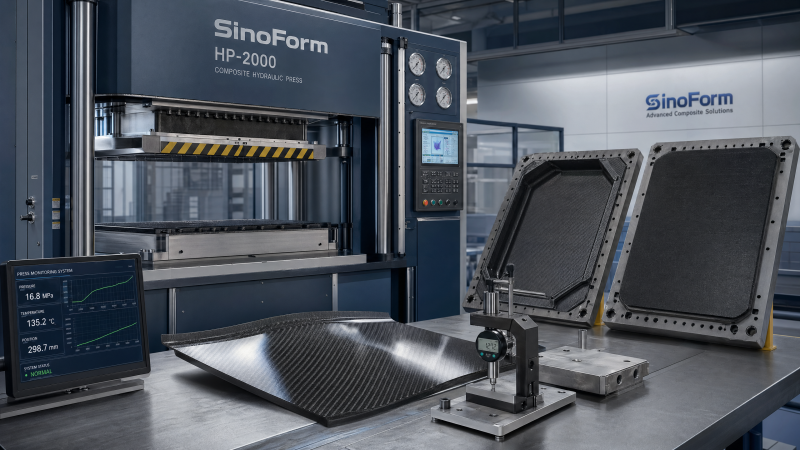
What really changes press quality in composite material forming? From hydraulic press for composite materials settings to sheet metal thickness control, even small parameter shifts can affect strength, surface finish, and consistency. For engineers, operators, and procurement teams, understanding these variables is essential to verify performance, reduce risk, and make more confident sourcing decisions.
In healthcare and life sciences manufacturing, this question is not theoretical. Composite components are increasingly used in diagnostic equipment housings, imaging support structures, surgical device subassemblies, laboratory automation frames, and lightweight covers for portable medical systems. When a formed composite part fails dimensional stability or mechanical expectations, the impact can extend from rework and scrap to delayed validation, procurement disputes, and downstream compliance risk.
For organizations that rely on technical benchmarking, such as hospital buyers, MedTech startups, and lab planners, press quality should be evaluated as a measurable process outcome rather than a supplier claim. The real drivers are usually found in pressure control, temperature uniformity, dwell time, mold condition, material prep, and inspection discipline. This article explains which variables matter most, how they interact, and what teams should verify before approving a composite forming partner.
Why press quality matters in composite material forming
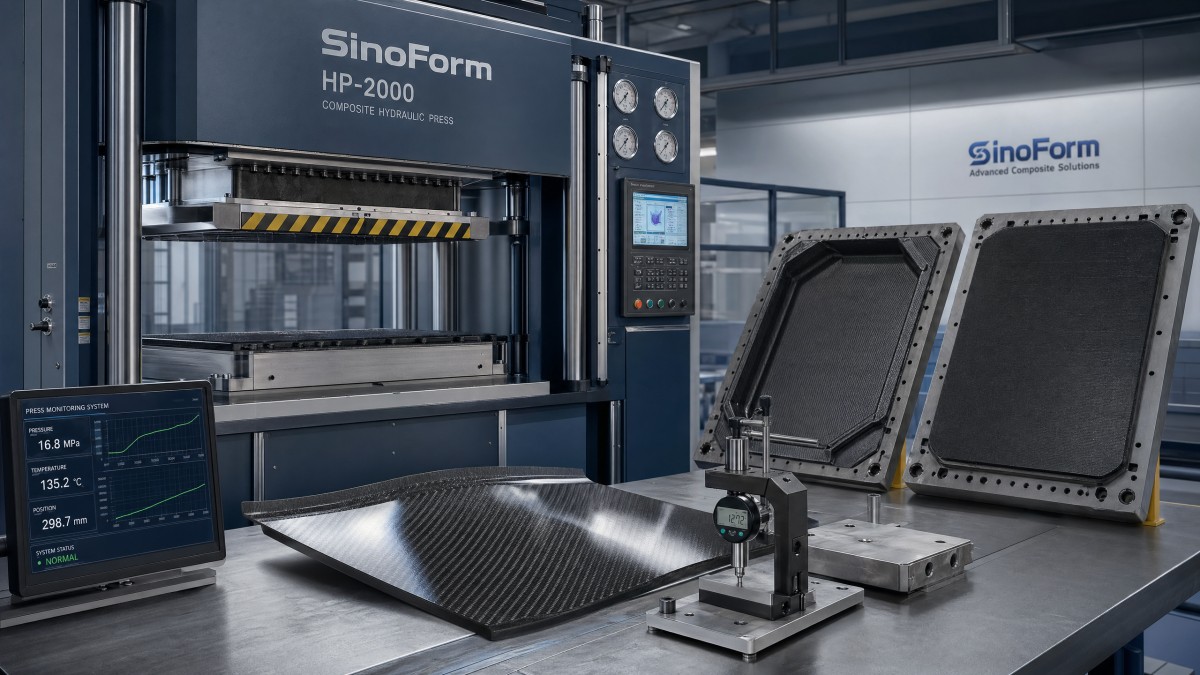
Press quality in composite material forming is the ability of a forming process to deliver repeatable geometry, stable mechanical properties, and acceptable surface finish across multiple production cycles. In practical terms, that means one batch of panels, shells, or structural inserts should behave like the next within defined tolerances such as thickness variation of ±0.15 mm to ±0.50 mm, depending on the application and layup design.
In medical-adjacent manufacturing, poor press quality can create hidden failure modes. A part may pass visual inspection but still contain resin-rich zones, dry spots, void clusters, or localized fiber distortion. These defects can reduce stiffness, shift load paths, or compromise mounting accuracy. For a device enclosure or instrument support, even a 1–2 mm warp over a mating edge may trigger assembly issues, vibration noise, or sealing failure.
Operators usually focus on machine settings, while procurement teams often focus on lead time and price. Both matter, but neither is sufficient in isolation. A composite press process that looks productive at 20% lower cycle time may still produce inconsistent cure or uneven consolidation. That is why technical review should combine process capability, incoming material control, and post-forming verification.
The difference between nominal settings and real forming performance
A hydraulic press for composite materials may be specified for a target tonnage, but actual performance depends on pressure distribution, platen parallelism, thermal stability, and feedback accuracy. A press rated at 200 tons is not automatically suitable for every laminate stack if pressure is uneven across the mold area or if temperature drift exceeds ±3°C during cure. The quality result comes from control quality, not only installed force.
The table below summarizes common press-quality indicators and why they should be reviewed before supplier approval or process transfer.
These indicators are useful because they connect machine behavior to part behavior. A supplier may meet output volume, but if the thermal map is unstable or thickness repeatability is weak, the formed composite may not support long-term field reliability. For technical buyers, this is where benchmarking adds value: it translates process variables into sourcing evidence.
The core process variables that change press quality
Several variables change press quality, but they do not act independently. In most composite forming lines, the key controls are pressure, temperature, heating rate, dwell time, material positioning, and tool condition. A small shift in one area can magnify weaknesses elsewhere. For example, a slightly fast ramp rate combined with high moisture content may create blistering or trapped volatiles even if the final pressure is correct.
Pressure profile is often misunderstood. Higher force does not always mean better parts. If pressure is applied too early, before the resin reaches the desired flow window, fibers may bridge or wrinkle. If pressure is too low during consolidation, voids and uneven thickness can remain. Typical forming pressure can range from a few bar in low-pressure thermoplastic consolidation to much higher effective load conditions in matched-die compression processes.
Temperature control is equally decisive. In thermoset systems, the process window may be narrow, sometimes within 10°C to 20°C between ideal flow and premature cure onset. In thermoplastic composites, insufficient heat soak can leave cold zones that resist forming, while overheating may damage the matrix or increase flash. When reviewing suppliers, ask whether temperature is measured only at the platen or also at the tool and part interface.
Material and tooling factors
Material condition before the press cycle is a frequent root cause of inconsistent quality. Prepreg age, moisture pickup, storage exposure, fiber orientation error, and preform handling all affect the final result. A laminate cut inaccurately by just 2° to 5° off the intended fiber direction can change stiffness behavior. Likewise, inconsistent charge placement in compression molding can create localized thickness buildup and cosmetic defects.
Tooling quality deserves the same attention as press capacity. Worn molds, poor venting, inadequate release coating, or insufficient surface polishing can cause sticking, pits, and flow lines. In precision device applications, a mold should be checked for flatness, wear condition, and heating consistency on a defined schedule, often every 500 to 2,000 cycles depending on tool material and production load.
Variables that should be monitored during validation
- Actual pressure curve from initial contact to full dwell, not just the nominal setpoint.
- Tool surface temperature at multiple points, ideally 4 to 8 measurement locations for larger molds.
- Cycle time segments, including preheat, close speed, dwell, cool-down, and demolding.
- Part thickness at critical sections, especially edges, ribs, and mounting zones.
- Defect mapping for porosity, fiber wash, wrinkles, surface pinholes, and dimensional distortion.
Validation data should show repeatability across at least 3 to 5 consecutive production runs, not only one successful sample. This is particularly important for buyers comparing two suppliers whose quotations look similar but whose process discipline may differ significantly.
How thickness control, sheet behavior, and part design influence outcomes
Sheet metal thickness control is mentioned in many industrial forming discussions because dimensional control logic is similar: thickness variation changes stress distribution, assembly alignment, and process repeatability. In composite material forming, thickness management is often even more critical because the material is anisotropic and its local behavior changes with fiber content, resin flow, and compaction history.
A nominal 3.0 mm panel does not guarantee a true 3.0 mm functional section after press forming. Corners, transitions, bosses, and flange regions may become resin rich or fiber starved. If the design includes tight radii or abrupt geometry shifts, the risk increases. Many production teams target a thickness tolerance band that reflects end use, such as ±0.20 mm for tighter assembly areas and ±0.50 mm for less critical covers or shields.
Design engineers can improve press quality by considering drape behavior, charge pattern, vent paths, and the relationship between nominal thickness and local reinforcement buildup. Procurement teams should ask whether the supplier participated in design-for-manufacture review before tool release. That step often reduces rework loops later in the project.
Common geometry-related quality risks
The following comparison helps teams identify where design and forming conditions are most likely to challenge quality.
The key conclusion is that thickness variation is not only a measurement problem. It is a process-design interaction. Better press quality comes when machine settings, laminate architecture, and part geometry are evaluated together rather than by separate departments.
For healthcare procurement, this matters because device performance often depends on reliable fit, low vibration, cleanable surfaces, and repeatable assembly torque. Composite parts that vary too much in stiffness or flatness may create hidden service issues long after incoming inspection is complete.
What engineers, operators, and procurement teams should verify
Different stakeholders view press quality through different lenses. Engineers want process capability and material integrity. Operators want stable recipes and practical controls. Procurement teams want proof that the supplier can maintain quality through scale-up, not only during pilot samples. A useful evaluation framework should address all three perspectives in one review cycle.
For technical benchmarking, the most efficient approach is to review the process in 4 layers: machine capability, tooling condition, material control, and inspection evidence. If one layer is weak, the full system is weak. This is why a supplier with a modern press can still underperform if storage conditions, mold maintenance, or metrology discipline are not mature.
A practical verification checklist
- Confirm pressure and temperature calibration frequency, commonly every 6 to 12 months or per internal quality procedure.
- Request thickness mapping and dimensional reports from at least 3 sample parts taken from separate runs.
- Review cure or forming cycle documentation, including ramp, dwell, and cooling stages.
- Ask how incoming composite material is stored, traced, and quarantined when out of condition.
- Verify defect criteria and acceptance thresholds for voids, surface marks, flash, and warpage.
The table below can help buyers compare suppliers without reducing the decision to unit price alone.
When this kind of verification is built into sourcing, teams can better distinguish between a supplier that can make a part once and one that can produce it reliably over 12, 24, or 36 months. That distinction is especially important in regulated product ecosystems where component variability can trigger qualification delays.
Common purchasing mistakes
- Approving a vendor based on prototype appearance without reviewing process windows or repeatability data.
- Assuming press tonnage alone predicts composite forming quality.
- Ignoring mold maintenance intervals and thermal uniformity checks.
- Requesting only final-part inspection while skipping in-process control evidence.
Implementation guidance, risk control, and benchmarking value
Improving press quality in composite material forming usually requires a staged approach rather than a single adjustment. A practical roadmap includes baseline measurement, controlled trials, parameter optimization, and routine monitoring. In many facilities, meaningful improvement can be achieved within 2 to 6 weeks if the process already has stable tooling and traceable material lots.
A baseline should capture at least 5 data groups: part thickness map, dimensional stability, visible defect profile, cycle record, and material batch identification. Once that baseline is established, teams can change one parameter at a time, such as dwell time by 10% or platen temperature by 3°C to 5°C, and compare the effect. This avoids the common mistake of changing several settings simultaneously and losing cause-and-effect visibility.
For organizations in MedTech and life sciences, independent benchmarking adds another layer of confidence. It converts manufacturing language into decision-ready evidence. Instead of relying on supplier statements like “stable quality” or “optimized process,” decision-makers can review measurable outputs such as flatness deviation, thermal consistency, or defect frequency per run. That makes procurement more resilient and technical reviews more objective.
FAQ for sourcing and technical review
How do I know whether a hydraulic press for composite materials is suitable for my part?
Do not evaluate suitability by tonnage alone. Review platen size, parallelism, temperature control, pressure accuracy, and the supplier’s validation history with similar laminate thickness and geometry. For critical components, ask for 3 to 5 repeat samples produced under the same recipe and compare thickness, flatness, and visible defects.
What thickness variation is generally acceptable?
There is no single universal value. Less demanding covers may tolerate ±0.50 mm, while alignment-sensitive assemblies may require ±0.20 mm or tighter in functional zones. The acceptable range should match the downstream fit, stiffness, sealing, and fastening requirements rather than generic supplier claims.
How long does process validation usually take?
For an established tool and known material, initial validation may take 1 to 3 weeks. If the part geometry is new, the material stack is unfamiliar, or cosmetic standards are strict, a fuller optimization cycle may take 4 to 8 weeks. Timelines also depend on whether non-destructive checks, mechanical coupons, or environmental conditioning are required.
What should be included in a technical sourcing review?
At minimum, request machine capability data, cycle parameters, material traceability, sample inspection reports, defect criteria, and mold maintenance practice. If the part supports a healthcare device or laboratory system, also review how documentation is controlled and how process deviations are recorded and escalated.
Press quality in composite material forming changes when controllable variables drift or when teams fail to connect machine data with part performance. Pressure, temperature, dwell, tooling, material handling, and thickness control all shape the final outcome. For engineers, operators, procurement specialists, and business leaders, the priority is not only to ask whether a supplier can form the part, but whether the process can remain stable across time, batches, and production scale.
VitalSync Metrics supports this kind of evidence-based decision-making by translating technical process signals into clear benchmarking insight for healthcare and life sciences supply chains. If you need a more rigorous way to compare composite forming capability, reduce sourcing uncertainty, or evaluate process integrity before approval, contact us to discuss your application, request a tailored assessment framework, or learn more about our technical benchmarking solutions.
Recommended News
- 2026.04.28How to Spot Premium Car Accessories That Are Mostly MarkupDr. Julian Rossi (RehabTech Specialist)
- 2026.04.28What Shortens the Life of Aftermarket Truck Parts FastDr. Hideo Tanaka (Imaging Systems Analyst)
- 2026.04.28Aftermarket Auto Parts for Trucks That Cut Repeat RepairsDr. Hideo Tanaka (Imaging Systems Analyst)
The VitalSync Intelligence Brief
Receive daily deep-dives into MedTech innovations and regulatory shifts.