
When dental implant wholesale MOQ becomes a supply risk
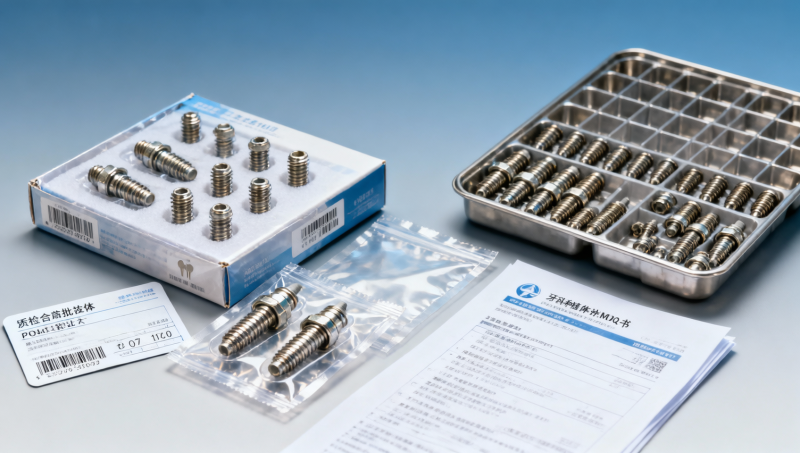
When dental implant wholesale MOQ rises beyond practical demand, it can shift from a pricing advantage to a serious supply risk. For procurement teams and decision-makers, the issue is not only stock pressure, but also healthcare compliance, MDR certification, medical device certification, and long-term product reliability. This article examines how MOQ affects sourcing resilience, medical device assessment, and supplier verification in a market where technical integrity matters more than volume discounts.
Why does dental implant wholesale MOQ become a real procurement risk?
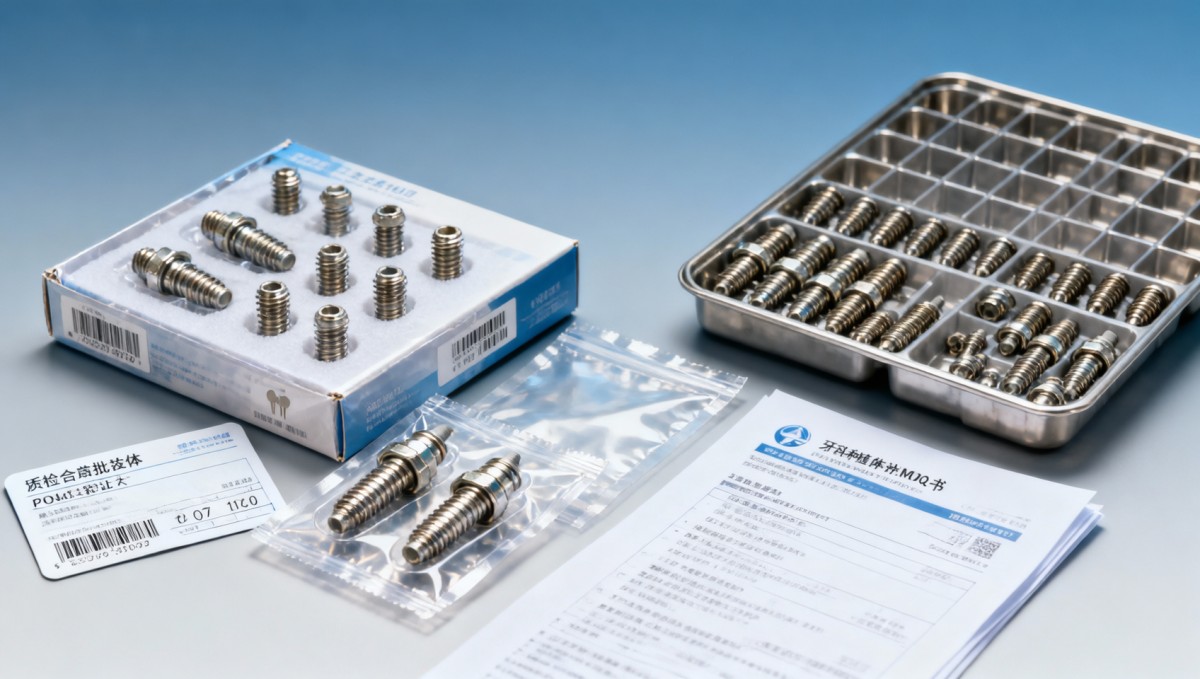
In dental implant wholesale, MOQ is often presented as a commercial advantage. Suppliers may promise lower unit pricing once a buyer commits to 500, 1,000, or even 3,000 units per SKU. On paper, that looks efficient. In practice, an oversized MOQ can lock distributors, clinics, and hospital procurement teams into inventory cycles that exceed realistic consumption over 6–12 months.
The risk is higher in medical procurement than in ordinary industrial sourcing. Dental implants are not generic fast-moving goods. They are linked to traceability, sterile packaging integrity, documented manufacturing controls, and post-market accountability. If procurement teams overbuy to secure a discount, they may increase exposure to storage drift, outdated documentation, and uneven lot turnover across multiple treatment centers.
For operators and clinical users, MOQ pressure can also distort product selection. Instead of choosing the implant system that best matches bone condition, surgical protocol, and prosthetic workflow, a buyer may favor the supplier with the most aggressive bulk terms. That is where commercial logic starts to conflict with clinical suitability and long-term reliability.
For enterprise decision-makers, the core question is not whether MOQ is high or low. The question is whether the minimum order quantity aligns with verified demand, regulatory shelf-life management, and supplier consistency over repeated batches. A poor match across those 3 dimensions can turn inventory into operational risk.
Three ways MOQ creates hidden instability
- Demand mismatch: a clinic network may consume one implant diameter quickly while another size remains in stock for 9–18 months, creating dead inventory and fragmented replenishment.
- Compliance mismatch: larger orders increase the burden of documentation control, including batch records, labeling version checks, sterilization declarations, and product registration alignment.
- Quality mismatch: committing to a large volume before technical benchmarking may expose buyers to design variability, surface inconsistency, or packaging issues across later production lots.
Why this matters more in the current healthcare supply chain
Healthcare procurement is shifting toward value-based purchasing. That means a lower unit price is no longer enough. Procurement teams now need evidence that a supplier can maintain process discipline, traceability, and documentation readiness across time. In the dental implant field, where product performance connects directly to patient outcomes and surgical confidence, MOQ must be evaluated as a supply chain variable, not just a pricing term.
This is where an independent technical assessment becomes valuable. VitalSync Metrics (VSM) helps filter out marketing claims by examining manufacturing parameters, material behavior, documentation structure, and long-term sourcing logic. For buyers comparing wholesale offers, that kind of engineering review can reveal whether a low-price large-MOQ proposal is truly sustainable.
What should buyers evaluate before accepting a large dental implant MOQ?
Before accepting a high dental implant wholesale MOQ, procurement teams should define a structured assessment model. A practical review usually includes 5 key checkpoints: actual monthly usage, shelf-life buffer, lot traceability, regulatory documentation readiness, and supplier batch consistency. Without these checkpoints, MOQ negotiations remain commercial rather than operational.
The first checkpoint is consumption realism. Buyers should segment demand by implant diameter, length, connection type, and compatible prosthetic components. A network that uses 40–60 units per month in total may still have only 5–10 units of monthly demand for certain low-rotation SKUs. In that case, a blanket MOQ across the full product family creates imbalance from day one.
The second checkpoint is quality-document synchronization. In medical devices, inventory is not only physical stock. It is also linked to instructions for use, labels, declarations, packaging revisions, and regulatory references. If any document version changes within a 12-month cycle, excessive stock can become difficult to deploy across regulated markets.
The third checkpoint is supplier reliability across lots. A supplier may provide an acceptable initial sample but show variation in machining tolerance, surface treatment consistency, or packaging sealing quality in later runs. For a high MOQ order, that variation scales quickly into financial and clinical disruption.
A practical procurement screening table
The table below helps buyers compare whether a dental implant MOQ supports real operational demand or creates avoidable supply risk. It is especially useful for procurement personnel, laboratory planners, and decision-makers reviewing multiple suppliers in a 2–4 week sourcing cycle.
This comparison shows that MOQ risk is rarely about quantity alone. It is usually the result of quantity combined with poor flexibility, weak documentation control, or insufficient technical verification. Buyers who review all 4 dimensions together make stronger procurement decisions than those who focus only on unit cost.
Questions procurement teams should ask suppliers
- Can the MOQ be split across diameters, lengths, or prosthetic interfaces rather than fixed to a single SKU?
- What is the standard lead time for replenishment: 2–4 weeks, 4–8 weeks, or longer during peak periods?
- Are lot-level records available for material origin, sterilization status, and packaging verification?
- Has the supplier maintained the same production process over recent batches, or were there equipment or subcontractor changes?
- What happens if a market-specific certification or labeling update affects stock already in transit or in storage?
How do compliance and certification change the MOQ decision?
In dental implant sourcing, compliance is not a separate legal box. It directly shapes inventory risk. When buyers commit to a large MOQ, they also commit to the documentation framework attached to that stock. If the product is sold across multiple regions, a change in MDR-related documentation, market registration status, or importer labeling responsibilities can affect whether inventory remains deployable.
That is why procurement teams should assess the regulatory maturity of the supplier before volume discussions begin. Medical device certification, technical files, sterilization validation references, and traceability procedures should be reviewed in parallel with price and lead time. A supplier offering an attractive MOQ discount without documentation discipline may increase future costs through relabeling, delayed release, or write-down of unsellable stock.
Operators and end users also need confidence that packaged implants remain supported by consistent instructions and complaint-handling pathways. In a regulated environment, post-market surveillance expectations extend beyond shipment. Procurement decisions made today can influence how efficiently an organization responds to a complaint, adverse trend review, or field correction 6–18 months later.
VSM’s role is especially useful here because technical benchmarking can bridge the gap between procurement language and engineering reality. Instead of accepting broad supplier claims, buyers can request structured evidence on manufacturing repeatability, documentation completeness, and performance-relevant parameters that support compliant long-term sourcing.
Compliance points that should be checked before committing to bulk volume
The next table summarizes common certification and documentation review points that affect dental implant wholesale MOQ decisions. It helps teams avoid treating compliance as a post-purchase task when it should be part of supplier qualification from the start.
A strong MOQ decision is therefore a compliance decision as much as a commercial one. If suppliers cannot show stable documents, traceability clarity, and consistent release discipline, volume should be phased rather than locked in upfront.
A practical rule for regulated procurement
If the buyer has not yet completed technical review, lot verification, and document mapping for the target market, it is often safer to begin with a controlled qualification phase. Many organizations use a 3-stage sequence: sample assessment, pilot order, then scaled procurement. That approach may extend the initial buying cycle by 2–6 weeks, but it can reduce downstream disruption significantly.
Which sourcing model is safer than accepting a rigid MOQ?
Rigid MOQ is not the only way to secure supply. In many cases, buyers can negotiate alternative sourcing models that preserve pricing logic without creating excess stock. The most useful options include phased releases, mixed-SKU bundles, call-off orders, and qualification-based volume ramps. Each model serves a different demand pattern and risk profile.
For information researchers and procurement planners, the key is to connect ordering structure to consumption visibility. If demand is stable across 3–5 fast-moving SKUs, a moderate MOQ may be efficient. If demand is fragmented across many variants or different clinical teams, a staggered model is usually safer. Bulk commitment should follow verified usage behavior, not assumptions.
From a cost perspective, a lower unit price does not always mean a lower total cost. Carrying inventory for 9 months, managing documentation updates, and handling write-offs can erase the value of a nominal 5%–12% discount. Decision-makers should evaluate landed cost, storage burden, and compliance exposure together.
VSM supports this evaluation by translating manufacturing and supplier variables into a decision-ready framework. Instead of choosing between “cheap” and “expensive,” buyers can compare sourcing models based on repeatability, documentation control, and lifecycle fit.
Comparison of practical sourcing alternatives
The following table compares common procurement models used when dental implant wholesale MOQ appears too high for realistic demand. It is intended to support selection, cost analysis, and supplier negotiation.
For most buyers entering a new supplier relationship, pilot-plus-scale or phased release tends to create the best balance between commercial leverage and technical caution. The right model depends on whether the organization values the next invoice price more than continuity across the next 2–4 quarters.
Signs that a lower MOQ is strategically better
- The supplier is new to your approved vendor list and only one sample batch has been reviewed.
- Clinical demand varies significantly by site, surgeon, or implant platform.
- The target market has active documentation, language, or registration requirements that may evolve within the next 6–12 months.
- Internal teams still need to validate handling, packaging performance, and traceability workflow before rollout.
FAQ: what do buyers, users, and decision-makers ask most often?
How high is too high for dental implant wholesale MOQ?
There is no single universal number. A workable MOQ should normally match verified turnover by SKU and market. If one order ties up more than 6–12 months of realistic use for several slow-moving variants, the MOQ is likely too high. The more complex the documentation and compliance environment, the more cautious the buyer should be.
Should procurement teams prioritize price breaks or batch consistency?
Batch consistency should come first, especially in medical device sourcing. A 5% price advantage can disappear quickly if later lots show documentation drift, packaging issues, or variable manufacturing control. Price matters, but only after technical repeatability and regulatory readiness have been verified.
What is the safest first step with a new supplier?
A controlled qualification path is usually the safest route. Start with technical document review, sample assessment, and a limited pilot order. If the supplier performs well across product quality, lot traceability, and delivery discipline, volume can then be increased over the next 1–3 ordering cycles. This is often more resilient than committing immediately to the largest discount tier.
How can operators and clinical teams support procurement decisions?
Clinical users should provide actual usage patterns by implant size, indication, and preferred workflow. They should also report any packaging, handling, or compatibility concerns during trials. That operational feedback helps procurement avoid buying large quantities of SKUs that look attractive in pricing sheets but move slowly in real treatment settings.
Why work with VSM before committing to volume?
When dental implant wholesale MOQ becomes a supply risk, the solution is not guesswork. Buyers need a reliable method to separate commercial claims from technical reality. VitalSync Metrics (VSM) provides an independent, data-driven perspective for healthcare and MedTech sourcing decisions, with a focus on technical integrity, compliance logic, and long-term supplier reliability.
We help procurement teams, operators, and enterprise leaders examine the details that often get missed in standard supplier conversations: manufacturing parameter consistency, document control readiness, benchmark-oriented assessment, and practical sourcing resilience. That is especially useful when deciding whether a large MOQ supports growth or simply transfers risk to the buyer.
If you are comparing dental implant suppliers, reviewing a new medical device partner, or questioning whether a bulk offer is truly safe, VSM can support a more informed decision path. We can discuss parameter confirmation, supplier benchmarking, MOQ structure review, lead-time logic, documentation checkpoints, pilot-order design, and market-specific compliance considerations.
Contact VSM to evaluate whether your current dental implant wholesale MOQ aligns with clinical demand, certification requirements, and long-term supply stability. A short technical review today can prevent months of excess stock, avoidable procurement friction, and hidden compliance exposure later.
- healthcare procurement
- MDR certification
- medical device assessment
- technical integrity
- hospital procurement
- technical benchmarking
- supply chain
- long-term reliability
- manufacturing parameters
- data-driven
- technical verification
- healthcare supply chain
- medical device certification
- healthcare compliance
- Packaging
- dental implant wholesale
Recommended News
The VitalSync Intelligence Brief
Receive daily deep-dives into MedTech innovations and regulatory shifts.