
Orthopedic implants manufacturer: what to verify
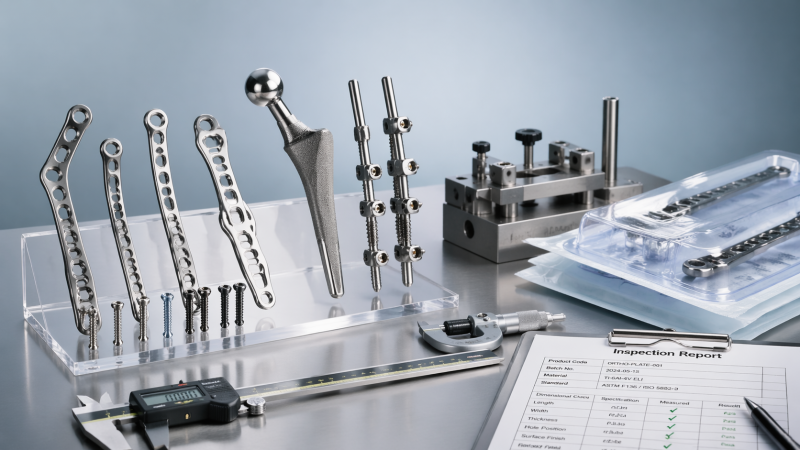
Choosing an orthopedic implants manufacturer is no longer just about price or product range. Buyers must verify engineering consistency, medical equipment safety standards, healthcare compliance solutions, and long-term performance data before making procurement decisions. For researchers, operators, purchasers, and executives, this guide explains what to check, how to compare suppliers objectively, and why independent technical validation matters in a market shaped by medical technology advancements and rising quality expectations.
In orthopedic procurement, the cost of a poor supplier choice can surface months or even years after delivery. A plate, screw, hip stem, or spinal fixation component may look acceptable on a brochure, yet still fail on dimensional repeatability, corrosion resistance, surface finish control, or documentation depth. For hospitals, OEM buyers, and MedTech startups, the real task is not identifying who can manufacture implants, but determining who can do so consistently across batches, audits, and clinical use conditions.
That is why verification matters more than claims. Independent technical review, process benchmarking, and structured supplier comparison reduce risk at the sourcing stage. For organizations working under tighter procurement scrutiny, especially in MDR-sensitive markets, a disciplined evaluation framework helps separate capable orthopedic implants manufacturers from suppliers that only appear qualified on paper.
Why verification matters more than catalog breadth
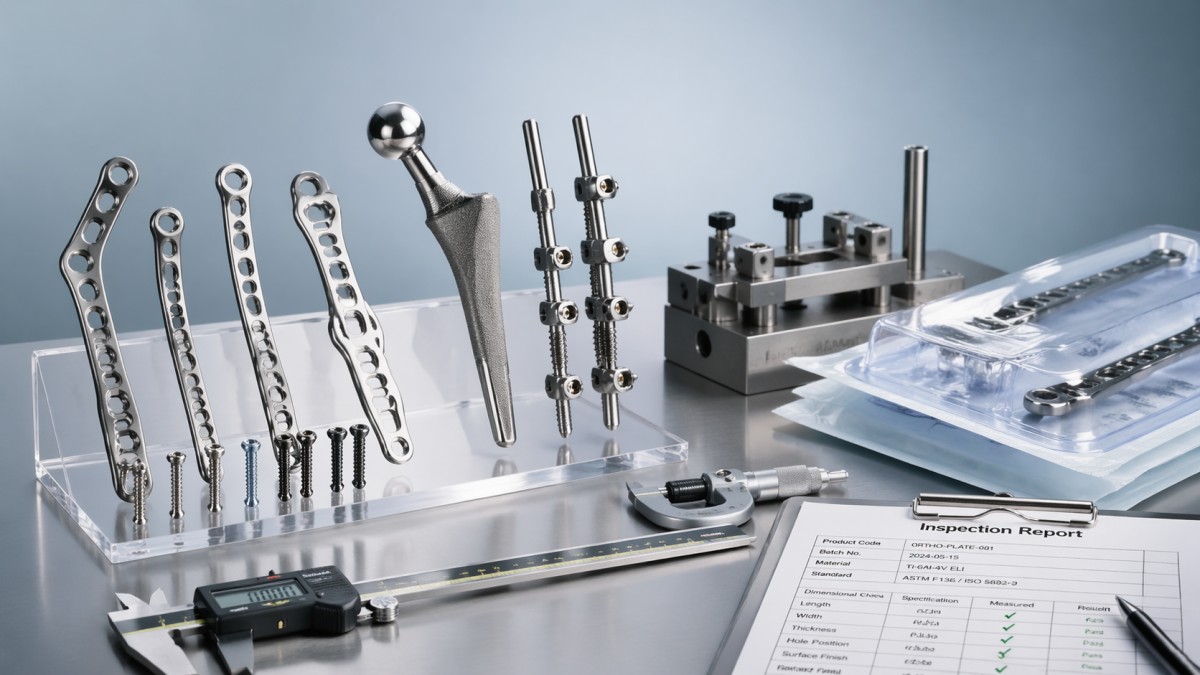
An orthopedic implants manufacturer may offer 20, 50, or even 200 product variants, but catalog size alone says little about manufacturing control. In practice, buyers should focus on whether the supplier can maintain tolerances, material traceability, and repeatable finishing across multiple production lots. For load-bearing implants, a small process drift can translate into significant clinical and commercial risk.
The most common sourcing mistake is to treat implants like standard industrial hardware. Orthopedic components operate in demanding biological and mechanical environments, often under cyclic stress for 5, 10, or 15 years. A manufacturer must demonstrate not only machining capability, but also process discipline in cleaning, passivation, sterilization interface control, packaging integrity, and post-production inspection.
For procurement teams, verification should cover at least 4 dimensions: engineering capability, compliance readiness, supply continuity, and performance evidence. Operators and technical users may additionally need to review instrumentation compatibility, labeling clarity, and packaging usability in operating room workflows. Executives, by contrast, often focus on supplier stability, audit exposure, and total cost of ownership over a 3–5 year horizon.
In a value-based purchasing environment, one rejected batch can trigger delays of 2–8 weeks, extra validation work, and avoidable replacement costs. This is where independent benchmarking organizations such as VitalSync Metrics (VSM) create practical value: they translate process parameters and performance indicators into comparable technical evidence, allowing decision-makers to filter out marketing noise before contracts are signed.
Core risks hidden behind attractive quotations
A lower unit price may conceal weak incoming material controls, limited fatigue testing, or poor lot documentation. In orthopedic sourcing, apparently small issues such as inconsistent anodizing thickness, rough edge finishing, or variable coating adhesion can increase complaint rates and raise non-conformance management costs.
- Batch-to-batch dimensional deviation beyond internal acceptance limits, often more critical than a one-time sample pass.
- Incomplete traceability from raw bar or forged blank to final implant and packaging lot.
- Limited validation evidence for fatigue, torsion, corrosion, or wear behavior under realistic use conditions.
- Regulatory files that are technically weak, outdated, or difficult to support during customer audits.
What technical buyers should ask first
Before discussing pricing tiers, ask for process capability evidence, sample inspection reports, material certificates, and details of how non-conforming parts are segregated. A serious manufacturer should be able to explain its control plan in 5–7 steps, not just send a generic capability deck.
Technical checkpoints for evaluating an orthopedic implants manufacturer
A robust technical review begins with material and process verification. Common implant materials such as titanium alloys, cobalt-chromium alloys, and implant-grade stainless steel require more than a certificate of analysis. Buyers should check whether the manufacturer controls incoming inspection, segregates medical-grade material from industrial stock, and preserves traceability through machining, finishing, and final packaging.
Dimensional consistency is another priority. For many orthopedic implants, tolerance windows can be narrow, especially on threaded interfaces, taper surfaces, and mating geometries. It is reasonable to request evidence of in-process inspection frequencies, gauge calibration intervals, and final release criteria. A supplier relying only on end-of-line checks may carry higher hidden risk than one using in-process SPC or 100% verification on critical dimensions.
Surface condition also deserves close review. Roughness, burr control, passivation quality, coating consistency, and contamination control affect implant performance and downstream sterilization readiness. A polished appearance is not enough; the manufacturer should define measurable acceptance parameters and document how those parameters are controlled from batch to batch.
Mechanical performance data should be examined with equal rigor. While not every buyer will run a full validation program, decision-makers should ask what data exists for fatigue, compression, torsion, pull-out, corrosion, or wear, depending on implant category. The relevance of that evidence depends on whether it reflects the final design, final material state, and actual finishing process rather than an early prototype condition.
Priority verification areas
The table below summarizes practical checkpoints that can be used during supplier screening, audit preparation, or technical due diligence.
The key takeaway is that a qualified orthopedic implants manufacturer should be able to provide evidence at process level, not only at product brochure level. If data is fragmented, outdated, or inconsistent across departments, that is a procurement warning sign even when pricing is attractive.
Typical acceptance questions during review
- Are critical dimensions verified per lot, per shift, or 100% for high-risk features?
- Can the supplier trace every implant back to raw material lot and process history within 24–48 hours?
- Are surface cleaning and passivation steps validated, monitored, and documented?
- Do test reports reflect the current production process rather than legacy builds?
Regulatory compliance, documentation depth, and audit readiness
Technical quality and regulatory quality are closely linked. A manufacturer may produce good samples yet still create downstream risk if documentation is incomplete, poorly controlled, or not aligned with the target market. For buyers supplying Europe or working with private-label programs, MDR-related documentation depth can influence launch timing as much as machining capability.
At minimum, purchasers should review the supplier’s quality management maturity, design and change control discipline, complaint handling process, and document retention practices. Even if the supplier is not the legal manufacturer on the label, weak records can affect customer audits, technical file support, and post-market follow-up obligations.
Audit readiness also matters for contract continuity. When a hospital group, OEM, or distributor performs a supplier assessment, delays often occur because process owners cannot retrieve current procedures, training records, or CAPA evidence within a reasonable timeframe. A responsive, well-controlled manufacturer should be able to organize requested records within days rather than weeks.
For multinational procurement teams, healthcare compliance solutions should include more than certificates on a wall. What matters is whether the supplier can demonstrate controlled change management, risk review before process modifications, and clear escalation paths when non-conformances appear. These are practical indicators of long-term reliability.
Documentation areas buyers should verify
The following checklist can be used during supplier qualification or annual business review to identify documentation strengths and gaps.
A useful rule is to treat document retrieval speed as a proxy for system maturity. If a supplier needs 2–3 weeks to assemble basic records, procurement teams should expect similar delays when handling deviations, urgent investigations, or customer audits.
Signals of a stronger compliance culture
- Clear revision control and change notification workflows.
- Complaint and CAPA records showing closure in defined timeframes, often 30–60 days depending on severity.
- Traceability systems that connect production date, operator, equipment, and inspection release status.
- Technical support available for audit questions, not only for sales discussions.
Comparing suppliers objectively: procurement scorecards and delivery risk
When multiple suppliers appear technically acceptable, a structured scorecard helps procurement teams compare them fairly. The best scorecards balance technical, commercial, regulatory, and operational criteria instead of over-weighting unit price. This is especially important when annual demand varies or when implant lines include both standard and custom-configured components.
A practical sourcing model often uses 5 major categories: product quality, documentation, manufacturing capacity, delivery performance, and responsiveness. Each category can be scored on a 1–5 scale, with weighting adjusted by project risk. For example, a startup preparing pilot launch may place 30% weight on engineering support, while a hospital system buying mature implant lines may prioritize supply continuity and complaint response time.
Lead time transparency is another differentiator. A manufacturer quoting 4 weeks for prototypes and 8–12 weeks for production should also explain what happens when design changes occur, when capacity tightens, or when sterilization coordination shifts timelines. Buyers should ask for historical on-time delivery performance by quarter, not just a generic promise of fast turnaround.
The financial impact of inconsistency is often underestimated. A supplier with a 3% lower unit price may still become the more expensive option if complaint handling consumes engineering time, extra inspections, or emergency resupply logistics. Objective comparison reduces that hidden cost exposure.
Example supplier comparison framework
The matrix below shows how decision-makers can turn qualitative impressions into a measurable sourcing view.
Using a scorecard does not remove expert judgment, but it prevents procurement decisions from being dominated by one attractive sample run or one aggressive quotation. It also creates a stronger record for internal approvals and cross-functional review.
Recommended sourcing workflow
- Screen 5–8 candidate suppliers using documentation and capability criteria.
- Shortlist 2–3 manufacturers for deeper technical review and sample assessment.
- Run a weighted scorecard with procurement, quality, and engineering input.
- Approve one primary and one backup source where supply risk justifies dual sourcing.
How independent benchmarking supports safer purchasing decisions
Independent validation becomes especially valuable when buyers face conflicting supplier claims. Two manufacturers may both state that their implants meet performance expectations, yet only one may provide technically comparable evidence. This is where a data-driven benchmarking approach adds clarity. Instead of relying on presentation quality, buyers can compare measurable indicators such as material fatigue limits, dimensional variability, inspection discipline, and documentation completeness.
VitalSync Metrics (VSM) is positioned to support that gap between promotional narratives and engineering reality. As an independent technical benchmarking laboratory and think tank focused on MedTech and life sciences supply chains, VSM helps procurement leaders and technical teams interpret manufacturing parameters through a neutral, standardized lens. That matters when sourcing orthopedic implants, where confidence should be built on evidence rather than sales positioning.
For users and operators, independent review can also improve practical outcomes. A technically validated supplier is more likely to deliver consistent packaging, clearer labeling, and better instrument compatibility, all of which affect operating room efficiency. For decision-makers, independent benchmarking creates a stronger basis for vendor approval, budget defense, and long-term supplier management.
In many projects, the most useful deliverable is not a single pass-fail result but a comparative view: where Supplier A is strong, where Supplier B is weak, and what risks remain open before a contract is signed. That style of review supports phased sourcing decisions over 30, 60, or 90 days and reduces the chance of discovering critical quality gaps after commercial launch.
FAQ for buyers and technical teams
How many suppliers should be reviewed before selecting an orthopedic implants manufacturer?
For most B2B sourcing projects, reviewing at least 3 qualified suppliers is a practical minimum. For higher-risk categories such as load-bearing implants or new-market launches, 5 or more candidates may provide a better comparison base before narrowing to a final 2-supplier technical review.
What delivery timeline is realistic for qualification and first production?
A basic supplier qualification can take 2–6 weeks depending on documentation quality and audit scope. Prototype or evaluation lots may require 3–6 weeks, while first controlled production often extends to 8–12 weeks once tooling, inspection plans, and release records are confirmed.
What are the most common procurement mistakes?
Three frequent errors are over-weighting unit price, accepting generic certificates without process-level evidence, and failing to verify change control discipline. Another common issue is assuming a successful sample batch guarantees stable serial production, which is not always true.
When should an independent benchmarking partner be involved?
Independent review is most useful during supplier shortlisting, pre-contract due diligence, quality remediation, or when two vendors appear similar on paper. It is also valuable when internal teams need objective support for board-level, procurement committee, or hospital network decisions.
Selecting the right orthopedic implants manufacturer requires disciplined verification across engineering, compliance, documentation, delivery, and long-term reliability. Buyers who assess only price or product range may miss deeper risks that surface later as batch variability, audit pressure, or clinical performance concerns. A structured comparison model, supported by measurable checkpoints and independent technical review, creates a far safer purchasing path.
For researchers, operators, purchasers, and executives, the most effective strategy is to demand evidence that is specific, current, and tied to actual production conditions. VitalSync Metrics (VSM) helps global healthcare decision-makers benchmark suppliers with greater precision and confidence. If you need a clearer view of orthopedic implant manufacturing capability, compliance readiness, or comparative supplier risk, contact us to discuss a tailored evaluation framework and explore more healthcare sourcing solutions.
- EMS
- ESS
- PPE
- orthopedic implants
- life sciences
- EdTech
- procurement
- AR
- supply chain
- Cement
- material fatigue
- benchmarking
- benchmarking lab
- regulatory compliance
- orthopedic implants
- medical technology
- medical equipment
- technical benchmarking
- material fatigue
- life sciences
- supply chain
- long-term reliability
- manufacturing parameters
- data-driven
- clinical performance
- healthcare compliance
- Packaging
- medical technology advancements
- medical equipment safety standards
- healthcare compliance solutions
- orthopedic implants manufacturer
Recommended News
- 2026.04.24Medical technology cost: where budgets go wrongDr. Alistair Thorne (Senior Biomedical Engineer)
- 2026.04.24Packaging choices that protect sterile instrumentsDr. Julian Rossi (RehabTech Specialist)
- 2026.04.24Mobility assist devices: which option fits bestSarah Jenkins (Laboratory Infrastructure Consultant)
The VitalSync Intelligence Brief
Receive daily deep-dives into MedTech innovations and regulatory shifts.