
Material biocompatibility tests: which ones matter
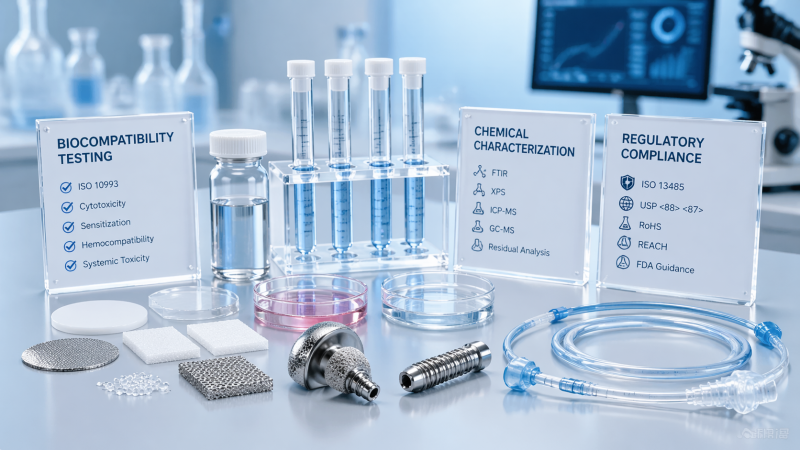
In medical product development, material biocompatibility tests are not just a regulatory checkbox—they directly shape safety, reliability, and procurement confidence. For teams evaluating wearable healthcare technology, orthopedic implants manufacturer capabilities, or broader healthcare compliance solutions, knowing which tests truly matter helps reduce risk, control medical technology cost, and align with evolving medical equipment safety standards.
For information researchers, device operators, procurement specialists, and business decision-makers, the challenge is rarely the existence of biocompatibility data. The real issue is determining whether the right tests were selected, whether the test plan matches the device’s patient-contact profile, and whether the final evidence is strong enough for supplier qualification, regulatory review, and long-term clinical use.
At VitalSync Metrics (VSM), this question sits at the center of technical benchmarking. In a market where one material change can trigger revalidation, delayed launch timelines, or additional MDR/IVDR scrutiny, understanding which material biocompatibility tests matter most is essential for engineering teams and procurement leaders alike.
Why biocompatibility testing is a core decision factor
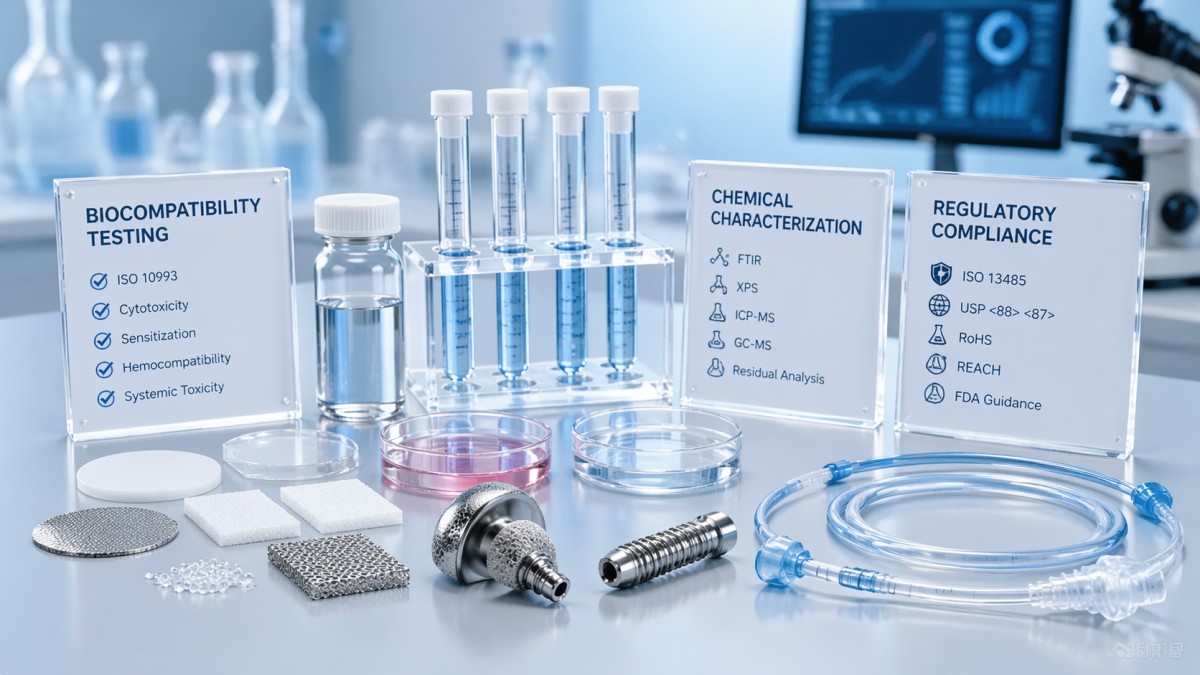
Biocompatibility testing evaluates how a material interacts with the human body under actual or simulated conditions of use. In practical terms, it helps answer 3 fundamental questions: Will the material cause harm, does the manufacturing process leave hazardous residues, and will performance remain acceptable over repeated or prolonged contact?
This matters across multiple healthcare categories. A skin-contact wearable patch may require a different evidence package than a blood-contact catheter, and both differ significantly from an orthopedic implant designed for 5-10 years of service. The risk profile changes with contact type, duration, surface area, sterilization method, and patient population.
For procurement teams, the absence of the right test can create hidden cost. A lower quoted component price may later be offset by 2-6 weeks of additional laboratory work, repeat batch testing, document remediation, or supplier change controls. For operators and end users, incomplete testing can translate into skin irritation, inflammatory response, device recalls, or shortened replacement cycles.
From a compliance standpoint, most mature evaluation plans align with ISO 10993-based risk assessment principles rather than a one-size-fits-all checklist. That means test selection should begin with intended use, body contact category, and contact duration, typically grouped as limited exposure, prolonged exposure, or permanent contact.
The 4 variables that change the test strategy
- Contact type: intact skin, breached tissue, blood path, bone, mucosal surface, or indirect contact.
- Contact duration: less than 24 hours, 24 hours to 30 days, or more than 30 days.
- Material state: solid, coating, adhesive, polymer blend, metal alloy, or degradable composite.
- Process influence: sterilization, cleaning chemistry, additive manufacturing residues, or packaging interactions.
These variables explain why a “complete” test package for one device may still be inadequate for another. A supplier offering only generic test summaries without device-specific rationale often creates risk rather than confidence.
Which material biocompatibility tests matter most by device risk profile
Not every test matters equally in every project. The most important material biocompatibility tests are those that match real patient exposure and realistic failure modes. In many B2B sourcing decisions, the best starting point is to separate baseline screening tests from deeper toxicological and long-term studies.
For many medical devices, 5 baseline evaluations repeatedly drive early qualification decisions: cytotoxicity, sensitization, irritation or intracutaneous reactivity, chemical characterization, and extractables/leachables review. These tests often reveal whether a material is broadly suitable before investment moves into longer and more expensive studies.
For higher-risk applications such as implants, blood-contact disposables, and devices with prolonged exposure, additional endpoints may become essential. These commonly include systemic toxicity, hemocompatibility, genotoxicity, implantation studies, and sometimes subacute, subchronic, or chronic toxicity assessments depending on the exposure duration.
The table below helps non-laboratory stakeholders understand which tests are usually most decision-critical in common healthcare product categories.
A key takeaway is that cytotoxicity alone is never enough for medium- or high-risk devices. It is useful as an early filter, but it does not replace testing for blood interaction, chronic tissue response, or chemical migration over time.
Baseline tests that often influence early supplier screening
Cytotoxicity
This is often the first pass/fail screen because it detects whether material extracts damage cultured cells. Turnaround may be around 5-10 business days in many laboratory settings, making it useful for rapid down-selection of candidate materials.
Sensitization and irritation
These endpoints matter especially for skin-contact devices, wound products, and repeated-use wearables. A material can be non-cytotoxic yet still produce unacceptable localized response after repeated exposure over 7, 14, or 30 days of real-world use.
Chemical characterization
For modern procurement, chemical characterization is increasingly central because it identifies what can migrate from the material. It is often more informative than relying on generic resin declarations, especially when pigments, processing aids, coatings, or sterilization byproducts are involved.
How to select the right test plan without overspending
One of the most common purchasing mistakes is paying for a broad testing battery before confirming whether the material and manufacturing route are stable. An efficient approach typically starts with a gap assessment, then a targeted test matrix, and only then full verification. This 3-step sequence can reduce unnecessary repeats and improve launch timing.
A practical review should compare 4 evidence layers: raw material declarations, process chemistry, finished-device exposure conditions, and previous validated data from equivalent use cases. If any one of these layers changes—for example, a new adhesive, colorant, sterilization cycle, or additive manufacturing parameter—the original biocompatibility rationale may no longer be sufficient.
For medical technology cost control, the goal is not “the maximum number of tests.” The goal is the minimum defensible set of tests that matches actual risk. Over-testing can add 3-8 weeks and substantial lab spending, while under-testing creates regulatory questions, delayed tenders, and post-market exposure.
The selection framework below is especially useful for procurement directors, startup founders, and quality leaders comparing suppliers or reviewing whitepaper evidence.
If a supplier cannot clearly map test reports to these 3 factors, the evidence should be treated as incomplete. In many sourcing projects, document clarity is almost as important as test completion because ambiguous reports slow technical and legal review.
A practical 5-step review process
- Define contact category and duration in precise operational terms.
- Check whether the tested sample matches the marketed or sourced final form.
- Review chemical characterization before assuming biological equivalence.
- Identify process changes that occurred within the last 12-24 months.
- Decide whether bridging rationale is acceptable or fresh testing is required.
This approach is particularly valuable in healthcare compliance solutions where multiple component suppliers contribute to one finished system. A device can fail biocompatibility expectations even when every individual supplier claims acceptable raw material quality.
Common risk points in wearables, implants, and outsourced manufacturing
Different product categories fail in different ways. In wearable healthcare technology, problems often arise from adhesives, sweat exposure, friction, and long contact times that exceed the original design assumption. A patch tested for 8 hours may not remain low-risk when used 16-24 hours per day for several consecutive days.
In orthopedic implants manufacturing, the risk extends beyond the base alloy or polymer. Surface finish, passivation, porous structure, machining residue, cleaning validation, and wear debris all affect biological response. Two implants built from the same nominal material may not present the same patient risk if one has different surface energy or particulate burden.
In outsourced manufacturing, teams often over-rely on legacy reports. A report generated 3 years ago on a previous production line, different sterilization route, or earlier resin supplier may no longer support current procurement claims. This is a frequent gap when startups scale from prototype runs to commercial manufacturing.
The issue is not only regulatory. It affects purchasing resilience. If a hospital or OEM qualifies a vendor based on incomplete evidence, any later nonconformance can trigger supplier substitution, emergency retesting, and delayed deployment across multiple sites.
4 common misconceptions that create avoidable risk
- Assuming “medical grade” automatically means biocompatible in every finished-device configuration.
- Using raw material certificates as a substitute for finished-product extractables review.
- Ignoring sterilization effects such as EO residues, radiation changes, or heat-induced degradation.
- Believing substantial equivalence removes the need for updated risk-based evidence after process change.
Risk indicators procurement teams should flag early
Ask whether the test article came from pilot, validation, or full production. If the answer is unclear, confidence should drop. Also confirm whether testing covered worst-case conditions such as maximum contact duration, post-sterilization state, and highest additive concentration.
Another useful indicator is change-control maturity. Suppliers serving regulated healthcare programs should be able to define notification triggers, often within 30-90 days before a significant material or process change reaches shipped product.
What buyers and technical teams should request from suppliers
A strong supplier package should go beyond a pass/fail claim. Buyers should request a test summary, intended-use mapping, sample description, extraction rationale, processing details, and any toxicological interpretation used to justify omitted endpoints. Without that context, comparison across vendors becomes inconsistent.
For enterprise decision-makers, the best documents are those that connect engineering facts to sourcing decisions. That means test evidence should help answer whether the material is scalable, whether batch-to-batch risk is controlled, and whether future line transfers or dual sourcing will require partial requalification.
For operators and end users, usability also matters. A biocompatible material that performs poorly under cleaning cycles, repeated bending, or skin moisture can still create operational failure. Testing should therefore be reviewed alongside durability, fatigue, residue control, and medical equipment safety standards relevant to the application.
Below is a practical supplier request checklist that supports better benchmarking and faster qualification decisions.
In many cases, the most valuable supplier is not the one with the lowest unit price, but the one that can provide a technically coherent evidence package with fewer review cycles. That directly supports faster tenders, cleaner audits, and more predictable lifecycle cost.
FAQ for buyers and product teams
How long does a typical biocompatibility evaluation take?
A focused screening package may take 2-4 weeks, while broader programs for implantable or blood-contact devices can extend to 6-12 weeks or longer depending on endpoint selection, sample preparation, and whether toxicological review is needed.
Can existing data be reused after a material or process change?
Sometimes, but only if the change is shown to be non-impacting through documented risk assessment and chemical or process equivalence. Even a small formulation or sterilization change may require bridging data or partial retesting.
What should procurement prioritize when comparing orthopedic implants manufacturers?
Look beyond alloy declarations. Review surface treatment consistency, particulate control, cleaning validation, wear-related evidence, and how the manufacturer links biological safety data to the final implant geometry and finishing process.
Material biocompatibility tests matter most when they reflect real exposure, real manufacturing conditions, and real procurement risk. For wearables, that often means irritation, sensitization, and chemical characterization. For blood-contact devices and implants, the evidence must go deeper into hemocompatibility, toxicology, implantation response, and process-linked chemical risk.
For healthcare organizations and MedTech suppliers, the strongest strategy is a risk-based, document-ready testing plan tied to supplier controls, lifecycle change management, and clear technical benchmarking. VitalSync Metrics (VSM) helps decision-makers turn fragmented lab data into procurement-grade engineering insight. To evaluate a material, compare supplier evidence, or build a more defensible compliance pathway, contact us to discuss a tailored benchmarking or healthcare compliance solution.
- additive manufacturing
- surface treatment
- EMS
- ESS
- medical devices
- PPE
- healthcare technology
- orthopedic implants
- EdTech
- procurement
- AR
- production line
- Cement
- benchmarking
- orthopedic implants
- medical technology
- medical equipment
- technical benchmarking
- healthcare technology
- healthcare compliance
- Material Biocompatibility
- Packaging
- medical technology cost
- medical equipment safety standards
- wearable healthcare technology
- healthcare compliance solutions
- orthopedic implants manufacturer
Recommended News
- 2026.04.24Medical technology cost: where budgets go wrongDr. Alistair Thorne (Senior Biomedical Engineer)
- 2026.04.24Packaging choices that protect sterile instrumentsDr. Julian Rossi (RehabTech Specialist)
- 2026.04.24Mobility assist devices: which option fits bestSarah Jenkins (Laboratory Infrastructure Consultant)
The VitalSync Intelligence Brief
Receive daily deep-dives into MedTech innovations and regulatory shifts.