
Wholesale medical endoscopes China offers, but quality varies fast
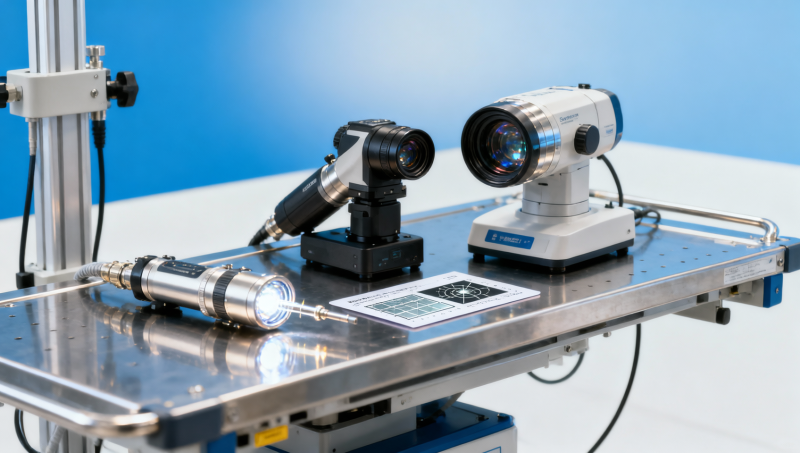
Wholesale medical endoscopes China suppliers offer wide price and feature ranges, but true procurement success depends on verified endoscope image resolution benchmark data, medical device certification, MDR certification, and hospital equipment standards. For buyers, operators, and decision-makers, this guide explains how to assess healthcare compliance, compare medical equipment standards, and reduce sourcing risk with evidence-based medical device assessment.
In practical sourcing, the largest gap is rarely the catalog price alone. It is the difference between a device that looks acceptable in a quotation sheet and one that performs consistently in a clinical workflow over 12 to 36 months. For hospital procurement teams, distributors, and MedTech startups building procedure systems, that gap affects reprocessing, uptime, image quality, staff training, and regulatory exposure.
China remains a major manufacturing base for rigid endoscopes, flexible scopes, camera heads, light sources, and accessory systems. Yet supply-side diversity creates a validation problem: two products with similar listed specifications may differ sharply in optical transmission, distal tip durability, sealing reliability, and documentation completeness. This is where benchmark-driven assessment becomes more valuable than sales language.
For organizations seeking technical clarity, VitalSync Metrics (VSM) focuses on engineering truth rather than promotional claims. The goal is not simply to identify a low-cost supplier, but to help decision-makers build a procurement framework that aligns image performance, compliance evidence, maintenance burden, and long-term operational risk.
Why wholesale medical endoscopes from China require deeper technical screening
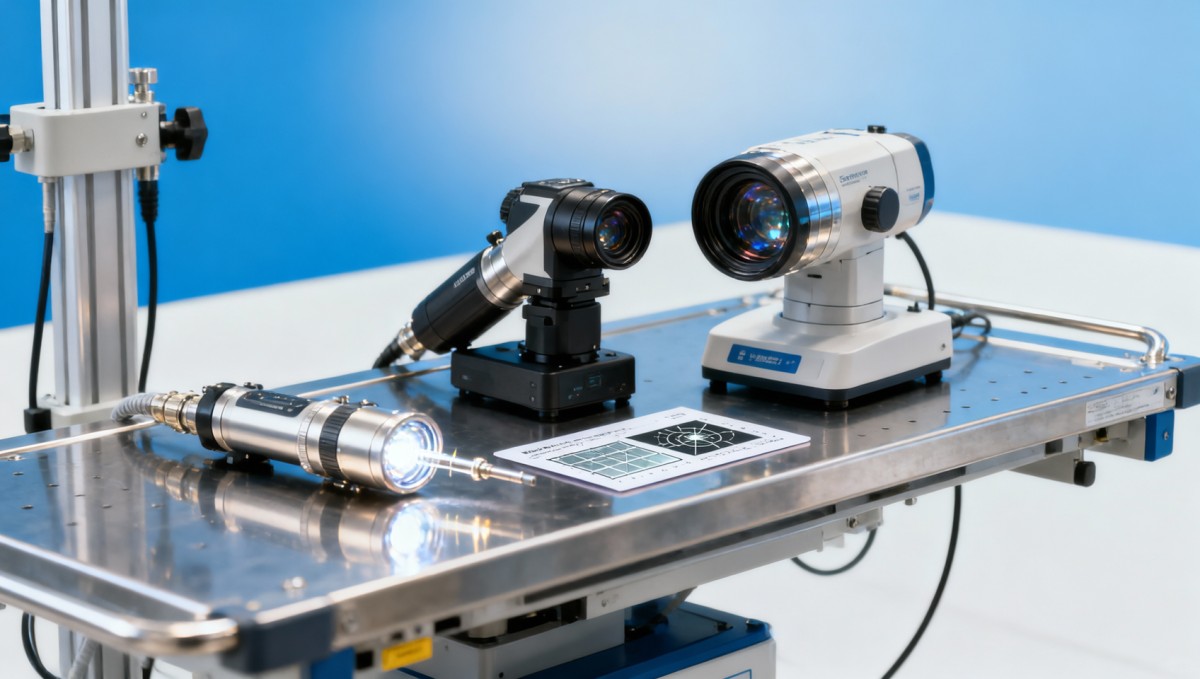
The Chinese endoscope supply market covers multiple tiers of manufacturers, from OEM factories producing stable export-grade assemblies to trading companies with limited control over component traceability. In a single sourcing round, buyers may see quotations that differ by 20% to 60% for what appears to be the same category of endoscope system. That spread often reflects hidden differences in lens coating, insertion tube materials, camera sensor quality, and final inspection discipline.
For users and operators, the issue becomes visible in day-to-day performance. A scope with insufficient illumination uniformity can reduce visibility in narrow anatomy. A unit with weak sealing or poor articulation endurance may pass an incoming inspection but fail after 50 to 200 cycles of use and reprocessing. These failures are costly because they interrupt procedure scheduling and increase repair dependence.
For procurement personnel, the commercial risk extends beyond hardware. Documentation gaps around CE-related technical files, MDR alignment, sterilization validation, biocompatibility declarations, or electrical safety reports can delay import clearance and hospital approval. A low purchase price becomes far less attractive if the total acquisition timeline expands from 4 weeks to 10 or 12 weeks due to unresolved compliance questions.
Decision-makers therefore need a layered review model that checks not only the product itself, but also the supplier’s manufacturing maturity, quality records, and capacity to support post-sale service across multiple regions.
Core reasons visible specification sheets are not enough
- Listed resolution such as 1080p or 4K does not confirm true end-to-end image clarity through the optical chain.
- A stated service life does not prove bending section fatigue resistance under repeated clinical use.
- General certification language may omit product-family scope, intended use limitations, or market-specific compliance gaps.
- Accessory compatibility claims may not include validated light source, camera control unit, or sterilization workflow matching.
High-risk mismatch areas in wholesale sourcing
A common issue is mismatch between promotional positioning and actual clinical fit. A model marketed for multi-department use may perform adequately in routine observation but not in high-detail applications where color rendering, edge sharpness, and low-light visibility matter. Another frequent mismatch appears in repairability. Some lower-cost systems require full module replacement rather than targeted repair, increasing lifecycle cost by 15% to 30% over 2 years.
The table below summarizes the most important screening dimensions before requesting samples or placing a trial order.
The key conclusion is simple: wholesale medical endoscopes China offers can be commercially attractive, but procurement should start with a technical validation matrix. This reduces the likelihood of selecting a system that performs well in a demo room but poorly in real healthcare workflows.
How to evaluate image resolution, durability, and hospital-use fitness
Image quality is one of the most misunderstood parameters in endoscope sourcing. Buyers often focus on advertised output resolution, but actual clinical visibility depends on at least 4 linked factors: optical transmission, sensor sensitivity, illumination consistency, and display integration. A 1080p system with strong optics may outperform a nominally higher-spec system if the lens assembly and light path are better controlled.
For benchmarking, ask for evidence from controlled test setups. Relevant checks may include central and edge sharpness comparison, color rendering under standard illumination, geometric distortion, and low-light noise behavior. If sample evaluation is possible, compare devices under the same monitor, same light source setting, and same target distance, ideally across 3 to 5 repeat observations rather than a single demonstration.
Durability deserves equal attention. For reusable medical endoscopes, lifecycle stability can be influenced by insertion tube reinforcement, distal window bonding, connector locking strength, and resistance to repeated cleaning cycles. Even when exact cycle counts vary by product family, buyers should seek evidence of repeated-use simulation, leak testing consistency, and repair history visibility. A product with lower initial cost may create 2 to 3 times more service events per year if the mechanical design is immature.
Hospital-use fitness also includes workflow compatibility. A technically acceptable scope may still be a poor procurement choice if it lacks validated reprocessing instructions, standard connector compatibility, or operator-friendly ergonomics for sessions lasting more than 30 minutes.
Practical benchmark questions before sample approval
- Is image clarity documented at center and edge fields, not just screen output specification?
- Has the supplier defined acceptable leakage, articulation, and connector wear thresholds?
- Are reprocessing instructions aligned with the intended sterilization or disinfection route?
- Can the supplier support replacement parts or service within 7 to 15 working days?
Recommended evidence package for comparison
The following comparison model helps procurement teams score multiple offers using measurable rather than subjective criteria.
A procurement team that evaluates these 4 dimensions together will usually make a more resilient decision than a team comparing camera pixels or quotation totals alone. This is especially important when sourcing across borders, where service turnaround and documentation quality are as important as product performance.
Compliance, MDR readiness, and documentation buyers should request
For medical endoscope procurement, compliance is not a checkbox that sits separately from product quality. It is part of the product’s market usability. Buyers should distinguish between broad claims such as “export compliant” and actual market-ready documentation that supports hospital evaluation, distributor onboarding, and regulatory review. In Europe-facing projects, MDR relevance is particularly important because legacy documentation may not be enough for current procurement standards.
At minimum, buyers should request a structured technical document set. This usually includes intended use definition, product classification support, safety and performance reports, labeling and IFU samples, sterilization or disinfection instructions where applicable, and declarations related to materials or biocompatibility. If a supplier cannot organize these materials within 5 to 10 working days, that is often a signal of weak document control.
MDR-related review should also consider lifecycle responsibilities. Hospitals and importers increasingly want clarity on post-market handling, complaint pathways, traceability, and change notification. A manufacturer may have acceptable hardware but still create procurement friction if engineering changes are poorly documented or serial traceability is inconsistent across production batches.
For operators and users, documentation matters because it shapes safe use. Incomplete IFU content, vague cleaning instructions, or unclear compatibility notes can increase procedural and reprocessing risk even when the device itself appears functional.
Documents worth reviewing before final supplier selection
- Product description with intended use and configuration boundaries.
- Applicable conformity documentation and market-specific declarations.
- Electrical safety and performance testing summaries where relevant to the system.
- Cleaning, disinfection, and storage instructions linked to real operating conditions.
- Complaint handling and traceability process for batch or serial management.
How VSM-style assessment strengthens buyer confidence
An evidence-led assessment approach helps separate complete suppliers from presentation-led suppliers. When manufacturing parameters, inspection logic, and documentation discipline are benchmarked together, procurement decisions become more defendable internally. That matters for enterprise decision-makers who need to justify vendor approval, capital equipment planning, or cross-border sourcing strategy to finance, compliance, and clinical teams at the same time.
A useful review model is to rate each supplier on 3 bands: technical integrity, compliance completeness, and service continuity. Even a simple scoring method from 1 to 5 per band can quickly reveal whether a low-quote supplier is genuinely efficient or merely incomplete.
Procurement workflow: from supplier shortlist to accepted delivery
A disciplined workflow can reduce sourcing risk significantly. In many organizations, endoscope procurement moves too quickly from quotation request to price negotiation, skipping the validation stages that matter most. A better process usually follows 5 steps: requirement definition, document screening, sample or demo validation, supplier capability review, and incoming acceptance planning. When these steps are compressed or ignored, hidden risk often appears after delivery rather than before purchase.
Requirement definition should map the endoscope to its actual use case. A central sterile department, outpatient clinic, surgery suite, and training lab may each need different priorities. Some need high image consistency; others need low repair burden; others need broad accessory compatibility. This front-end alignment often saves 2 to 4 weeks of rework later in the procurement cycle.
Sample review should involve both technical and user perspectives. Procurement may assess documentation and service terms, while operators assess ergonomics, cable handling, connector security, and real viewing comfort. If possible, create a scorecard using 8 to 12 weighted criteria so price does not dominate the final decision without context.
Incoming acceptance is the final filter. It should confirm packaging integrity, labeling consistency, visual condition, accessories, documentation, and basic functionality before the device enters normal use. For reusable systems, an initial leak check and compatibility confirmation are practical safeguards.
Suggested sourcing and acceptance sequence
- Define clinical scenario, budget range, and required standards.
- Collect quotations and request complete document packages from at least 3 suppliers.
- Run technical comparison and sample-based review using a fixed score matrix.
- Clarify warranty, spare parts lead time, and repair response before order release.
- Perform incoming inspection within the first 24 to 72 hours after receipt.
Common procurement mistakes to avoid
One common mistake is using generic RFQ language without defining the exact procedure environment. Another is approving a supplier based on catalog similarity to an incumbent model without validating optical and reprocessing performance. A third is overlooking service logistics. If spare parts are only available through a 4 to 8 week international route, even minor repairs can interrupt department throughput and reduce equipment availability.
A structured workflow transforms wholesale medical endoscopes China sourcing from a price-shopping exercise into a risk-managed procurement program. That shift is especially valuable for growing healthcare groups and distributors building longer-term portfolios.
FAQ: practical questions from buyers, operators, and decision-makers
How do I compare two endoscope suppliers with similar prices?
Use a comparison sheet with at least 4 weighted areas: image performance, compliance documentation, durability evidence, and after-sales support. If the prices differ by less than 10%, service response time and documentation quality often become stronger decision factors than nominal hardware features.
What is a reasonable lead time for wholesale medical endoscopes from China?
Lead time depends on configuration and stock status, but many standard projects fall in the 2 to 6 week range for production and dispatch. Custom branding, special accessory bundles, or expanded documentation review can add 1 to 3 extra weeks. Buyers should also ask whether spare parts ship separately or with the main lot.
Which indicators matter most for operators?
Operators usually care most about visualization stability, handling comfort, connector security, ease of cleaning, and repeatable performance over time. In practice, a system that reduces glare, improves edge visibility, and feels balanced in hand may be preferred over a more aggressively marketed unit with higher headline specifications.
When should a buyer involve an independent benchmarking partner?
Independent review is especially useful when entering a new supplier region, qualifying a private-label program, or comparing several manufacturers with inconsistent documentation quality. It is also valuable for enterprise procurement teams that need engineering-backed justification for supplier approval, tender design, or product portfolio standardization.
Wholesale medical endoscopes from China can offer strong commercial opportunity, but only when supported by disciplined technical review, documentation control, and lifecycle thinking. Buyers should look beyond headline price and stated resolution to assess benchmarked image quality, compliance readiness, service responsiveness, and real hospital-use fit.
For information researchers, operators, procurement teams, and business decision-makers, an evidence-based sourcing model creates more reliable outcomes and fewer surprises after delivery. VitalSync Metrics supports this approach by turning manufacturing and performance signals into practical evaluation insight that helps teams source with greater clarity and confidence.
If you need a more rigorous framework for comparing suppliers, validating technical integrity, or reducing sourcing risk in medical endoscope procurement, contact us to discuss your project, request a tailored assessment path, or explore more healthcare technology benchmarking solutions.
- EMS
- ESS
- PPE
- healthcare technology
- EdTech
- procurement
- AR
- Cement
- procurement standards
- benchmarking
- MDR certification
- hospital equipment standards
- medical device assessment
- medical equipment standards
- technical integrity
- medical equipment
- hospital procurement
- engineering truth
- manufacturing parameters
- medical device certification
- healthcare technology
- healthcare compliance
- Packaging
- wholesale medical endoscopes china
- endoscope image resolution benchmark
Recommended News
- 2026.04.23Low-Altitude Economy Enters Scale-Up Year: eVTOL Infrastructure & Vital Sign SensingLydia Vancini (Regulatory Compliance Lead)
- 2026.04.23Lianyirong, ABC Shanghai Dongfang Hub Branch Close Two e-NI TransactionsDr. Hideo Tanaka (Imaging Systems Analyst)
- 2026.04.23China’s April 2026 LPR Set at 3.0% (1Y) and 3.5% (5Y+): Implications for Medical Device Export Financing
The VitalSync Intelligence Brief
Receive daily deep-dives into MedTech innovations and regulatory shifts.