
When Sheet Metal Brackets Fail in Robotics Assemblies
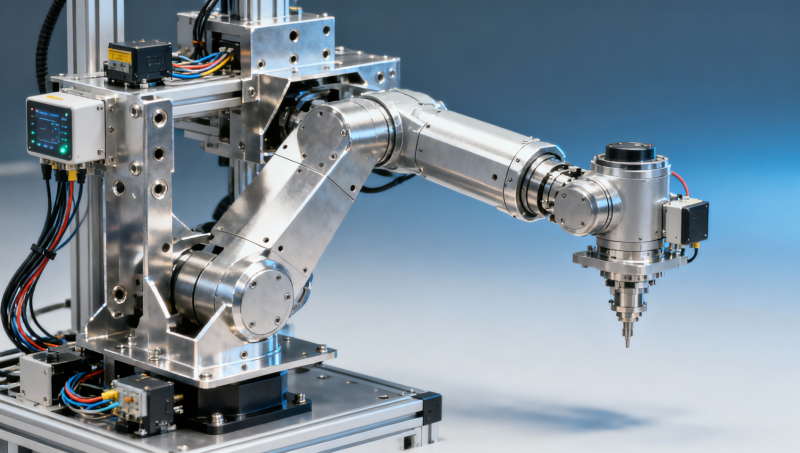
When a sheet metal bracket fails in a robotics assembly, the impact can ripple through precision, uptime, and safety. For buyers comparing sheet metal cost, evaluating a sheet metal manufacturer or sheet metal supplier, and engineers reviewing sheet metal fabrication quality, understanding failure causes is essential. This article explores how sheet metal forming, sheet metal bending, and material decisions affect real-world reliability in complex automated systems.
In healthcare automation, bracket reliability is not a minor mechanical detail. A poorly designed support in a lab robot, diagnostic analyzer, dispensing arm, or imaging subassembly can shift tolerances by fractions of a millimeter, yet those small deviations may affect sensor alignment, repeatability, and service intervals. For procurement teams and technical decision-makers, the right question is not only who offers the lowest sheet metal cost, but which supplier can demonstrate stable forming quality, traceable materials, and long-term fatigue performance.
For organizations navigating value-based procurement, bracket failure analysis also supports better vendor verification. A bracket that survives 3 months of pilot use but cracks after 12 to 18 months in continuous-duty robotics can create hidden downtime costs, emergency replacement cycles, and compliance concerns. That is especially relevant in MedTech and life sciences environments, where uptime, cleanliness, and predictable maintenance windows directly influence operational risk.
Why Sheet Metal Bracket Failure Matters in Robotics and Healthcare Automation
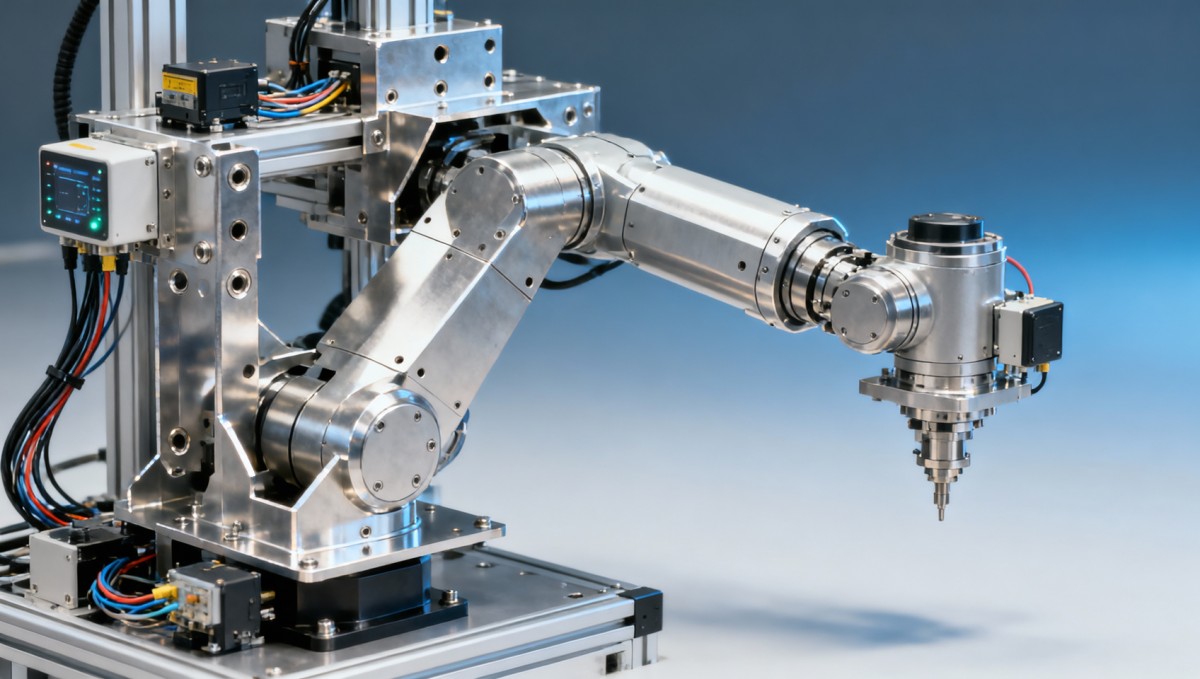
In robotics assemblies, sheet metal brackets often carry mixed loads rather than simple static weight. A single bracket may support 5 kg to 25 kg of equipment while also resisting vibration, torsion, start-stop acceleration, and cable drag. In hospital automation carts, laboratory handlers, and compact diagnostic devices, these loads repeat thousands of times per day, which makes fatigue resistance more important than headline tensile strength alone.
Failure usually appears first as drift, noise, or alignment instability before complete fracture. Operators may notice increased vibration, sensor misreads, or inconsistent robotic positioning in the range of ±0.3 mm to ±1.0 mm. For systems that require repeatability under ±0.1 mm, even a slight bracket deformation can cause process quality issues long before the component visibly breaks.
For procurement leaders, this means bracket evaluation should be connected to lifecycle cost. A low-price fabrication option may reduce upfront spend by 8% to 15%, but if the same part increases service calls, line stoppages, or revalidation events, the total cost of ownership rises quickly. In regulated or semi-regulated healthcare workflows, every mechanical instability can also trigger inspection burdens and longer restart timelines.
A reliable sheet metal supplier should therefore be assessed not only on quote speed and unit cost, but on process discipline. That includes bend radius control, burr management, flatness, fastening strategy, and consistency across batches of 100 to 5,000 parts. For engineering teams, the supplier’s ability to translate CAD intent into repeatable production is often the difference between nominal design performance and field failure.
Typical failure impact areas
- Motion accuracy loss in pick-and-place, dispensing, and sample handling systems.
- Increased maintenance frequency, often moving from quarterly checks to monthly corrective intervention.
- Noise and vibration growth that affects optical modules, sensors, or user confidence in equipment stability.
- Unexpected downtime that can delay lab throughput, scheduled testing, or equipment utilization planning.
Operational warning signs
Early warning signs include fastener loosening within 2 to 6 weeks, visible coating cracks near bend lines, edge distortion around mounting holes, and recurring recalibration requests. These symptoms often indicate that the problem is not isolated assembly error, but insufficient sheet metal fabrication robustness under cyclic loading.
The Most Common Root Causes of Bracket Failure
Most failures can be traced to a combination of design geometry, material selection, and fabrication control. In many robotics projects, the bracket looks structurally adequate in 3D models but performs poorly once real-world load direction changes, vibration, and fastening tolerances are introduced. A bracket intended for a static 10 kg support may fail early if dynamic shock loads reach 1.5 to 2.0 times the nominal design assumption.
Sheet metal bending is one of the most overlooked factors. When bend radii are too tight for the selected alloy and thickness, strain concentrates along the bend line. Over time, these zones become crack initiation points, especially in stainless steel parts formed without proper tooling control. For thin gauges such as 1.0 mm to 1.5 mm, even small deviations in bend consistency can affect stiffness and fatigue life.
Hole placement and edge distance also matter. A mounting hole too close to a bend or edge can reduce local strength, amplify stress around fasteners, and accelerate elongation under repetitive motion. In robotics assemblies with frequent acceleration and deceleration, this may lead to looseness after several hundred thousand cycles, even if the bracket passed initial installation inspection.
Another common cause is poor alignment between the bracket design and the manufacturing process. A part optimized only for lower sheet metal cost may omit stiffening ribs, use insufficient thickness, or rely on post-assembly correction. That approach can create hidden process variation, especially when parts come from multiple facilities or when prototypes are hand-adjusted but production batches are not.
Root cause comparison table
The table below outlines frequent bracket failure causes, how they appear in production or field use, and what buyers should verify when assessing a sheet metal manufacturer.
The practical takeaway is that bracket failure is rarely caused by a single defect. It is usually the result of stacked small compromises in geometry, forming, finishing, and inspection. That is why technical review before sourcing is more effective than reacting to field complaints later.
Design and fabrication mistakes that increase risk
- Choosing thickness based only on quoted sheet metal cost instead of dynamic stiffness requirements.
- Ignoring fatigue cycles when the bracket will experience continuous robotic motion for 8 to 24 hours per day.
- Placing bends, holes, and welds too close together, which creates stress concentration.
- Using prototype adjustments that cannot be repeated at production scale by the sheet metal supplier.
Material Choice, Forming Quality, and Tolerance Control
Material choice has a direct effect on fatigue life, corrosion resistance, and manufacturability. In healthcare-adjacent robotics, common options include stainless steel, cold-rolled steel, and aluminum alloys. Stainless steel offers corrosion resistance and cleanability, but higher springback can complicate sheet metal bending. Aluminum reduces weight, yet lower stiffness may require thicker sections or reinforcement to maintain positional accuracy.
Thickness alone is not enough. A 2.0 mm aluminum bracket may still deflect more than a 1.5 mm steel bracket under the same load case, depending on geometry and span length. For compact robotic modules, span lengths of 80 mm to 250 mm are common, and small changes in flange design or ribbing often improve rigidity more effectively than simply increasing gauge.
Tolerance control is especially important where brackets interface with motors, linear guides, optical heads, or sensor mounts. A flatness deviation of 0.5 mm may be acceptable in one cabinet application but unacceptable in a precision mechanism. Likewise, hole position tolerance, bend angle repeatability, and mating surface consistency should be tied to the actual assembly function, not just to generic fabrication standards.
For buyers evaluating a sheet metal manufacturer, the best indicator is often process transparency. Can the supplier explain tooling selection, inspection sampling, material traceability, and how they manage bend compensation? A credible partner should be able to discuss not only nominal dimensions but also process capability for repeat orders over 6 months to 24 months.
Material and application fit
The following comparison helps align material selection with robotics use cases, service conditions, and procurement priorities.
There is no universal best material. The correct decision depends on cleaning requirements, weight targets, vibration level, batch size, and expected service life. In practice, comparing two or three material-thickness combinations during early sourcing usually prevents expensive redesign later.
What tolerance questions should buyers ask?
- What bend angle repeatability can be held across a batch of 100 parts?
- How is flatness inspected for mounting faces that affect robotic alignment?
- What hole position tolerance is realistic after forming, not only before bending?
- Can the supplier provide first-article reports within 3 to 5 working days of pilot production?
How to Evaluate a Sheet Metal Supplier for Failure Prevention
Choosing a sheet metal supplier for robotics assemblies should combine commercial and technical review. Price remains important, but it should sit beside capability checks such as batch repeatability, forming expertise, inspection discipline, and responsiveness to engineering change. A vendor that is 10% cheaper but cannot control bend consistency or mounting feature accuracy may create far higher downstream costs.
For healthcare and life sciences applications, supplier evaluation should also include documentation maturity. Procurement teams may need material certificates, inspection records, revision traceability, and stable change control over 12-month to 36-month sourcing programs. This is where independent benchmarking and technical whitepaper-style review can add value by translating fabrication data into procurement-ready decision criteria.
A practical supplier audit should include design-for-manufacture feedback, sample validation, and pilot run observation. If a supplier can suggest changes that reduce crack risk, improve stiffness, or shorten lead time from 4 weeks to 2 weeks without lowering quality, that is a positive sign. If they only respond to drawings without challenging obvious risk points, buyers should be cautious.
For enterprise decision-makers, the best sourcing model often involves two stages: technical qualification first, commercial negotiation second. This prevents low-bid selection from locking the project into avoidable field failures. It also supports better internal alignment between engineering, operations, and purchasing teams.
Supplier evaluation checklist
The table below can be used as a working procurement framework when comparing sheet metal fabrication partners for robotic or medical automation assemblies.
This framework helps shift supplier conversations away from generic claims and toward measurable capability. It also gives purchasing teams a clearer basis for comparing quotes that may look similar on paper but differ significantly in process reliability.
Four questions to ask before placing a production order
- Has the bracket been reviewed for dynamic loading, not only static load capacity?
- Can the supplier show repeatable results on bend-critical features over at least 3 pilot batches?
- What is the corrective action timeline if out-of-tolerance parts are found after delivery?
- Are inspection and change-control records available for internal quality review?
Implementation, Maintenance, and Risk Reduction in Real Projects
Preventing bracket failure does not end at sourcing. Installation quality, torque control, vibration isolation, and maintenance planning all influence service life. In robotics assemblies operating 16 to 24 hours per day, a well-designed bracket can still fail early if fasteners are over-tightened, cable loads are unrestrained, or mating surfaces are uneven during installation.
A practical implementation plan should include three checkpoints: first-article approval, pilot assembly validation, and in-use inspection after the first 30 to 90 days. This sequence allows teams to catch deformation, settling, and unexpected load paths before full-scale deployment. For hospital and laboratory equipment, this is particularly useful because service access constraints often appear only after the unit is placed in a real workflow environment.
Maintenance teams should inspect not only the bracket itself but the surrounding mechanical system. Repeated loosening, coating wear, or edge contact marks may point to broader vibration issues in the robot arm, actuator, or mounting frame. In many cases, bracket replacement solves the symptom but not the root cause. Cross-functional review between operators, technicians, and sourcing teams can reduce repeat failures significantly.
For organizations relying on technical benchmarking, documenting these findings in a standardized review format supports future procurement decisions. It becomes easier to compare suppliers, set acceptance thresholds, and decide whether a higher initial unit price is justified by better long-term reliability. This aligns closely with data-driven sourcing models used in healthcare technology programs.
Recommended risk-reduction workflow
- Define critical dimensions and load cases before RFQ issuance, including vibration and duty-cycle assumptions.
- Request a pilot batch and inspect at least 5 key features tied to alignment, fastening, and bend integrity.
- Validate the bracket in real operating conditions for 2 to 6 weeks before scaling to volume production.
- Set a maintenance review interval, such as every 3 months or every 500,000 cycles, depending on duty profile.
FAQ for buyers and engineering teams
How do I know if low sheet metal cost is creating hidden reliability risk?
Look for signs such as missing material traceability, vague tolerance commitments, no first-article reporting, and limited discussion of fatigue or bend quality. If a supplier cannot explain how they control repeatability across 100 to 1,000 parts, the lower price may reflect unaccounted process risk rather than true efficiency.
Which brackets need the most careful validation in robotics assemblies?
Brackets supporting sensors, linear motion systems, imaging components, cable carriers, and motor-adjacent structures usually need the closest review. These positions are sensitive to vibration, alignment drift, and cyclic loading, so even small fabrication variation can affect system performance.
What pilot quantity is reasonable before volume production?
A pilot run of 10 to 30 parts is often enough to confirm forming consistency, fit, and assembly behavior, especially when paired with dimensional inspection and short-term functional testing. Larger pilot volumes may be useful when the bracket includes multiple bends, welded features, or cosmetic finish requirements.
How long should bracket performance be observed before full approval?
For many automated systems, 30 to 90 days of monitored operation can reveal early loosening, deformation, and vibration-related issues. If the equipment runs high duty cycles or performs safety-critical functions, longer validation windows may be justified before final supplier lock-in.
Sheet metal bracket failure in robotics assemblies is rarely just a mechanical nuisance. It is a sourcing, design, and lifecycle management issue that affects uptime, precision, and procurement confidence. By reviewing sheet metal forming quality, bend strategy, material choice, inspection rigor, and supplier capability together, organizations can reduce avoidable failures and make more defensible purchasing decisions.
For healthcare automation, lab systems, and MedTech equipment programs, a data-driven evaluation model brings additional value. It helps decision-makers compare suppliers beyond marketing claims, define meaningful acceptance criteria, and align engineering performance with long-term reliability goals. To discuss bracket risk assessment, supplier benchmarking, or a more structured technical review process, contact us to get a customized solution and explore more reliability-focused sourcing strategies.
- EMS
- ESS
- PPE
- healthcare technology
- life sciences
- EdTech
- procurement
- AR
- metal fabrication
- sheet metal
- sheet metal fabrication
- sheet metal bending
- sheet metal forming
- sheet metal bracket
- sheet metal supplier
- sheet metal manufacturer
- sheet metal cost
- Cement
- benchmarking
- value-based procurement
- technical benchmarking
- life sciences
- long-term reliability
- data-driven
- healthcare technology
- Robotics
Recommended News
- 2026.04.20What Sheet Metal Fabrication Buyers Should Ask in 2026Dr. Julian Rossi (RehabTech Specialist)
- 2026.04.20Are Sheet Metal Parts Worth It for Mobility DevicesSarah Jenkins (Laboratory Infrastructure Consultant)
- 2026.04.20How to Source Sheet Metal Enclosures Without DelaysDr. Hideo Tanaka (Imaging Systems Analyst)
The VitalSync Intelligence Brief
Receive daily deep-dives into MedTech innovations and regulatory shifts.