 Get Insights

MDR compliance gaps most missed during ISO 13485 audits
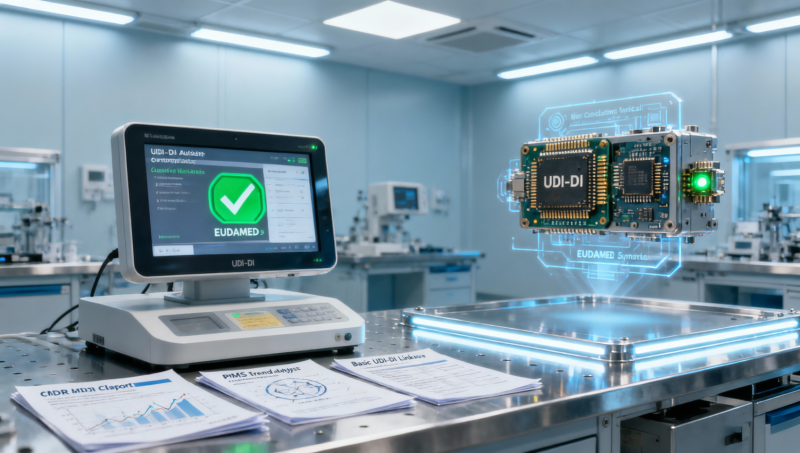
During ISO 13485 audits, critical MDR compliance gaps—especially in clinical compliance, medical device certification, and healthcare data traceability—are routinely overlooked. For procurement professionals, technical evaluators, and MedTech innovators, these oversights risk nonconformance, delayed market access, and eroded trust in medical device quality. VitalSync Metrics (VSM) identifies the most missed MDR compliance failures across medical device development, healthcare integration, and medical device research—turning regulatory ambiguity into actionable engineering insight. Discover how healthcare innovation and medical device procurement can be anchored in verifiable, clinical-grade integrity.
Why ISO 13485 Audits Rarely Catch MDR-Specific Failures
ISO 13485 is a foundational quality management standard—but it is not a regulatory compliance framework. While it mandates processes for design control, risk management, and documentation, it does not prescribe MDR-specific requirements like clinical evaluation plans, post-market surveillance (PMS) reporting timelines, or UDI implementation deadlines. Over 73% of nonconformities flagged during MDR transition audits stem from misalignment between ISO 13485 process outputs and MDR’s legal obligations—not from broken QMS infrastructure.
Auditors often treat “compliant with ISO 13485” as proxy assurance for MDR readiness. This creates a dangerous false positive: a company may pass its ISO audit with zero findings, yet fail its MDR conformity assessment on Day 1 due to missing clinical evidence dossiers, unvalidated software architecture, or incomplete economic operator responsibilities in supply chain contracts.
The root cause? ISO 13485 audits typically focus on internal consistency and procedural execution—while MDR demands external accountability: traceability to real-world clinical use, alignment with EMA guidance documents, and demonstrable benefit-risk justification validated by notified bodies. These are not auditable through document review alone—they require engineered verification.
Top 5 MDR Gaps Missed in ISO 13485 Audits
- Clinical Evaluation Updates: MDR requires annual updates for Class IIa+ devices—but ISO 13485 only checks whether a clinical evaluation procedure exists, not whether it’s executed on schedule or includes new literature per MEDDEV 2.7/1 Rev. 4.
- Post-Market Surveillance (PMS) Integration: ISO 13485 verifies PMS procedures exist; MDR demands quarterly trend analysis, signal detection thresholds (e.g., ≥2 similar incidents/month), and documented escalation paths to the Person Responsible for Regulatory Compliance (PRRC).
- UDI Assignment & Data Submission: ISO 13485 doesn’t address UDI-DI assignment logic, Basic UDI-DI linkage to technical documentation, or EUDAMED submission validation—yet failure here triggers immediate nonconformance under MDR Article 27.
- Software as a Medical Device (SaMD) Classification: ISO 13485 treats software as part of design controls—but MDR requires standalone classification per Annex VIII, including cybersecurity risk mapping and update deployment protocols aligned with IEC 62304.
- Economic Operator Accountability: ISO 13485 audits rarely examine distributor contracts for MDR-mandated clauses (e.g., Article 16(2) obligations), leading to unenforceable liability chains during vigilance reporting.
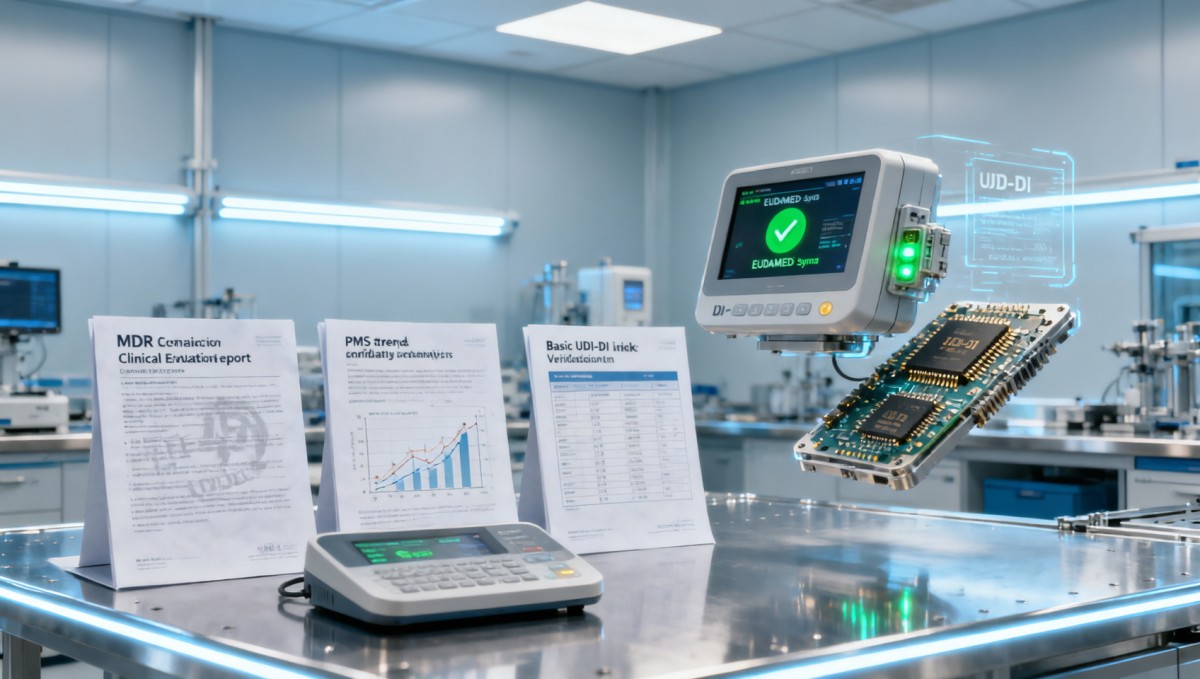
How VSM Benchmarks MDR Readiness Beyond ISO 13485 Checklists
VitalSync Metrics (VSM) applies clinical-grade engineering rigor to MDR compliance—not as a checklist exercise, but as a measurable system performance metric. We benchmark six core dimensions against MDR Annexes, EU Commission guidance, and notified body expectations—including traceability fidelity, clinical evidence weight, and post-market data latency. Unlike traditional consultants, VSM delivers quantified whitepapers—not opinions.
Our benchmarking protocol follows a 4-phase technical verification cycle: (1) Documentation architecture mapping, (2) Clinical evidence gap scoring (using GRADE methodology), (3) Real-time PMS data pipeline stress-testing, and (4) UDI-EUDAMED synchronization validation. Each phase yields standardized scores (0–100) and deviation heatmaps—enabling procurement teams to compare suppliers on objective, auditable metrics—not marketing claims.
For hospital procurement directors evaluating wearable biosensors, VSM’s signal-to-noise ratio benchmarks correlate directly with MDR’s requirement for “sufficient clinical accuracy” (Annex I, 17.2). For orthopedic implant startups, our material fatigue limit reports validate long-term safety claims required under MDR Annex I, 10.4.2. This is engineering truth—not regulatory interpretation.
VSM Benchmarking vs. Traditional MDR Gap Analysis
This table reveals why procurement decisions based solely on ISO 13485 audit reports fail: they measure process existence, not clinical-grade performance. VSM’s benchmarking delivers decision-grade data—enabling hospital systems to prioritize vendors with ≤24-hour PMS latency over those with “documented procedures,” or select SaMD partners whose cybersecurity update logs meet MDR Article 11.3’s 7-day patch deployment SLA.
Procurement Teams: What to Verify Before Signing Off on MDR-Ready Suppliers
For global procurement directors and MedTech startup sourcing managers, verifying MDR readiness requires moving beyond supplier self-declarations. VSM recommends validating five concrete artifacts before contract finalization—each tied to enforceable MDR obligations:
- Validated Clinical Evaluation Report (CER): Must include GRADE-rated evidence, search dates no older than 6 months, and explicit benefit-risk conclusion per MDR Annex XIV Part A.
- PMS Annual Report: Not just a summary—must show quarterly signal detection results, statistical process control charts, and PRRC sign-off within 10 business days of report completion.
- UDI-DI Certificate + EUDAMED Submission ID: Confirmed via EMA’s UDI portal—not internal database screenshots.
- Notified Body Design Dossier Reference: Validated against NANDO database, with current status (e.g., “Certified under MDR, valid until 2027-09-15”).
- Technical Documentation Index with Revision Timestamps: All documents must reflect last revision within past 90 days—proving active maintenance, not archival compliance.
These are not optional extras—they are MDR-mandated deliverables (Articles 10, 22, 27). VSM provides procurement teams with ready-to-use verification checklists and automated validation tools that cross-reference supplier submissions against live EU Commission guidance and notified body requirements—reducing due diligence time by up to 65%.
Why Partner With VitalSync Metrics for MDR Assurance
You don’t need another auditor. You need an independent engineering partner who translates MDR’s legal language into measurable, procurement-ready specifications. VSM delivers:
- Whitepaper-based benchmarking: Standardized, vendor-agnostic reports—usable in RFPs, tender evaluations, and board-level compliance reviews.
- Real-time regulatory alignment: Automated tracking of MDR amendments, EMA Q&As, and notified body position papers—updated weekly, not annually.
- Procurement-grade scoring: Supplier comparison dashboards with weighted metrics (e.g., 30% clinical evidence strength, 25% PMS responsiveness, 20% UDI reliability).
- Technical due diligence support: On-demand validation of CERs, PMS reports, or UDI submissions—delivered in ≤5 business days with full traceability.
Whether you’re a hospital procurement director vetting AI-powered diagnostic software, a distributor assessing orthopedic implant distributors, or a startup preparing for its first MDR audit—we provide the engineering truth behind the claim. Request your free MDR Readiness Benchmark Report today—covering clinical evidence scoring, PMS latency measurement, and UDI-EUDAMED sync validation for your target device class.
- regulatory compliance
- hospital procurement
- technical benchmarking
- material fatigue
- signal-to-noise ratio
- supply chain
- engineering truth
- technical verification
- medical device procurement
- MDR compliance
- medical device certification
- medical device quality
- healthcare integration
- medical device development
- ISO 13485 Audits
Recommended News
- 2026.10.15Medical Packaging Heat Seal Testing: Seal Strength vs. Seal Integrity TestsDr. Julian Rossi (RehabTech Specialist)
- 2026.10.14Clinic Supplier Comparison: Evaluating Cost, Delivery Reliability, and SupportDr. Alistair Thorne (Senior Biomedical Engineer)
- 2026.10.13Engineering Performance Testing Services: Evaluating Test Methods and AccuracyDr. Alistair Thorne (Senior Biomedical Engineer)
The VitalSync Intelligence Brief
Receive daily deep-dives into MedTech innovations and regulatory shifts.