
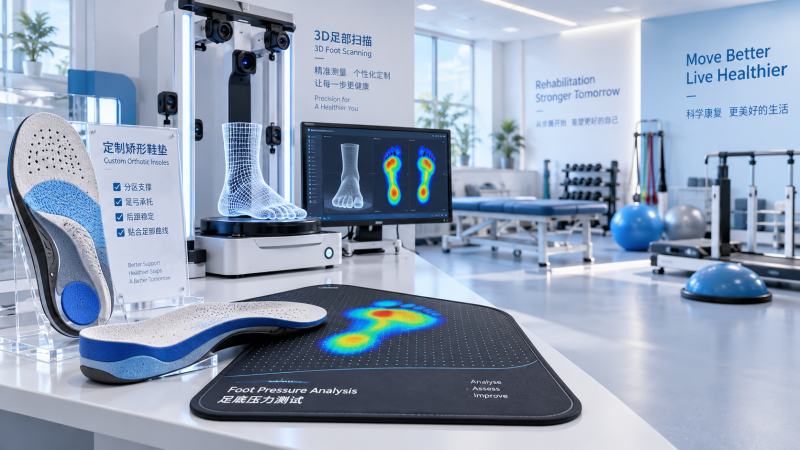
For physical therapy project leaders, custom orthotics technology for physical therapy is no longer a peripheral consideration. It can improve rehabilitation consistency, patient mobility, and measurable treatment outcomes.
The value, however, depends on more than a precise scan or a sophisticated fabrication method. Teams need reliable biomechanical inputs, validated materials, defined clinical protocols, and outcome monitoring.
For engineering and program leaders, the practical question is whether an orthotic system can fit clinical operations while delivering repeatable results across patient groups, sites, and care pathways.
Start With the Clinical Problem, Not the Device Specification
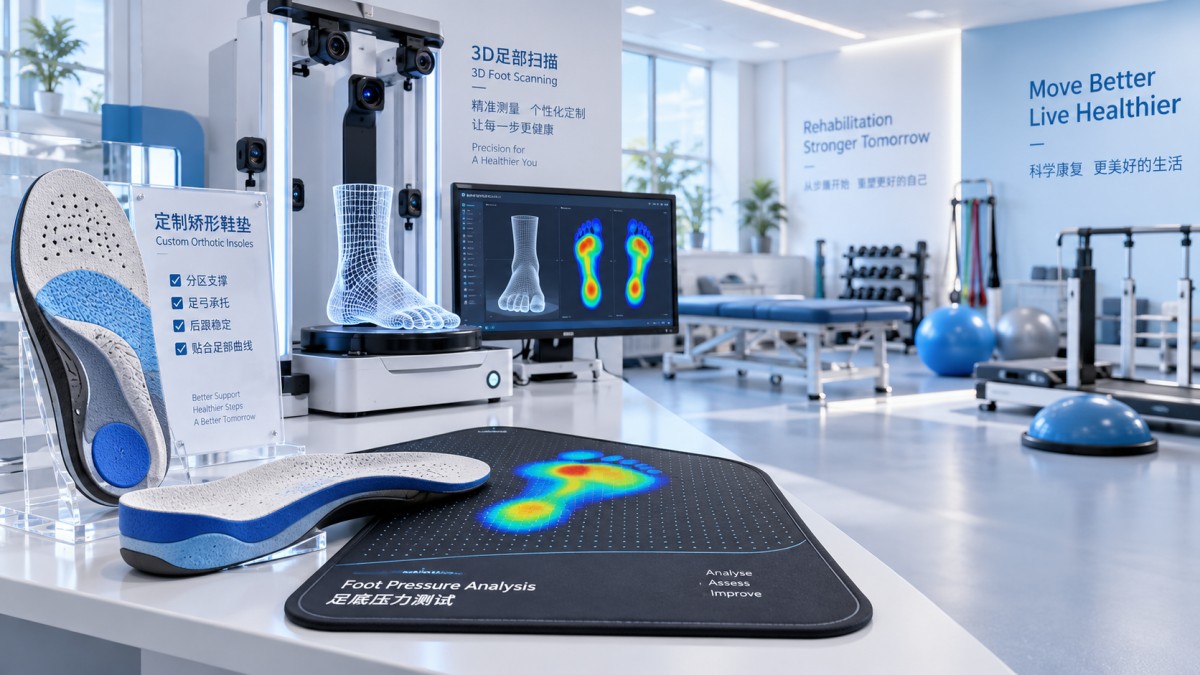
Custom orthotics should be selected to address a defined rehabilitation barrier, such as unstable gait, excessive plantar pressure, poor alignment, recurrent pain, or limited exercise tolerance.
Projects often underperform when teams begin with scanner features, software interfaces, or fabrication speed before agreeing on the functional problem the intervention must solve.
A clear problem statement links the orthotic prescription to therapy objectives. It identifies which movement pattern, loading condition, or activity limitation requires mechanical support or correction.
For example, a post-surgical rehabilitation program may prioritize controlled load redistribution. A fall-prevention pathway may instead prioritize stability, proprioceptive feedback, and safer walking mechanics.
Project leaders should define target populations before procurement. Diagnosis alone is insufficient because functional impairment, body mass, activity level, footwear needs, and adherence vary considerably.
Clinical teams also need to identify contraindications and escalation rules. Severe neuropathy, skin compromise, vascular concerns, and rapidly changing edema require more cautious assessment and follow-up.
The strongest use cases combine a repeatable patient profile with a defined care pathway. This allows teams to standardize assessment, prescription logic, fitting, and outcome reporting.
When the clinical problem is explicit, custom orthotics technology becomes easier to evaluate. Decision-makers can compare systems against functional requirements instead of relying on broad performance claims.
Connect Orthotic Design to Functional Therapy Outcomes
Physical therapy outcomes improve when orthotic design supports the exercises, movement retraining, and progressive loading plan already prescribed by the clinical team.
An orthosis cannot replace therapeutic intervention. Its role is to create a more favorable mechanical environment in which patients can practice movement with less pain or instability.
Arch contour, heel stabilization, posting, cushioning, forefoot accommodation, and stiffness each influence how forces travel through the foot, ankle, knee, hip, and lower back.
Those variables should be considered in relation to therapeutic goals. A device intended for offloading may require different material behavior than one supporting gait symmetry or dynamic balance.
For rehabilitation programs, useful outcomes include walking speed, step symmetry, pain during activity, range of motion, exercise tolerance, fall incidence, and return-to-function milestones.
Patient-reported outcomes are equally important. Comfort, confidence during walking, fatigue, footwear compatibility, and willingness to wear the device influence whether theoretical benefits become real outcomes.
Project leads should avoid treating “custom” as a guarantee of effectiveness. Customization has value only when the measurement, prescription, manufacturing, and fitting steps remain clinically coherent.
A well-designed program establishes which design features correspond to which functional objectives. This improves clinician communication and makes later outcome analysis more meaningful.
Use Biomechanical Data That Supports Repeatable Decisions
Digital foot scanning, plantar pressure mapping, gait analysis, and patient-reported symptoms can strengthen orthotic decisions, but only when data quality and interpretation are controlled.
Static geometry alone does not reveal every functional need. A foot can appear structurally typical during scanning while demonstrating substantial instability or abnormal loading during movement.
Dynamic information helps clinicians understand timing, force distribution, center-of-pressure progression, and asymmetry. These signals can guide whether support, accommodation, or load redistribution is appropriate.
Data collection protocols should be documented across sites. Differences in footwear, walking speed, sensor calibration, technician technique, and patient instruction can reduce comparability.
For multi-location programs, standard operating procedures should specify measurement conditions, acceptable data quality thresholds, repeat-capture requirements, and responsibility for clinical review.
Engineering leaders should ask vendors how raw data are processed. Algorithms that generate recommendations need transparent assumptions, version controls, and clear clinician override mechanisms.
Artificial intelligence may accelerate pattern recognition, but it does not remove accountability. Clinicians remain responsible for determining whether system outputs are suitable for an individual patient.
Reliable custom orthotics technology for physical therapy combines objective measurements with professional judgment. The system should make decisions more consistent without obscuring clinical reasoning.
Evaluate Materials and Manufacturing Beyond Initial Comfort
Material selection directly affects comfort, durability, pressure redistribution, hygiene, device weight, and mechanical response. These factors influence both patient adherence and long-term program cost.
Soft foams may improve immediate comfort and accommodate sensitive areas. However, compression set and fatigue can alter support characteristics after repeated loading cycles.
More rigid polymers can provide structural control, yet excessive stiffness may reduce comfort or create new pressure concerns. The correct choice depends on function, footwear, and patient tolerance.
Program managers should request evidence on material hardness, density, resilience, moisture behavior, abrasion resistance, bonding performance, and expected service life under representative conditions.
Manufacturing consistency also matters. A clinically appropriate design can fail operationally when milling, printing, lamination, finishing, or quality checks introduce unacceptable variation between units.
Where additive manufacturing is used, teams should review layer orientation, post-processing, dimensional accuracy, material traceability, and validation of repeated mechanical performance.
Where traditional fabrication is used, the same rigor applies. Manual production steps require documented tolerances, technician training, inspection criteria, and corrective-action procedures for defects.
Clinical procurement should therefore assess total performance over time. Initial fit is important, but retained function and predictable replacement needs determine operational value.
Assess Technology Vendors Through a Clinical Engineering Lens
Vendor selection should extend beyond demonstrations and patient testimonials. A capable partner must show how its technology, quality controls, support model, and evidence fit the intended care program.
First, examine the measurement system. Confirm accuracy specifications, calibration procedures, software updates, data export options, cybersecurity controls, and interoperability with existing clinical documentation workflows.
Second, evaluate the prescription workflow. Determine whether clinicians can adjust parameters, document rationale, compare revisions, and retain responsibility for decisions generated by software.
Third, review manufacturing governance. Ask how the supplier controls lot traceability, material substitutions, dimensional verification, nonconformance management, and repeatability across production locations.
Fourth, request clinical evidence relevant to the intended population. General claims about comfort or alignment are weaker than evidence tied to comparable diagnoses, settings, and functional measures.
Fifth, clarify regulatory status and product classification in target markets. Requirements may differ depending on intended use, customization level, digital workflow, and associated clinical claims.
Vendors should also provide service-level commitments for turnaround time, remake policies, technical support, training, and continuity planning when systems or material supplies change.
A structured scorecard prevents subjective decisions. Weight criteria according to clinical impact, implementation burden, data integrity, regulatory exposure, total cost, and supplier reliability.
Build an Implementation Workflow That Clinicians Will Use
Even advanced orthotic platforms can fail when they add friction to already constrained therapy schedules. Implementation must protect clinician time while preserving assessment and fitting quality.
Start with a pilot pathway rather than enterprise-wide deployment. Choose a patient cohort with predictable needs, motivated clinical champions, available outcome data, and manageable operational complexity.
Map every step from referral through reassessment. Include eligibility screening, measurement, prescription approval, fabrication, fitting, patient education, follow-up, adjustment, and discharge documentation.
Each step needs an owner. Ambiguity between physical therapists, orthotists, physicians, technicians, and administrators creates delays, missed follow-ups, and inconsistent patient communication.
Training should include more than device operation. Staff need to understand indication criteria, measurement reliability, fitting checks, red flags, comfort expectations, and escalation procedures.
Patient education deserves explicit planning. Patients should understand break-in expectations, wear schedules, skin checks, footwear requirements, cleaning instructions, and when to request adjustment.
Digital systems should integrate with existing records wherever possible. Manual re-entry increases administrative burden and makes it harder to connect orthotic use with therapy outcomes.
After the pilot, review workflow bottlenecks before scaling. The goal is not simply faster device delivery, but dependable care that clinicians can sustain under real workloads.
Measure Outcomes, Cost, and Risk Across the Full Program
Project leaders need a measurement framework before implementation begins. Without baseline data, teams cannot distinguish meaningful improvement from normal recovery variation or selection bias.
Clinical metrics should be selected according to the use case. Relevant measures may include pain scores, timed mobility tests, gait parameters, skin integrity, adherence, and therapy completion.
Operational metrics are equally necessary. Track referral volume, assessment time, turnaround time, remake rate, adjustment frequency, appointment utilization, and staff training requirements.
Financial evaluation should include more than unit price. Consider staff time, consumables, equipment depreciation, software subscriptions, repeat visits, replacements, and avoided complications or delays.
Risk monitoring should capture adverse events, pressure-related discomfort, fit failures, patient discontinuation, delayed delivery, data issues, and deviations from approved clinical protocols.
Segment results by patient characteristics when possible. Average outcomes can conceal situations where a technology performs well for one functional profile but poorly for another.
Review data at predetermined intervals and involve clinical, engineering, procurement, and quality stakeholders. Cross-functional review helps teams identify whether issues are technical, procedural, or clinical.
A successful program creates a closed loop: data inform prescription choices, outcomes validate assumptions, and findings improve future workflow, supplier management, and resource allocation.
Where Custom Orthotics Technology Delivers the Greatest Value
Custom orthotics technology provides the strongest value where a clear mechanical need intersects with an organized rehabilitation pathway and meaningful opportunities to monitor functional change.
Post-operative lower-limb rehabilitation can be a strong fit when patients need controlled progression, footwear accommodation, and consistent support while strength and movement patterns recover.
Neurological rehabilitation may benefit when stability, sensory feedback, gait confidence, or pressure management affects participation. These cases require careful monitoring because needs can evolve quickly.
Chronic musculoskeletal programs may also benefit, particularly where recurring symptoms limit exercise participation. Orthotic intervention should remain integrated with strengthening, mobility, and behavioral strategies.
Sports rehabilitation can justify more advanced assessment when return-to-play decisions depend on dynamic movement analysis. Yet teams should distinguish performance optimization from medically necessary care claims.
High-volume programs should be cautious about universal customization. Some patient populations may achieve comparable outcomes with standardized options, making triage criteria essential for responsible resource use.
The key is matching technology intensity to clinical complexity. Expensive data capture is not automatically justified when a simpler assessment and orthotic approach meets the treatment objective.
Decision-makers should therefore use custom solutions selectively, prioritizing populations where improved fitting, biomechanical precision, or follow-up data can change rehabilitation outcomes materially.
Conclusion: Treat Orthotics as a Managed Rehabilitation Capability
Custom orthotics technology for physical therapy can improve outcomes when it is treated as a managed clinical capability rather than a standalone product purchase.
Successful programs begin with a defined patient problem, connect design choices to functional goals, validate measurement and material performance, and establish accountable implementation workflows.
For project leaders, the most defensible decision is not the most technologically impressive option. It is the solution that delivers repeatable clinical value, operational fit, and measurable long-term reliability.