 Get Insights

Choosing Reusable Smart Orthotic Devices: Fit, Sensors and Maintenance
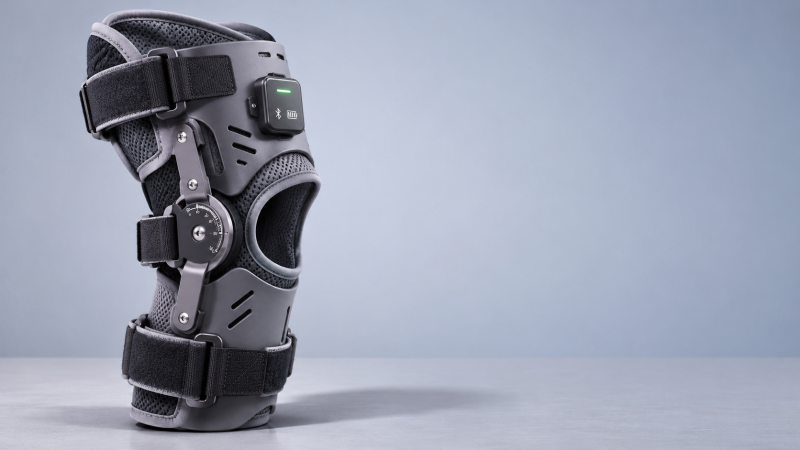
The strongest reusable smart orthotic devices are those that maintain an acceptable fit and produce usable measurements throughout their intended service life. A detailed sensor specification cannot compensate for a brace that shifts during movement, a cleaning process that damages electronics, or a calibration routine that staff cannot consistently perform.
Start by defining the decision the device must support. An orthosis used to guide rehabilitation exercises has different measurement and maintenance needs from one used to monitor joint movement during daily activities. Compare devices against that intended use, then examine how fit, sensor placement and servicing interact under realistic conditions.
Define what must remain consistent across repeated use
“Reusable” can describe several arrangements: one person wearing an orthosis repeatedly, a clinic issuing the same device to different users, or a durable frame paired with replaceable components. These arrangements create different demands on adjustment, cleaning and traceability.
For an individually assigned device, gradual strap wear or changes in limb shape may be the main sources of variation. In a shared clinical inventory, evaluators also need a reliable way to reset the fit, clean patient-contact surfaces and associate each data record with the correct user. A product suitable for one arrangement may be impractical for the other.
Document the intended population, body region, activities, wear duration and environment before comparing specifications. Also identify the measurement that matters: joint angle, movement pattern, pressure distribution, wear time or another output. This makes it easier to distinguish a useful feature from a measurement that will not inform the intended decision.
Set acceptance criteria for the complete system, including the orthosis, sensors, software and maintenance process. If the device will be used to make or support clinical decisions, the evidence required for that use should be more demanding than for an exploratory activity-tracking application.
Fit is part of the measurement system
An orthosis must provide its intended mechanical support without creating unacceptable pressure or restricting movement beyond its purpose. For a smart device, fit also determines where sensors sit and whether their relationship to the body remains stable. A movement sensor attached to a shifting shell may report a mixture of body movement and device movement.
Assess the available size range and adjustment method against the intended population, rather than relying on a single nominal size. Consider limb circumference and length, anatomical landmarks, swelling, clothing or liners, and whether the device can accommodate the range of motion needed for the task. For adjustable hinges, check whether alignment can be achieved without forcing the shell or straps into an uncomfortable position.
During a fitting assessment, look at more than the initial seated position. Observe how the device behaves through the movements it is intended to support. Does it migrate, rotate or loosen? Can the user put it on consistently? Are straps easy to tighten without covering a sensor or creating a pressure point? A device that fits well only when carefully positioned by a specialist may be less suitable for independent use.
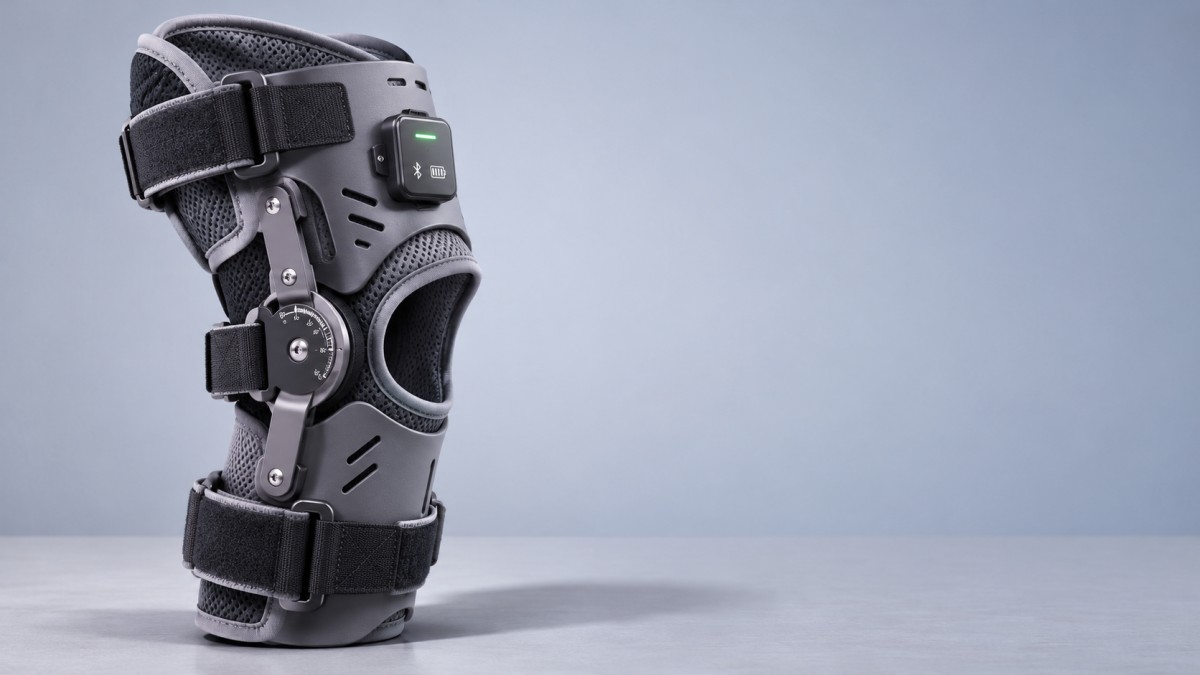
Repeatability matters as much as adjustability. Markings, physical stops or a documented fitting procedure can help users return the device to a consistent position. They do not eliminate variation, so assess whether the remaining variation is acceptable for the measurement and use case. When a device is shared, determine whether its adjustment settings can be restored between users and whether any patient-specific parts need replacement.
Comfort also affects data quality. If a wearer loosens a strap to relieve discomfort, sensor contact or alignment may change. Conversely, a device tightened to improve contact can create skin problems or discourage use. Include user feedback and skin-contact checks in the evaluation, especially for longer wear periods or populations with reduced sensation.
Match sensor performance to the intended decision
Begin with the physical quantity the device claims to measure and how the reported output is derived. An inertial sensor, for example, measures motion-related signals; a displayed joint angle may be calculated from those signals using an algorithm and assumptions about sensor placement. Pressure sensors measure conditions at their contact surface, which may differ from the clinical quantity an evaluator ultimately wants to understand.
Ask for evidence that connects the reported output to an appropriate reference method under conditions representative of use. A bench test may establish that a sensor responds consistently, but it does not by itself show that the complete orthosis measures reliably during walking, exercises or repeated fitting. Review the tested activities, population, placement procedure and sources of error alongside the results.
Several specifications are useful only when interpreted in context:
- Accuracy and agreement: Consider the size and direction of errors relative to the decision being made. A difference that is acceptable for tracking broad activity trends may be unsuitable for detecting a small change in joint motion.
- Repeatability: Examine whether measurements remain consistent when the same task is repeated and when the device is removed and refitted. These are different sources of variation.
- Resolution and sampling: The displayed number of decimal places does not establish accuracy. Sampling must be adequate for the movement or event the system is intended to capture.
- Signal quality: Movement artifacts, poor contact, electrical noise and sensor displacement can affect the output. Ask how the system identifies or handles data that cannot be interpreted reliably.
- Latency and data gaps: Delayed or missing data may be tolerable for later review but problematic if the device provides feedback during movement.
Pay particular attention to sensor placement. A pressure sensor may be sensitive to a liner, strap tension or local wrinkling; an orientation sensor may depend on alignment with a limb segment. Where placement requires a trained operator, assess whether that requirement fits the planned workflow. Where users apply the device themselves, test whether instructions and positioning aids support consistent placement.
For systems that turn raw signals into scores or alerts, request a clear description of what the output represents and the conditions under which it has been evaluated. A proprietary score may be useful, but it is difficult to assess if users cannot tell whether a change reflects the wearer, the fit or an algorithm update.
Separate calibration from routine setup
Manufacturers may use “calibration” to describe different activities. One device may require a reference posture before each session; another may require periodic sensor adjustment or service equipment. These tasks have different implications for staffing, downtime and measurement consistency.
Map the full setup sequence: who performs it, what position or equipment is required, when it must be repeated and how a failed setup is identified. Consider whether the user can complete it independently and whether the process remains feasible when a limb cannot reach the assumed reference position.
Ask what happens after a sensor module, strap or liner is replaced. A component change may alter alignment or contact and require a new setup or performance check. For multi-user devices, establish how settings and data are reset between users, including whether the system retains a record of calibration or configuration changes.
Drift deserves attention when measurements are compared over time. If a system gradually changes its output under unchanged conditions, an apparent improvement or deterioration may partly reflect the device. A practical evaluation should establish what checks are available to detect this problem and what action follows a failed check.
Assess cleaning and durability as a connected workflow
Reusable equipment must survive the cleaning process that its actual setting requires. Obtain the manufacturer’s instructions for each material and component, including straps, liners, shells, sensors, connectors and charging contacts. Check which parts can be cleaned in place, which must be removed and whether any are designated for individual use.
Then compare those instructions with the facility’s infection prevention procedures or the home user’s expected routine. A device is a poor operational fit if its approved cleaning method cannot be performed in the intended setting, or if a detachable sensor creates a difficult-to-clean recess. Water resistance alone does not establish compatibility with a particular cleaning agent or process.
Repeated handling also affects fit and measurement. Straps can lose holding force, liners can compress, hinges can develop play, and connectors can wear. Ask what inspection criteria indicate that a component needs replacement, who can replace it and whether replacement parts will be available throughout the planned service period. Include any required post-cleaning or post-replacement checks in the workflow.
For shared equipment, consider the time between uses: removal of patient-specific parts, cleaning, drying, inspection, charging and preparation for the next fitting. A device with strong sensor performance may still limit availability if this cycle does not match the expected workload.
Review software, data and service alongside the hardware
A smart orthosis is only as useful as the data it makes available to the people who need it. Determine whether measurements can be reviewed on the device, through a local application or through a connected service. Check whether the intended setting has the connectivity, compatible devices and user accounts required for normal operation.
For technical review, ask what data can be exported, in what form and with what context. Timestamps, units, sensor configuration, calibration status and relevant software versions help make measurements interpretable. Aggregated scores alone may be insufficient when an evaluator needs to investigate unexpected readings or compare outputs with a reference system.
Clarify how access is controlled, how records are associated with users, and what happens to stored data when a device is reassigned, repaired or retired. Software updates should also be part of the assessment: a change to an algorithm or processing pipeline can affect comparisons over time, so version history and change information have practical value.
Review battery replacement or charging procedures, service turnaround, spare parts and support responsibilities. When comparing costs, include recurring consumables, software access, training and time spent preparing the device, rather than considering the purchase price alone.
Build a comparison around evidence and use conditions
A concise evaluation matrix can expose differences that a feature list conceals. Use the same intended task and acceptance criteria for each candidate, and record both the supplier’s evidence and observations from a representative trial.
Where a device is intended for medical use, include its stated intended purpose and relevant regulatory documentation in the review for the markets and applications involved. These documents help establish the scope of the manufacturer’s claims; they do not replace assessment of whether the device fits the local population and workflow.
A useful trial should include fitting, the intended activities, removal and refitting, data review, and the cleaning or service steps expected in normal use. Record deviations such as failed setup, loss of contact, discomfort or missing data, along with the conditions in which they occurred. The goal is to understand whether those events can be detected and managed, not merely whether a demonstration can produce a reading.
Choose the device whose evidence and operating requirements fit the intended application. If a claim is central to the decision but is supported only under conditions unlike the planned use, treat that gap as part of the comparison. Independent technical benchmarking, such as the approach described by VitalSync Metrics, can help structure questions about sensor performance and material durability when supplier claims are difficult to compare directly.
Recommended News
- 2026.11.22MedTech Benchmarking: Which Metrics Reveal Operational Performance?Dr. Alistair Thorne (Senior Biomedical Engineer)
- 2026.11.21Study Finds Declining Device Failure Transparency, Raising Questions About FDA OversightDr. Julian Rossi (RehabTech Specialist)
- 2026.11.21Technical Integrity Compliance: How to Document Design ChangesDr. Julian Rossi (RehabTech Specialist)
The VitalSync Intelligence Brief
Receive daily deep-dives into MedTech innovations and regulatory shifts.