 Get Insights

Endoscope image resolution benchmark versus low light performance
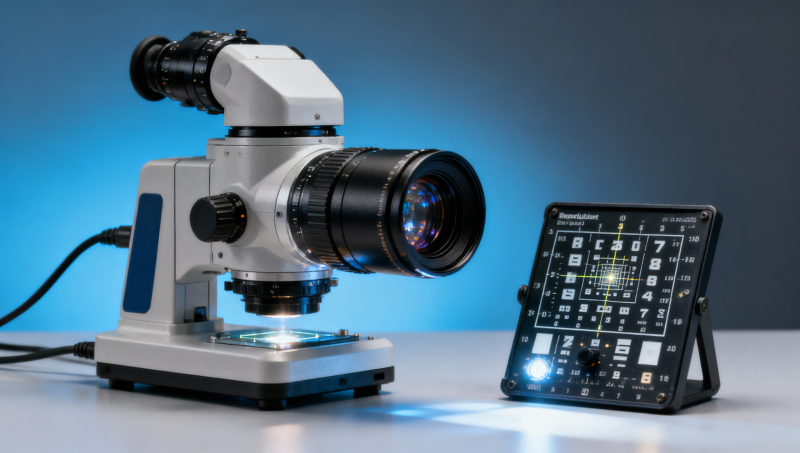
When evaluating modern imaging systems, endoscope image resolution benchmark data alone is not enough—low-light performance often determines whether clinically relevant details are visible in real procedures. For procurement teams, engineers, and healthcare decision-makers, understanding how resolution interacts with noise, illumination limits, and real-world usability is essential to separating marketing claims from measurable technical performance.
In hospital purchasing, device development, and laboratory validation, resolution figures are often highlighted first because they are easy to compare on paper. Yet an endoscope that performs well at bright illumination can lose practical value when light levels fall, tissue reflectivity changes, or working distance shifts by only a few millimeters. For users and buyers, the real question is not whether a camera sensor reaches 1080p or 4K, but whether clinically useful detail remains visible under realistic operating conditions.
This is where independent benchmarking becomes strategically important. VitalSync Metrics (VSM) approaches imaging systems from an engineering and procurement perspective, translating technical parameters into evidence that can support supplier qualification, risk control, and long-term value-based sourcing. In the context of endoscope image resolution benchmark work, the most meaningful comparisons combine spatial detail, signal-to-noise behavior, illumination thresholds, and repeatability across test conditions.
Why Resolution Alone Fails as a Decision Metric
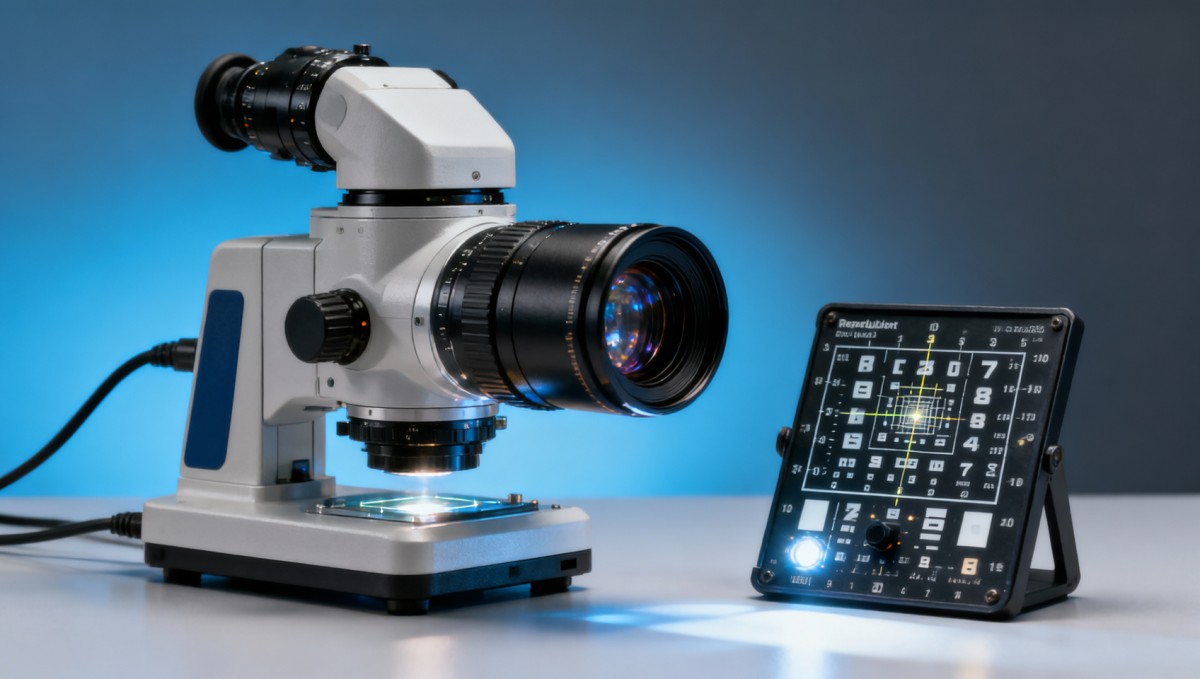
A high published resolution can create a false sense of security. In controlled demonstrations, manufacturers may show sharp images under optimized lighting, short working distances, and ideal targets. Clinical and laboratory reality is less forgiving. Blood, moisture, specular reflections, tissue texture, and narrow lumens can all reduce visible detail even when nominal pixel count remains unchanged.
From a technical standpoint, endoscope image resolution benchmark results should be interpreted together with illumination level, contrast transfer, lens performance, and image processing behavior. A 4K sensor may not deliver more usable diagnostic information than a lower-resolution system if aggressive noise reduction smears edges or if optical performance falls at the image periphery. In many setups, the difference between “detectable detail” and “marketing sharpness” appears below 20 lux or at longer insertion paths.
For procurement teams, this matters because acquisition decisions typically remain in service for 5 to 8 years. Choosing on resolution labels alone can introduce downstream costs: repeat procedures, operator dissatisfaction, inconsistent image archives, and increased reliance on post-processing. A benchmark program should therefore evaluate not just maximum line-pair visibility, but resolution retention under reduced light, motion, and varying target reflectance.
A practical benchmark also needs to distinguish between sensor-limited and system-limited performance. The imaging chain includes optics, illumination delivery, sensor quantum efficiency, analog gain, compression, display scaling, and software enhancement. Weakness in any one of these stages can reduce true performance by 15% to 40% versus nominal laboratory claims.
Key reasons published resolution can mislead buyers
- Resolution charts are often captured at optimal center focus, while edge clarity and depth consistency receive less attention.
- Low-light conditions may trigger gain amplification, raising noise and reducing usable contrast at exactly the moment detail matters most.
- Digital sharpening can create the impression of detail without improving actual tissue discrimination or lesion boundary visibility.
- Compression and display pipeline settings can affect archived and live views differently, leading to inconsistent operator perception.
Core benchmark dimensions that should travel together
An endoscope image resolution benchmark is most valuable when it combines at least 4 dimensions: spatial resolution, low-light sensitivity, signal-to-noise ratio, and color or contrast stability. In some procurement frameworks, a fifth dimension—repeatability across units—is equally important because sample-to-sample variation can distort pilot evaluations.
The table below shows why single-parameter comparison often fails in technical due diligence.
The main conclusion is straightforward: image resolution is necessary, but not sufficient. For evidence-based sourcing, buyers should request multi-condition benchmark data rather than relying on a single headline specification.
How Low-Light Performance Changes Real-World Visibility
Low-light performance is not simply about brightness. It describes how effectively an endoscope preserves useful information when photons are limited. As illumination drops, the system must make trade-offs among gain, exposure time, frame rate, and noise filtering. These trade-offs directly affect motion blur, edge definition, and the operator’s ability to distinguish low-contrast anatomy.
In practical use, clinically relevant performance often starts to diverge when illumination falls from around 100 lux toward 30 lux and below. At 10 to 20 lux, weaker systems may still generate a visible image, but the image can become too noisy or too soft for reliable interpretation. This distinction is crucial in minimally invasive environments where light delivery is constrained by diameter, heat management, and optical path losses.
For operators, poor low-light behavior increases cognitive load. Instead of focusing on navigation or tissue assessment, they compensate by repositioning, increasing irrigation, or relying on brightness settings that may amplify noise. For procurement teams, that translates into workflow inefficiency and avoidable user dissatisfaction even when the product met nominal bid specifications.
An effective endoscope image resolution benchmark should therefore include illumination sweep testing, for example at 100 lux, 50 lux, 20 lux, and 10 lux, while observing both central and peripheral detail. It should also record whether the system preserves frame rate at 25 to 30 fps or drops performance under auto-exposure adjustments.
Low-light variables that affect visible detail
- Sensor sensitivity, often linked to pixel design and quantum efficiency, determines how much usable signal can be captured under limited illumination.
- Optical transmission influences how much light reaches the sensor after passing through lenses, protective windows, and distal components.
- Gain strategy affects whether darker scenes remain interpretable or become noisy and artificial-looking.
- Image processing can help or harm; moderate denoising may improve visibility, while aggressive smoothing can erase small but important structures.
What buyers should ask suppliers to disclose
Suppliers should be asked for threshold definitions, not just sample images. Useful questions include: At what lux level does the system maintain predefined contrast detail? Under what gain conditions is the image captured? Is frame rate preserved? Are images compressed before output? Is the result measured at center only, or across at least 70% of the field?
Without these disclosures, one supplier’s “low-light capability” may reflect a slow exposure and heavy filtering, while another’s may reflect real-time clinically usable imaging. The difference is material for both risk management and total cost of ownership.
A Practical Benchmark Framework for Engineers and Procurement Teams
To compare systems fairly, benchmark design must be repeatable, transparent, and aligned with application risk. VSM-style evaluation typically begins with standardizing the test chain: target type, working distance, angle of view, illumination source, display output, and recording method. Even a 5 mm change in distance or a small change in white balance can alter visible performance enough to mislead decision-makers.
A useful benchmark framework should include at least 3 operating bands: nominal light, reduced light, and stress condition. Within each band, teams can test resolution retention, noise escalation, edge contrast, and color consistency. For product screening, 2 to 3 sample units per model are often more informative than evaluating a single demonstration unit, especially when manufacturing variation is a concern.
Procurement teams also benefit from separating “must-pass” criteria from “weighted comparison” criteria. For example, a minimum low-light interpretability threshold might be non-negotiable, while peripheral sharpness and color consistency may be scored comparatively. This structure reduces the chance that a visually impressive demo outweighs a clinically important weakness.
Benchmark outputs should be reported in a format that supports both technical review and management approval. That means turning raw imaging data into understandable procurement evidence: thresholds, acceptance windows, test conditions, and interpretation notes. A short whitepaper or comparative matrix often helps multidisciplinary teams align faster than isolated data sheets.
Suggested benchmark workflow
- Step 1: Define application context, such as diagnostic observation, intervention guidance, or teaching documentation.
- Step 2: Lock test variables including working distance, target reflectance, output settings, and environmental illumination.
- Step 3: Measure baseline resolution and contrast at nominal illumination, then repeat at 50%, 20%, and near-threshold levels.
- Step 4: Record signal-to-noise behavior, frame rate stability, and image processing artifacts under the same sequence.
- Step 5: Summarize pass/fail findings, ranked differentiators, and procurement implications for lifecycle use.
The following table shows a procurement-friendly scoring model that balances engineering evidence with decision usability.
This kind of structure helps technical teams justify why one product with a lower headline resolution may still outperform a higher-spec alternative in real low-light use. It also creates a documented basis for supplier negotiation and acceptance testing.
Common Selection Mistakes and How to Avoid Them
One frequent mistake is confusing image brightness with image quality. A brighter display can make a system appear better during a short demo, but if that brightness comes from high gain rather than strong optical and sensor performance, the result may be increased noise and reduced micro-detail. Buyers should always ask whether comparison images were matched for display settings and captured under equivalent lux conditions.
A second mistake is ignoring procedural variability. Different specialties place different demands on endoscope performance. A system that works well in a larger cavity with stable illumination may struggle in narrower anatomies or during instrument shadowing. Benchmark design should reflect at least 2 to 3 likely use scenarios rather than a single idealized configuration.
A third mistake is treating software enhancement as a substitute for optical quality. Edge enhancement, temporal filtering, and color optimization all have value, but they should be evaluated as part of the total imaging chain. If software settings cannot be disclosed or controlled during testing, results become difficult to reproduce and therefore less useful for procurement governance.
The final mistake is neglecting lifecycle verification. Performance at commissioning is only one part of the picture. Illumination output, optical cleanliness, connector wear, and repeated sterilization or handling can gradually reduce usable image quality. Acceptance criteria should therefore be linked to periodic verification intervals, often every 6 to 12 months depending on usage intensity.
Selection checklist for decision-makers
- Verify whether endoscope image resolution benchmark data includes low-light testing below 30 lux, not only bright-field images.
- Confirm whether the supplier reports central and peripheral performance, rather than best-case center-only results.
- Request information on frame rate stability, gain behavior, and any processing features active during captured examples.
- Assess serviceability, recalibration needs, and performance verification intervals over a 3- to 5-year ownership horizon.
- Use cross-functional review involving operators, biomedical engineering, and procurement before final award.
Risk control in supplier evaluation
In regulated healthcare environments, technical validation also supports compliance and audit readiness. If claims around visibility, resolution, or image integrity are part of supplier qualification, procurement files should retain benchmark methodology, pass criteria, and interpretation notes. This is especially valuable when products are sourced across regions with varying documentation depth.
For MedTech startups and laboratory architects, independent benchmark data can also accelerate partner discussions. Instead of debating subjective image preference, teams can work from standardized evidence that links measured output to use-case relevance and risk exposure.
Implementation, Acceptance Testing, and Ongoing Verification
Selecting the right platform is only the first stage. To protect long-term value, healthcare organizations should convert benchmark findings into acceptance testing and maintenance plans. At installation, the same critical measurements used during pre-purchase comparison should be repeated in simplified form to confirm that delivered units match evaluated performance.
A practical acceptance protocol can usually be completed within 1 to 2 days per system family. It should include visual inspection, functional checks, baseline image capture under defined illumination, and confirmation of output consistency across recording and display paths. Where multiple units are purchased, a statistically sensible sample should be checked rather than relying on one unpacked device.
Ongoing verification is equally important. High-use departments may benefit from quarterly screening and annual full review, while lower-volume settings may use a 6- or 12-month interval. The goal is not to repeat a full engineering benchmark every time, but to monitor drift in light output, noise behavior, focus consistency, and connector or cable wear before clinical frustration appears.
For organizations operating under value-based procurement models, this approach strengthens total-cost control. A device with slightly higher acquisition cost may deliver better lifecycle economics if it maintains low-light usability longer, requires fewer interventions, and supports more consistent operator performance over 3 to 7 years.
Recommended post-purchase control points
- Document baseline benchmark images and settings at commissioning for future comparison.
- Define threshold indicators for review, such as rising noise, reduced peripheral sharpness, or lower-than-expected illumination.
- Align service intervals with actual use intensity, cleaning exposure, and storage practices.
- Train operators to recognize the difference between display adjustment issues and true device performance degradation.
FAQ for buyers and technical evaluators
How should procurement teams compare 1080p and 4K endoscope options?
They should compare them under matched illumination, distance, and processing settings, then assess usable detail retention rather than format alone. In many cases, a well-optimized 1080p system can outperform a weaker 4K platform in low-light scenes if noise and contrast are better controlled.
What is a reasonable minimum low-light test range?
A practical range often includes at least 100 lux, 50 lux, 20 lux, and 10 lux. Exact thresholds vary by application, but testing across these bands helps reveal when usable detail begins to collapse rather than simply when an image is still visible.
How many units should be tested before purchase?
For higher-risk or larger-volume purchases, testing 2 to 3 units per shortlisted model can reduce the chance of making decisions based on an exceptional demo sample. This is especially relevant when supplier manufacturing consistency is unknown.
How often should image performance be rechecked after deployment?
A common approach is every 6 to 12 months, with more frequent checks in high-use departments. If operators report brightness compensation, increased blur, or inconsistent image output, earlier review is warranted.
An effective endoscope image resolution benchmark must go beyond headline pixels and address the question that matters most in practice: how much clinically useful detail survives when conditions become difficult. Resolution, low-light behavior, signal-to-noise ratio, optical transmission, and processing transparency should be evaluated together if hospitals, developers, and technical buyers want dependable evidence rather than attractive demonstrations.
VitalSync Metrics (VSM) helps decision-makers turn complex imaging claims into structured benchmark insights that support sourcing confidence, technical validation, and lifecycle planning. If you need a more rigorous comparison framework, acceptance criteria guidance, or a tailored benchmarking approach for endoscopic imaging systems, contact us to discuss your evaluation goals and obtain a customized solution.
Recommended News
- 2026.10.15Medical Packaging Heat Seal Testing: Seal Strength vs. Seal Integrity TestsDr. Julian Rossi (RehabTech Specialist)
- 2026.10.14Clinic Supplier Comparison: Evaluating Cost, Delivery Reliability, and SupportDr. Alistair Thorne (Senior Biomedical Engineer)
- 2026.10.13Engineering Performance Testing Services: Evaluating Test Methods and AccuracyDr. Alistair Thorne (Senior Biomedical Engineer)
The VitalSync Intelligence Brief
Receive daily deep-dives into MedTech innovations and regulatory shifts.