
Centrifugation tech: how to pick the right speed
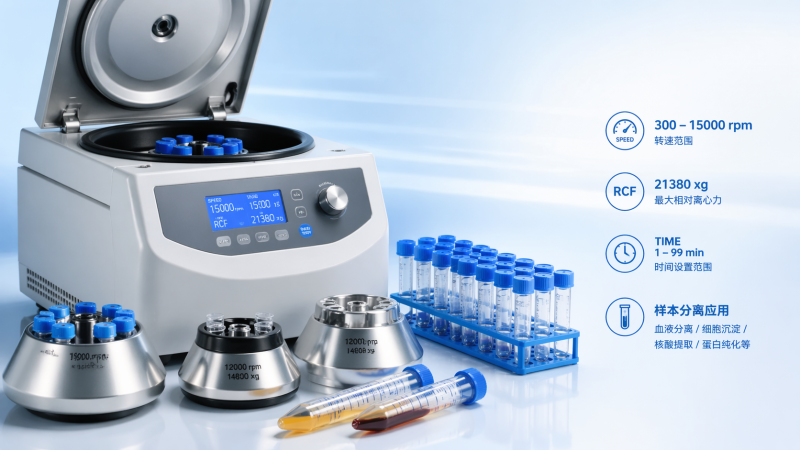
Choosing centrifugation speed is not just a technical setting—it directly affects sample integrity, workflow efficiency, and medical equipment safety standards. For buyers, lab operators, and decision-makers evaluating life sciences instrumentation, understanding speed, RCF, and application fit is essential to reducing medical technology cost while supporting healthcare compliance solutions. This guide explains how to select the right speed with practical, engineering-based insight for reliable laboratory performance.
Why centrifugation speed selection is a technical and procurement issue
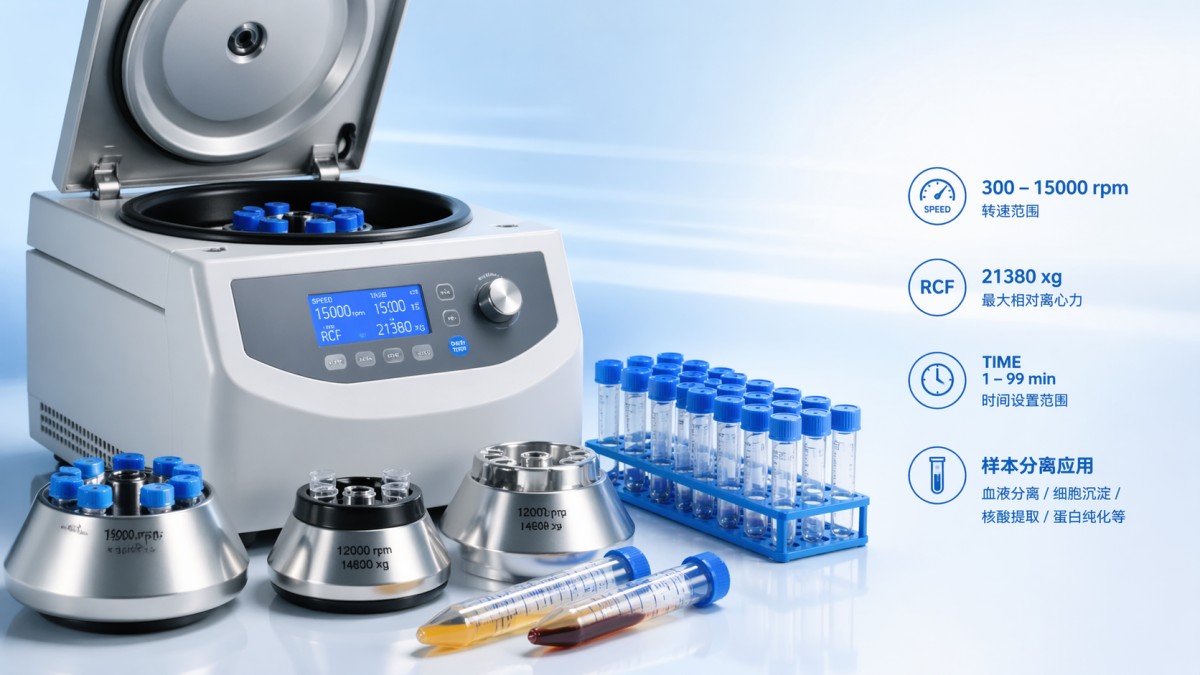
In laboratory operations, centrifugation speed is often discussed as a simple RPM value, yet the real decision is more complex. Speed determines the relative centrifugal force, heat generation, vibration behavior, tube stress, and run consistency. For clinical, research, and industrial laboratory users, a poor speed choice can lead to incomplete separation, damaged pellets, hemolysis, or inconsistent repeatability across batches.
For procurement teams and enterprise decision-makers, the issue goes beyond performance claims. A centrifuge may advertise a maximum speed of 15,000 rpm, 20,000 rpm, or even higher, but maximum speed alone does not tell whether the system can maintain stable operation over 2–4 hours per day, across different rotor types, under acceptable noise and vibration limits, and within routine preventive maintenance cycles every 6–12 months.
This is where engineering-based evaluation matters. VitalSync Metrics (VSM) approaches centrifugation technology from a technical benchmarking perspective. Instead of relying on brochure language, buyers should compare rotor geometry, achievable RCF, acceleration and deceleration control, sample temperature rise, lid-lock safety logic, and compatibility with healthcare compliance solutions relevant to MDR/IVDR-governed procurement environments.
In value-based procurement, the right speed is not the highest setting. It is the setting that matches the sample matrix, turnaround time, and operating risk profile. In many labs, selecting the wrong speed increases rework, consumable waste, and downtime. That creates hidden medical technology cost, especially when one failed protocol affects dozens of samples in a single shift.
RPM versus RCF: the first distinction every buyer should make
RPM measures rotational speed, but RCF expresses the actual force applied to the sample. Two centrifuges running at the same RPM can generate different separation results if their rotor radius differs. This is why application validation, SOP alignment, and procurement specifications should prioritize RCF targets rather than relying only on speed labels.
As a practical rule, low-speed workflows may operate below 3,000 × g, general laboratory separation often falls within 3,000–10,000 × g, and specialized molecular or subcellular work may require 10,000 × g and above. The correct choice depends on sample fragility, desired pellet quality, and acceptable processing time, not on marketing-driven maximum values.
- Use RPM when discussing machine capability and rotor limits.
- Use RCF when defining protocol suitability and separation effectiveness.
- Verify whether published speed values apply to a specific rotor or the full platform.
- Check whether the centrifuge can sustain the target force across repeated daily runs.
How to choose the right speed by sample type and workflow goal
The right centrifugation speed starts with the sample. Blood, urine, cell culture, protein prep, environmental samples, and industrial biological materials behave differently under force. Operators should define four variables before setting speed: sample volume, density contrast, fragility, and required turnaround time. In many practical settings, a 5-minute run at an excessively high force is less reliable than a 10–15 minute run at a controlled, validated force.
For blood component separation, the wrong speed can distort serum or plasma quality and complicate downstream diagnostics. For cell harvesting, excessive force may rupture fragile cells or reduce viability. For nucleic acid workflows, speed must balance pellet formation with contamination control. Procurement teams should therefore ask not only “How fast does it go?” but “Which validated applications can this speed support consistently?”
A useful way to structure selection is to link force level with operational intent. Low force supports gentle separation. Mid-range force supports routine laboratory throughput. Higher force supports compact pellets and small-particle recovery, but usually increases heat and mechanical stress. That means speed selection should always be paired with rotor choice, braking profile, and temperature control where applicable.
Typical speed selection logic by application
The table below summarizes common selection patterns for buyers and users who need a practical starting point. These are not fixed protocol values, but decision ranges that help teams compare centrifugation technology with real workflow requirements.
The key message is that speed selection is always application-bound. A system optimized for high-force microtube work may not be ideal for routine blood processing if braking is too aggressive or if temperature rise affects sample quality. Decision-makers should request application-specific performance evidence rather than relying on generic product tiers.
A 4-step speed selection workflow
- Define the sample and output target, such as clean supernatant, compact pellet, or viable cells.
- Translate protocol needs into RCF, runtime, rotor type, and temperature requirements.
- Validate balance tolerance, acceleration profile, and consumable compatibility for daily use.
- Confirm maintenance frequency, operator training needs, and compliance documentation before purchase.
This method helps avoid a common problem in mixed-use facilities: one centrifuge is purchased for “flexibility,” but its actual speed control, rotor ecosystem, or validation support does not fit the 3–5 most frequent workflows. As a result, the lab either underuses the platform or creates unofficial workarounds that increase operational risk.
What technical parameters matter beyond top speed
Top speed attracts attention, but technical performance depends on a wider parameter set. Buyers comparing centrifugation technology should examine at least 6 core areas: maximum RCF, rotor compatibility, acceleration and deceleration control, temperature management, vibration stability, and safety interlocks. These factors shape whether the platform supports stable laboratory performance under real workloads rather than ideal showroom conditions.
Rotor design is especially important. Fixed-angle and swing-out rotors create different sedimentation behavior. A machine that reaches the same nominal speed with different rotors may produce different pellet geometry, separation interfaces, and tube stresses. This matters in regulated healthcare settings, where protocol reproducibility and documented process control are often more important than peak specification values.
Temperature rise during spinning is another overlooked issue. In short runs of 3–10 minutes, heat buildup may be manageable for robust samples. In repeated batch processing over 1–2 shifts, however, thermal drift can affect enzyme activity, protein integrity, and sample stability. Where thermal sensitivity exists, buyers should evaluate refrigerated operation, pull-down behavior, and temperature recovery between runs.
VSM’s benchmarking perspective is useful here because engineering truth often sits in the interactions between parameters. A centrifuge with high speed but poor vibration control may shorten rotor life. A model with broad rotor compatibility but limited braking options may not suit fragile samples. That is why procurement should focus on verified operating envelopes, not isolated headline numbers.
Parameter checklist for technical review
The following table can be used by operators, spec writers, and procurement leads when comparing systems or validating whether a candidate platform matches the intended speed range and application profile.
A disciplined parameter review prevents overbuying and under-specifying at the same time. In many cases, a laboratory does not need the highest-speed centrifuge on the market. It needs a platform with the right force window, the correct rotor family, stable daily operation, and a service structure that supports the expected workload over 3–5 years.
How buyers can compare centrifuges for cost, compliance, and risk
Procurement decisions in healthcare and life sciences rarely fail because of one missing feature. They fail because technical fit, documentation quality, lifecycle cost, and compliance expectations were reviewed separately instead of together. For centrifugation technology, the better approach is to score platforms across performance, operational burden, and procurement risk in one matrix.
A lower-priced centrifuge may appear attractive at quotation stage, but hidden cost often emerges in rotor replacement, training gaps, balancing errors, service delays, or protocol drift. Conversely, a premium system may be unnecessary if the workflow only needs moderate force, basic timers, and standard safety features. The right question is not “Which is cheapest?” but “Which configuration lowers total process risk within our use case?”
For regulated environments, documentation quality matters as much as hardware. Buyers should verify user manuals, preventive maintenance guidance, installation qualification support where needed, and traceable technical specifications. In MDR/IVDR-adjacent procurement contexts, this discipline supports audit readiness and reduces the gap between claimed performance and actual controlled use.
A practical comparison matrix for procurement teams
Use the comparison table below to evaluate centrifugation speed selection from a procurement perspective. It helps different stakeholders align on whether a platform is fit for routine use, specialist use, or multi-department deployment.
This comparison method also helps reduce decision friction between end users and finance teams. Operators may prioritize sample quality and convenience, while finance may focus on acquisition cost. A structured matrix shows where a more suitable speed range, better braking control, or clearer compliance documentation can lower overall lifecycle risk even if the purchase price is not the lowest.
Five common procurement mistakes
- Choosing based on maximum RPM without converting protocol needs into RCF.
- Ignoring rotor-specific limits and buying a platform that cannot support planned tube formats.
- Underestimating service response time for sites running daily or multi-shift workloads.
- Assuming one centrifuge can cover all use cases without reviewing braking, temperature, and balancing constraints.
- Treating compliance documentation as optional instead of part of technical risk control.
Standards, operating risks, and frequent misconceptions
In healthcare and life sciences, centrifuge selection sits inside a wider quality framework. Even when a buyer is not purchasing a regulated diagnostic system directly, the centrifuge can still affect sample preparation quality, traceability, and SOP control. That is why compliance review should include electrical safety, operator protection features, maintenance documentation, and suitability for intended use under the organization’s quality procedures.
A common misconception is that higher speed always means better separation. In reality, excessive force can compress pellets too tightly, disturb phase interfaces during braking, or damage fragile biological material. Another misconception is that balancing errors are minor. In repeated operation, imbalance increases bearing stress, elevates noise, and can compromise long-term reliability, especially in platforms used many times per day.
Operators should also avoid informal speed substitutions. If an SOP calls for a defined force range and a user substitutes a different rotor or machine using RPM only, the process may no longer be equivalent. This is one reason VSM emphasizes technical benchmarking and standardized whitepaper-style interpretation: decision-makers need transparent engineering logic, not just informal habit or inherited lab practice.
From a risk-management perspective, 4 checkpoints should be reviewed before routine deployment: rotor-condition tracking, balance discipline, preventive maintenance timing, and application-specific validation. These are simple controls, but they reduce the probability of sample loss, reruns, and avoidable downtime over the equipment life cycle.
FAQ for users and buyers
How do I know whether RPM or RCF should be in the purchase specification?
Use RCF for the application requirement and RPM for equipment description. If the procurement file only lists RPM, two platforms may appear equivalent while delivering different actual force because of rotor radius differences. A strong specification usually includes the intended sample type, target force range, runtime window such as 5–15 minutes, and rotor format.
What speed range is suitable for general laboratory work?
There is no single universal range, but many routine workflows sit in low-to-moderate or moderate-to-high force windows depending on sample type. The decision should be based on validated application needs, not a generic “fast enough” assumption. If a site handles multiple sample classes, it is often better to define 3 operating bands rather than one default setting.
What should procurement ask about service and reliability?
Ask about rotor inspection guidance, preventive maintenance intervals, expected wear parts, service lead time, and whether technical support can help align speed settings with the intended application. For facilities running frequent daily cycles, service responsiveness may have more operational value than a marginal increase in maximum speed.
Can one centrifuge cover every use case in a mixed laboratory?
Sometimes, but not always. A flexible platform can support multiple workflows if its rotor range, force capability, braking control, and consumable compatibility all match site needs. In many labs, however, forcing one instrument to handle gentle cell work and high-force microtube tasks creates compromise. A two-tier setup may reduce risk and improve turnaround over 12–24 months.
Why work with VSM when evaluating centrifugation technology
Selecting the right centrifugation speed should not depend on vendor marketing language alone. VitalSync Metrics (VSM) helps procurement directors, MedTech teams, and laboratory planners verify technical integrity through data-driven review. Our role is to translate engineering parameters into practical sourcing intelligence, so teams can compare force capability, rotor limitations, reliability risks, and documentation readiness with greater confidence.
This is especially valuable when the purchasing decision affects clinical workflows, healthcare compliance solutions, or multi-site laboratory standardization. VSM focuses on measurable performance logic: what the equipment can sustain, how the specification aligns with use conditions, and where hidden cost may appear over 3–5 years of operation. That approach supports more informed value-based procurement and reduces the gap between promise and performance.
If your team is comparing centrifuges, refining a tender specification, or questioning whether a current speed protocol is truly fit for purpose, we can help structure the review. Typical consultation topics include parameter confirmation, speed versus RCF interpretation, rotor and application matching, documentation expectations, delivery-cycle planning, and lifecycle cost discussion for healthcare and life sciences environments.
Contact VSM to discuss your centrifugation technology assessment needs. You can request support for product selection, technical benchmarking, protocol-fit analysis, compliance-oriented documentation review, sample workflow evaluation, or quote-stage comparison before final procurement. This gives your operators, buyers, and decision-makers a clearer basis for choosing the right speed—and the right system—for reliable laboratory performance.
- EMS
- ESS
- PPE
- life sciences
- EdTech
- procurement
- AR
- Cement
- benchmarking
- value-based procurement
- medical technology
- technical integrity
- medical equipment
- technical benchmarking
- life sciences
- long-term reliability
- engineering truth
- data-driven
- healthcare compliance
- Centrifugation Tech
- medical technology cost
- life sciences instrumentation
- medical equipment safety standards
- healthcare compliance solutions
Recommended News
- 2026.04.24Medical technology cost: where budgets go wrongDr. Alistair Thorne (Senior Biomedical Engineer)
- 2026.04.24Packaging choices that protect sterile instrumentsDr. Julian Rossi (RehabTech Specialist)
- 2026.04.24Mobility assist devices: which option fits bestSarah Jenkins (Laboratory Infrastructure Consultant)
The VitalSync Intelligence Brief
Receive daily deep-dives into MedTech innovations and regulatory shifts.