
How to Estimate Sheet Metal Cost for IVD Hardware
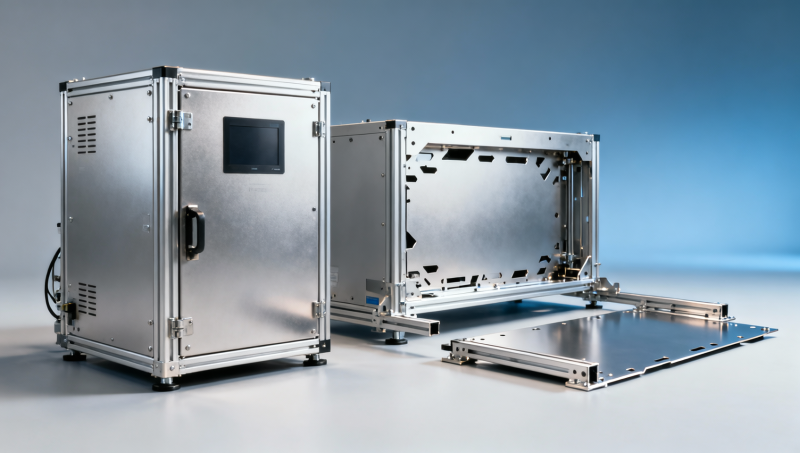
Estimating sheet metal cost for IVD hardware requires more than checking a simple sheet metal price list. From sheet metal chassis, housing, panel, and bracket design to sheet metal cutting, bending, forming, welding, and final sheet metal fabrication, every process affects cost, compliance, and reliability. This guide helps procurement teams, engineers, and decision-makers evaluate a sheet metal manufacturer or sheet metal supplier with greater accuracy and confidence.
For most buyers, the real question is not “What is the price per part?” but “What will this IVD hardware truly cost us after design revisions, quality controls, tooling choices, documentation, and production risk are included?” For in vitro diagnostics (IVD) equipment, sheet metal cost estimation must balance manufacturability, regulatory expectations, cosmetic quality, assembly efficiency, and long-term supply stability. A low quote can become expensive if it leads to rework, tolerance failures, coating issues, or delayed validation.
The most reliable way to estimate sheet metal cost for IVD hardware is to break the total cost into visible drivers: material, part geometry, process complexity, tolerances, finishing, assembly, compliance requirements, order volume, and supplier capability. Once those factors are clear, procurement teams and engineering leaders can compare quotations on a like-for-like basis and make better sourcing decisions.
What actually drives sheet metal cost in IVD hardware?
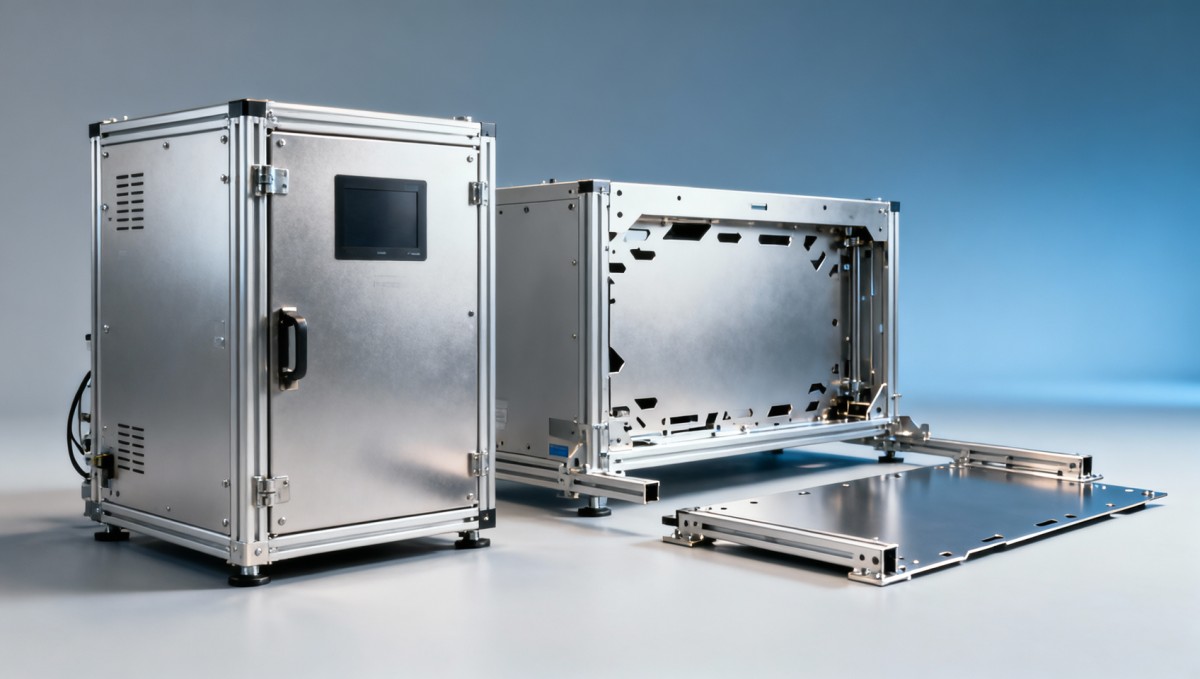
In IVD devices, sheet metal components often include enclosures, internal frames, shielding covers, mounting brackets, doors, access panels, and support structures. Their cost is rarely determined by raw material alone. In many cases, fabrication labor, setup time, finishing, and quality control account for a larger share than the metal itself.
The main cost drivers usually include:
- Material type and thickness: Stainless steel, cold-rolled steel, aluminum, galvanized steel, and specialty materials differ significantly in cost, corrosion resistance, cleanability, and suitability for medical environments.
- Part size and sheet utilization: Larger parts and poor nesting efficiency increase material waste.
- Cutting method: Laser cutting, turret punching, or other cutting processes affect both speed and cost.
- Bending complexity: More bends, tighter bend radii, and difficult geometries increase cycle time and setup effort.
- Forming and welding: PEM insertion, studs, spot welding, TIG welding, seam welding, and assembly operations add labor and inspection requirements.
- Tolerance and cosmetic standards: Tight tolerances and visible exterior surfaces require more process control.
- Surface finishing: Powder coating, passivation, anodizing, plating, silk-screen printing, and labeling all contribute to cost.
- Documentation and validation: For IVD hardware, traceability, inspection reports, material certificates, and controlled change management may be essential.
If a quote seems unusually low, the missing cost is often hidden in one of these areas rather than eliminated altogether.
How to build a practical cost estimate before requesting quotes
A useful cost estimate should be structured, not guessed. Before contacting a sheet metal manufacturer, define the hardware in a way that allows realistic pricing. That means collecting not only CAD files, but also the production assumptions behind them.
A practical estimation framework includes the following:
- Identify the part category: Is it a cosmetic outer housing, a structural chassis, an EMI shielding cover, or a simple bracket? The answer changes material, finish, and tolerance expectations.
- Define material specifications: Include alloy, thickness, finish state, corrosion requirements, and whether the material must support cleaning chemicals or lab environments.
- Count fabrication steps: Estimate cutting, punching, bending, tapping, insertion hardware, welding, grinding, finishing, and assembly.
- Assess tolerance criticality: Not every dimension needs the same control level. Over-specifying tolerances can sharply increase cost.
- Separate prototype and production economics: Prototype cost per piece is often much higher because setup and engineering charges are spread over fewer units.
- Include secondary and hidden costs: Packaging, incoming inspection, compliance records, transit protection, and revisions should be considered from the beginning.
For buyers in regulated healthcare environments, this framework helps prevent the common mistake of comparing a basic fabrication quote with a production-ready supply quote. They are not the same thing.
Why design decisions have such a large impact on sheet metal fabrication cost
Many sheet metal cost overruns start in design, not in purchasing. Small geometry choices can create large manufacturing penalties. In IVD hardware, this matters even more because designs often must support sensors, fluidics, optics, ventilation, service access, and electromagnetic shielding in a compact footprint.
Common design choices that raise cost include:
- Using more part splits than necessary instead of consolidating features
- Creating difficult bend sequences that require manual handling or special tooling
- Specifying unnecessarily tight flatness or positional tolerances
- Adding cosmetic requirements to internal, non-visible parts
- Mixing too many hardware insert types across similar assemblies
- Designing weldments where tab-and-slot assembly or fasteners would be sufficient
- Ignoring standard sheet thicknesses and bend rules
Design for manufacturability can reduce total cost without lowering quality. In practice, the best sheet metal supplier will often suggest changes such as standardizing material thickness, reducing weld length, improving bend access, or minimizing reorientation during fabrication. These are not minor improvements. They can directly affect yield, consistency, and project timeline.
What procurement teams should compare when evaluating supplier quotations
When estimating sheet metal cost for IVD hardware, procurement should avoid choosing based only on unit price. Two suppliers may quote similar-looking parts with very different assumptions. One may include inspection records, traceable material certificates, protected packaging, and finish validation. Another may not.
To compare quotations fairly, review these points:
- Scope clarity: Does the quote clearly include cutting, bending, welding, finishing, hardware insertion, assembly, and packaging?
- Material assumptions: Are alloy, thickness, and grade fully specified?
- Finish quality: Is the coating or surface treatment defined by standard, thickness, color, adhesion, or corrosion requirement?
- Quality plan: Are first article inspection, in-process checks, and final inspection included?
- Documentation: Are certificates of conformity, inspection reports, and revision control available?
- Tooling and NRE: Are one-time costs separated from recurring production costs?
- Lead time and capacity: Can the supplier handle ramp-up without quality drift?
- Change control: How are engineering changes managed after qualification?
This approach is especially valuable for enterprise decision-makers. A quote that is 8% lower but introduces validation risk, cosmetic rejection, or delayed delivery may be significantly worse from a total-cost perspective.
How compliance and medical-grade expectations change the cost structure
IVD hardware does not always require the same regulatory treatment as patient-contact components, but it still operates within a highly controlled ecosystem. Hardware for analyzers, lab instruments, sample preparation systems, and diagnostic platforms must often meet demanding standards for cleanliness, repeatability, traceability, and serviceability.
That affects cost in several ways:
- Traceable raw materials may cost more than commodity sourcing.
- Controlled finishing processes are needed where corrosion resistance, chemical exposure, or cleanability matters.
- Dimensional consistency becomes more important when hardware interfaces with optics, electronics, motion systems, or consumables.
- Documentation burden increases when customers require lot traceability, quality records, or supplier process controls.
- Supplier qualification time can add indirect project cost even if the part price itself seems reasonable.
For healthcare and life sciences buyers, the cheapest sheet metal fabrication route is rarely the safest route. Hardware that appears non-critical can still disrupt verification, field reliability, or servicing if mechanical quality is inconsistent.
How to reduce sheet metal cost without compromising reliability
Cost optimization is possible, but it should be done intelligently. The goal is not simply to lower the quote; it is to reduce unnecessary cost while preserving function, compliance readiness, and manufacturability.
High-impact cost reduction opportunities often include:
- Standardizing materials and thicknesses across multiple parts
- Reducing the number of unique components in the assembly
- Relaxing non-critical tolerances
- Converting cosmetic surfaces only where user-visible appearance matters
- Replacing complex weldments with mechanical fastening where appropriate
- Designing for common tooling and simpler bend sequences
- Ordering in production-relevant volumes to reduce setup cost per unit
- Engaging the supplier early for manufacturability review
For procurement leaders, one of the most effective strategies is to request a cost breakdown by process category. Even if the supplier does not reveal exact internal margins, a structured breakdown makes it easier to identify whether cost is being driven by material, labor, finishing, or quality overhead.
Questions to ask a sheet metal manufacturer before you trust the estimate
A good estimate is only as reliable as the supplier behind it. For IVD hardware, buyers should test whether the manufacturer understands both fabrication and application context.
Useful questions include:
- What similar medical, laboratory, or diagnostic hardware have you produced?
- Which processes are done in-house, and which are outsourced?
- How do you control cosmetic defects on visible panels and housings?
- How do you manage revision changes after first article approval?
- Can you provide material certifications and dimensional inspection data?
- What are the most common cost risks you see in our current design?
- How would you redesign this part to reduce cost without affecting function?
- What is your plan if demand increases after product launch?
The quality of answers to these questions often reveals more than the quotation itself. A capable supplier will discuss process limits, tolerances, finish trade-offs, and production planning with clarity. A weak supplier will stay at the level of price only.
Final takeaway: estimate total manufacturing value, not just fabrication price
To estimate sheet metal cost for IVD hardware accurately, buyers must look beyond raw sheet metal price and even beyond individual process costs. The true cost is shaped by design complexity, process sequence, finishing requirements, inspection rigor, compliance expectations, and supplier maturity.
For engineers, this means improving design-for-manufacturability before RFQ. For procurement teams, it means comparing quotes based on scope, assumptions, and risk, not just headline price. For business decision-makers, it means treating sheet metal hardware as part of product reliability and launch readiness, not as a commodity purchase.
In a healthcare environment where technical integrity matters, the best estimate is the one that reflects the real production path. When sheet metal chassis, housings, panels, and brackets are evaluated with that level of discipline, organizations can source with greater confidence, reduce avoidable cost, and protect long-term product performance.
- surface treatment
- laser cutting
- EMS
- ESS
- PPE
- IVD devices
- life sciences
- procurement
- AR
- metal fabrication
- sheet metal
- sheet metal fabrication
- sheet metal cutting
- sheet metal chassis
- sheet metal supplier
- sheet metal manufacturer
- sheet metal price
- sheet metal cost
- sheet metal components
- technical integrity
- life sciences
- IVD Hardware
- Packaging
Recommended News
- 2026.04.20What Sheet Metal Fabrication Buyers Should Ask in 2026Dr. Julian Rossi (RehabTech Specialist)
- 2026.04.20Are Sheet Metal Parts Worth It for Mobility DevicesSarah Jenkins (Laboratory Infrastructure Consultant)
- 2026.04.20How to Source Sheet Metal Enclosures Without DelaysDr. Hideo Tanaka (Imaging Systems Analyst)
The VitalSync Intelligence Brief
Receive daily deep-dives into MedTech innovations and regulatory shifts.