
What Makes a Reliable Sheet Metal Supplier for Enclosures
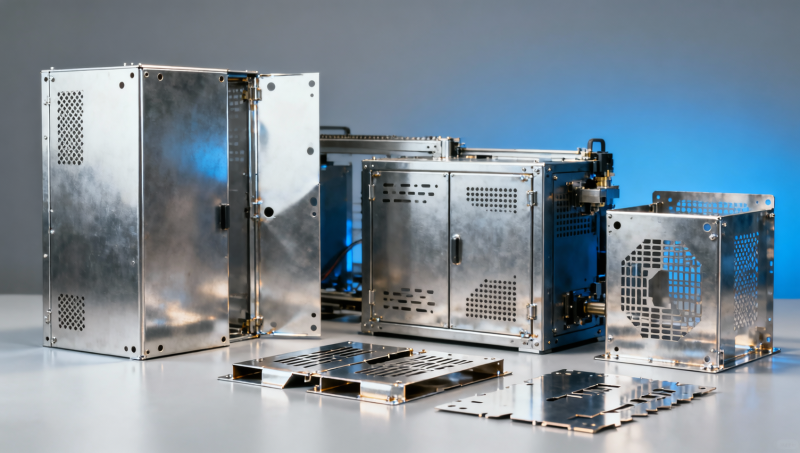
Choosing the right sheet metal supplier for enclosures is not just about finding the lowest sheet metal price. For buyers in healthcare, laboratory, industrial, and electronics applications, a reliable supplier is the one that can consistently turn design intent into compliant, durable, and repeatable sheet metal parts. That means proven capability in sheet metal fabrication, controlled processes for sheet metal cutting and bending, dependable quality systems, traceable materials, and the ability to support enclosure performance over the full product lifecycle. If an enclosure must protect sensitive electronics, meet cleanliness requirements, maintain dimensional accuracy, and scale from prototype to production, supplier reliability becomes a technical and business decision—not simply a purchasing decision.
What actually makes a sheet metal supplier reliable for enclosures?
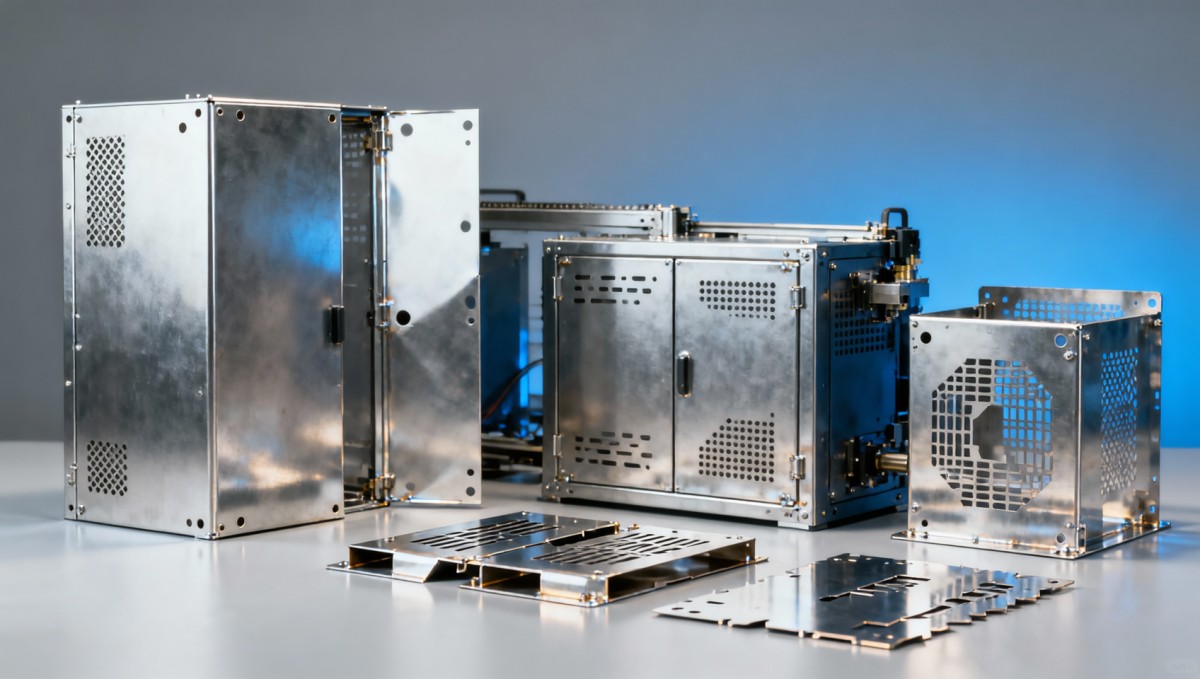
A reliable sheet metal manufacturer for enclosures combines manufacturing competence with quality discipline and commercial consistency. In practice, that means the supplier can do more than quote fast or offer attractive sheet metal cost. They must be able to deliver the same enclosure quality repeatedly, across batches, revisions, and production volumes.
For enclosure buyers, reliability usually comes down to six core factors:
- Engineering capability: Can the supplier understand tolerances, fit-up requirements, ventilation patterns, EMI shielding needs, mounting features, and assembly constraints?
- Process control: Are sheet metal forming, sheet metal cutting, sheet metal bending, and sheet metal welding executed under stable, documented processes?
- Material traceability: Can they verify the grade, thickness, finish, and source of the metal used in the sheet metal housing or sheet metal chassis?
- Quality assurance: Do they inspect critical dimensions, cosmetic requirements, flatness, hole positions, bend angles, and weld integrity?
- Scalability: Can they support prototyping, pilot runs, and mass production without major quality drift?
- Supply reliability: Do they communicate clearly, manage lead times honestly, and respond effectively when design or demand changes?
If a supplier is weak in any of these areas, enclosure performance can suffer in ways that are expensive and hard to fix later: poor door alignment, inconsistent panel gaps, coating failures, assembly interference, vibration issues, grounding problems, or field reliability complaints.
Why low sheet metal price alone is a poor way to choose a supplier
Many sourcing teams begin by comparing sheet metal price across multiple vendors. That is understandable—but incomplete. The cheapest quote often excludes the hidden costs that matter most after purchase:
- Higher defect rates and rework
- Longer assembly time due to inconsistent parts
- Late deliveries that delay product launch
- Unstable cosmetic quality in customer-facing enclosures
- Weak documentation for regulated or audited industries
- Engineering change delays when revisions are needed
For medical and laboratory environments especially, enclosure quality is not only cosmetic. A poorly made sheet metal enclosure can affect equipment cooling, cable routing, grounding, access panel function, cleanability, and even downstream regulatory documentation. In these cases, total cost of ownership matters more than the initial sheet metal cost.
A more useful question is: What level of process reliability am I buying for the quoted price? That is how procurement teams and technical decision-makers avoid false savings.
Which manufacturing capabilities matter most for enclosure quality?
Not every sheet metal supplier is equally strong in enclosure work. Enclosures often require tighter aesthetic and assembly control than basic brackets or flat sheet metal parts. When evaluating a supplier, focus on the processes that most directly affect fit, function, and finish.
Sheet metal cutting accuracy
Laser cutting, punching, and related operations need to produce clean edges, consistent feature sizes, and accurate hole locations. Poor cutting quality can create burrs, dimensional errors, and assembly misalignment. For enclosures with fasteners, vents, connectors, or display openings, precision at this stage is critical.
Sheet metal bending consistency
Sheet metal bending determines whether panels align correctly and whether the final assembly has stable geometry. Reliable suppliers control bend allowance, springback, tooling selection, and sequence planning. This is especially important for sheet metal chassis structures and enclosure frames where stacking errors can accumulate across multiple bends.
Sheet metal welding quality
Where enclosures require welded seams, brackets, studs, or structural reinforcement, welding quality directly affects strength and appearance. Buyers should look for evidence that the supplier can manage distortion, maintain repeatability, and inspect weld integrity appropriately for the application.
Sheet metal forming and finishing integration
Embosses, louvers, countersinks, hardware insertion, surface preparation, powder coating, plating, and silk-screening all influence enclosure usability and appearance. A strong supplier understands how these secondary processes interact with the base sheet metal fabrication process and plans accordingly.
How do you evaluate whether a supplier can meet enclosure performance requirements?
The best evaluation method is not a generic capability presentation. It is a structured review of how the supplier handles your specific enclosure requirements.
Ask questions such as:
- Have you produced sheet metal housing or sheet metal chassis assemblies similar in size, complexity, and finish?
- What tolerances do you routinely hold on critical enclosure features?
- How do you manage flatness, bend accuracy, weld distortion, and cosmetic inspection?
- Can you provide first article inspection reports?
- How do you control outsourced finishing processes?
- What is your process for engineering change orders and revision traceability?
- Can you support low-volume prototypes and later scale to full production?
For regulated or quality-sensitive sectors, it is also useful to review sample documentation, inspection formats, nonconformance handling, and lot traceability. A reliable supplier should be able to demonstrate control—not just claim experience.
What quality systems and documentation should buyers look for?
Quality systems matter because enclosure issues are often discovered late—during assembly, validation, or field use. A supplier with structured controls reduces that risk.
Key indicators include:
- Documented inspection plans for critical dimensions and appearance criteria
- Material certifications and incoming material verification
- Calibration control for measurement tools
- First article inspection for new or revised parts
- Nonconformance reporting and corrective action
- Revision and drawing control
- Supplier management for outsourced coating, plating, or specialty operations
For healthcare-adjacent applications, buyers may also need stronger documentation discipline to support internal validation, supplier qualification, and audit readiness. Even if the sheet metal enclosure itself is not the regulated device, poor supplier documentation can still create approval and traceability problems.
How important are design support and manufacturability feedback?
Very important. One of the clearest signs of a reliable sheet metal supplier is their willingness and ability to improve the design before problems appear in production.
Good suppliers do not simply build to print without comment. They review the enclosure design for:
- Bend feasibility and tool access
- Tolerance stack-up risk
- Hardware insertion suitability
- Weld access and distortion risk
- Coating coverage concerns
- Assembly efficiency
- Cost-saving opportunities that do not reduce performance
This kind of DFM feedback is especially valuable for MedTech startups, OEM development teams, and buyers managing custom equipment programs. It can shorten development cycles, reduce revision loops, and improve long-term enclosure consistency.
Can a supplier support both prototype flexibility and production stability?
This is often where suppliers look strong early and struggle later. Some shops are excellent at prototype sheet metal fabrication but lack the systems to scale. Others are optimized for volume but slow and rigid during development.
A reliable supplier for enclosures should be able to bridge both stages:
- Prototype stage: quick feedback, practical design adjustments, transparent lead times, and support for revision changes
- Pilot stage: more formal inspection, stable routings, and early identification of process risks
- Production stage: repeatable output, documented controls, capacity planning, and quality consistency across batches
For buyers, this transition capability is a major reliability indicator. It shows that the supplier is not just making parts—they are supporting a product lifecycle.
What warning signs suggest a sheet metal supplier may not be dependable?
Even if a supplier looks competitive on paper, certain red flags deserve attention:
- Quotes are fast, but technical questions are vague or unanswered
- No clear explanation of tolerance capability or inspection method
- Inconsistent sample quality across similar parts
- Weak control over outsourced finishing or hardware insertion
- Long lead times without planning transparency
- Frequent reliance on “shop-floor adjustment” instead of documented process control
- Limited change management or revision traceability
- Overemphasis on low sheet metal price with little discussion of quality risk
In enclosure manufacturing, these issues often surface later as assembly frustration, cosmetic rejects, field failures, or supply chain instability.
How should procurement teams and decision-makers compare suppliers in a practical way?
The most effective approach is to score suppliers across technical, quality, and commercial criteria instead of choosing based on quote value alone.
A practical comparison framework may include:
- Technical fit: enclosure experience, process range, tolerance capability
- Quality maturity: inspection plans, documentation, corrective action discipline
- Program support: DFM input, responsiveness, engineering communication
- Production readiness: capacity, lead-time reliability, supply continuity
- Commercial value: total cost, not just unit sheet metal cost
- Risk profile: dependence on subcontractors, traceability gaps, change control weakness
This approach is especially useful for enterprise buyers and healthcare-related sourcing teams who need to justify supplier selection on both operational and risk-management grounds.
Conclusion: the best sheet metal supplier for enclosures is the one that reduces risk while delivering repeatable performance
A reliable sheet metal supplier for enclosures is not defined by low pricing alone. The right partner can consistently deliver accurate sheet metal parts, stable sheet metal fabrication quality, controlled sheet metal forming and bending, dependable sheet metal welding, and documentation that supports confidence at every stage. For enclosure buyers, the real test is whether the supplier can protect product performance, support scaling, reduce quality escapes, and respond effectively when requirements change.
Whether you are sourcing a sheet metal housing for medical electronics, a sheet metal chassis for laboratory equipment, or custom sheet metal enclosures for industrial systems, the smartest decision is to evaluate suppliers by process integrity, quality control, and lifecycle support. That is what turns a vendor into a reliable manufacturing partner.
- laser cutting
- mass production
- EMS
- ESS
- PPE
- tractors
- EdTech
- procurement
- AR
- metal fabrication
- sheet metal
- supply chain
- sheet metal fabrication
- sheet metal bending
- sheet metal cutting
- sheet metal forming
- sheet metal welding
- sheet metal parts
- sheet metal enclosure
- sheet metal housing
- sheet metal chassis
- sheet metal supplier
- sheet metal manufacturer
- sheet metal price
- sheet metal cost
- Cement
- supply chain
Recommended News
- 2026.04.20What Sheet Metal Fabrication Buyers Should Ask in 2026Dr. Julian Rossi (RehabTech Specialist)
- 2026.04.20Are Sheet Metal Parts Worth It for Mobility DevicesSarah Jenkins (Laboratory Infrastructure Consultant)
- 2026.04.20How to Source Sheet Metal Enclosures Without DelaysDr. Hideo Tanaka (Imaging Systems Analyst)
The VitalSync Intelligence Brief
Receive daily deep-dives into MedTech innovations and regulatory shifts.