
ISO 13485 audits: how to prepare without delays
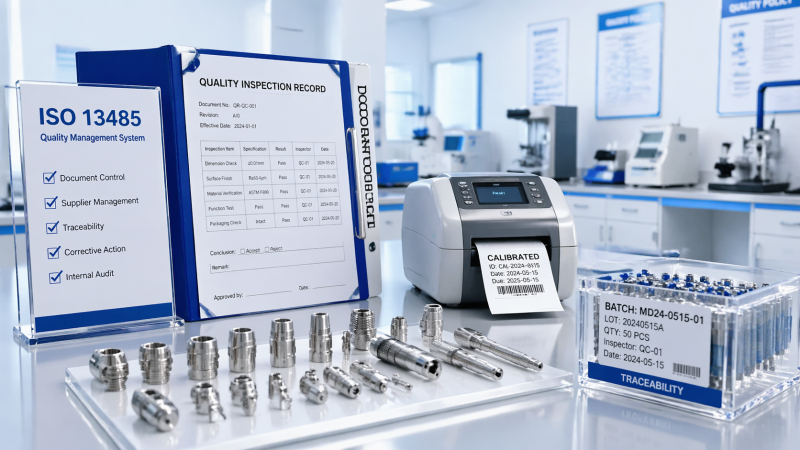
Preparing for ISO 13485 audits without delays requires more than paperwork—it demands traceable processes, verified medical equipment safety standards, and practical healthcare compliance solutions. For procurement teams, operators, and decision-makers evaluating wearable healthcare technology, orthopedic implants manufacturer capabilities, or life sciences instrumentation, a structured audit strategy reduces risk, protects timelines, and strengthens confidence in long-term medical technology performance.
In MedTech and life sciences, audit readiness is not only a quality function. It affects supplier qualification, production scheduling, market access, tender eligibility, and post-market trust. A delayed audit can hold back a product launch by 4 to 12 weeks, interrupt validation activities, or force corrective actions that consume engineering and regulatory resources at the same time.
For organizations sourcing components, building manufacturing partnerships, or preparing internal quality systems, the practical question is simple: how do you prepare for an ISO 13485 audit without creating bottlenecks? The answer usually lies in document control, process evidence, risk-based thinking, and objective technical records that stand up to review.
From the perspective of VitalSync Metrics (VSM), audit preparation should be treated as an operational engineering task rather than a last-minute documentation exercise. When technical claims, process controls, and supplier records are benchmarked early, procurement and compliance teams can move faster with fewer surprises.
Why ISO 13485 audit delays happen in healthcare supply chains
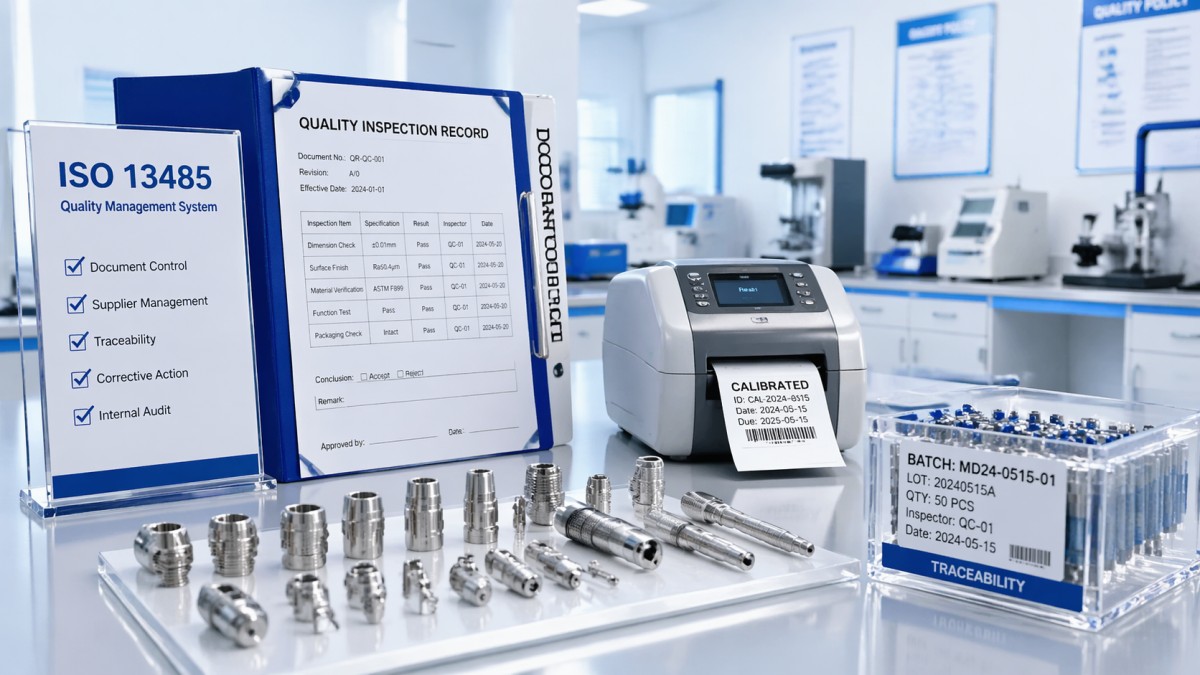
ISO 13485 audits often slow down because organizations underestimate the number of linked records that must be available on demand. In a typical healthcare manufacturing environment, auditors may review 6 to 12 process areas in one visit, including design control, supplier management, complaint handling, calibration, training, and traceability. If just one area lacks current evidence, the delay can spread across the full audit schedule.
Another common issue is the gap between commercial documentation and production reality. A supplier may present polished procedures, but operators on the floor may still use obsolete work instructions, incomplete device history records, or manual logs that do not match the approved process flow. In medical technology, that inconsistency is a direct audit risk.
For hospital procurement teams and enterprise buyers, these delays matter because certification status alone does not confirm day-to-day control. An orthopedic implants manufacturer, for example, may have acceptable high-level quality policies but still struggle with lot traceability, material verification, or cleanroom documentation if internal review cycles are weak.
In wearable healthcare technology and life sciences instrumentation, audit lag is also linked to rapid product iteration. Firmware updates, sensor revisions, labeling changes, and new component substitutions can outpace document approval. When engineering change control runs 2 to 3 weeks behind production, the audit trail becomes fragmented and harder to defend.
Four recurring root causes
- Uncontrolled documents, including duplicate forms, outdated templates, or training records not tied to the current revision.
- Weak supplier oversight, especially when critical raw materials, contract sterilization, or test services come from external partners.
- Insufficient objective evidence for risk controls, validation, maintenance, or calibration intervals such as 6-month or 12-month cycles.
- Poor cross-functional preparation, where QA, operations, procurement, and regulatory teams review the audit plan in isolation.
The operational implication is clear: preventing delay requires a system review that starts before the audit agenda is fixed. Many organizations benefit from an internal readiness check 30 to 45 days before the external audit, followed by a focused gap closure window of 10 to 15 working days.
Build an audit-ready foundation: documents, traceability, and evidence
The fastest way to reduce ISO 13485 audit delays is to organize evidence by process, not by department. Auditors do not only want to see that procedures exist. They want to confirm that approved procedures connect to records, training, monitoring, and corrective action. In practical terms, each core process should have 4 linked layers: the procedure, the current form or template, completed records, and proof of effectiveness.
Traceability is especially important in medical equipment safety standards and healthcare compliance solutions. Whether the product is a wearable sensor, a laboratory analyzer subassembly, or an implant component, organizations should be able to trace material lot, operator release, inspection result, and nonconformance history within minutes rather than hours. If retrieving a lot history takes longer than 15 to 20 minutes, the system is usually too fragile for a smooth audit.
A practical audit binder or digital dashboard should include controlled procedures, quality objectives, management review outputs, internal audit summaries, CAPA status, supplier qualification files, calibration logs, and recent complaint or vigilance records where applicable. This structure helps both internal teams and external auditors navigate the system without repeated follow-up requests.
For procurement and decision-makers, technical evidence matters as much as paperwork. A supplier handling life sciences instrumentation should not only show a certificate. It should also show measurement system control, incoming inspection criteria, and how technical parameters are verified against specification tolerances such as ±0.5%, ±1°C, or dimensional limits defined in controlled drawings.
Core records to verify before the audit
The checklist below helps teams identify whether the quality management system is ready for review across operations, procurement, and technical compliance.
The key insight is that most delays do not come from one missing document. They come from broken links between documents and execution. If procurement files, validation records, and shop-floor practices are aligned, the audit usually moves faster and with fewer nonconformities.
Minimum internal readiness standard
- Confirm that 100% of critical procedures have current revision approval.
- Sample at least 3 recent production or service records per key process.
- Review open CAPAs older than 90 days and verify containment status.
- Check that all critical measurement devices have valid calibration status.
- Validate that supplier files cover risk-based classification and performance review.
A practical pre-audit workflow that keeps teams on schedule
An effective ISO 13485 audit preparation plan usually works best in 3 stages: readiness mapping, evidence verification, and audit simulation. This approach is useful for MedTech startups preparing a first formal audit and for established manufacturers managing surveillance or recertification activities. The main goal is to convert scattered records into a time-based review system.
During readiness mapping, teams define the audit scope, responsible owners, and record locations. This stage typically takes 5 to 7 working days and should include quality, operations, engineering, procurement, and regulatory functions. If a critical outsourced process exists, such as sterilization or software verification, the related supplier data should be pulled in early rather than after an auditor asks for it.
Evidence verification is the most labor-intensive phase. Teams should test how quickly they can retrieve training records, device history records, nonconformance files, and change orders. In well-prepared systems, common audit evidence can be retrieved within 5 to 10 minutes. If retrieval regularly exceeds 30 minutes, document architecture needs improvement before the audit date.
The final stage is an internal mock audit. This should not be a casual review. It should include interview practice, record tracing, and challenge questions around complaint handling, risk management, and production release. A 1-day mock audit can expose weak points that would otherwise generate a major delay during the real assessment.
Suggested timeline for a no-delay audit plan
The schedule below gives procurement teams, QA managers, and technical leaders a realistic planning framework.
This timeline works because it separates gap detection from gap closure. Too many teams try to do both in the same week, which increases the chance of incomplete evidence, uncontrolled revisions, and staff confusion during interviews.
Execution tips for operators and process owners
- Use one approved evidence list to avoid duplicate document requests from different departments.
- Assign one spokesperson per process and one backup in case of shift or availability issues.
- Freeze nonessential document changes during the final 3 to 5 days unless patient safety or compliance requires immediate revision.
- Prepare real examples from the last 60 to 90 days rather than old “perfect” files that do not reflect current practice.
What buyers and decision-makers should evaluate in suppliers before an audit window
For buyers, ISO 13485 audit preparation is not only an internal compliance topic. It is a supplier risk signal. If a contract manufacturer or component provider cannot demonstrate stable audit readiness, the purchasing organization may face delayed onboarding, qualification drift, or weak post-market support. This is especially relevant for global sourcing programs where a single quality issue can interrupt multiple sites.
In sectors such as wearable healthcare technology, orthopedic implants manufacturing, and laboratory systems, the procurement team should examine whether the supplier’s quality system supports technical repeatability. Key indicators include response time to document requests, frequency of internal audits, closure time for CAPAs, and consistency of incoming and final inspection records.
A practical supplier screen should combine quality documentation with engineering evidence. For instance, a supplier of sensor modules should be able to show not only controlled procedures, but also test repeatability, environmental stress screening logic, and acceptance thresholds relevant to the intended use. A supplier making implant-related components should show how material certificates, process validation, and dimensional release are connected.
Independent technical benchmarking can strengthen this evaluation. VSM’s positioning as a data-driven think tank is useful here because procurement leaders often need a neutral filter between vendor claims and engineering reality. Benchmark-style review helps confirm whether a supplier’s compliance narrative is supported by measurable performance and traceable manufacturing controls.
Supplier audit-readiness screening matrix
The matrix below can be used during sourcing, requalification, or pre-award review for critical healthcare suppliers.
For enterprise decision-makers, this matrix helps separate suppliers that are merely certified from suppliers that are operationally ready. That distinction matters when product complexity rises and compliance evidence must hold under regulatory, customer, and clinical scrutiny at the same time.
Common mistakes, audit questions, and how to avoid corrective action delays
Many organizations lose time during ISO 13485 audits because they answer only the document question and miss the process question behind it. If an auditor asks for training records, the real concern may be operator competence on a revised process. If the auditor asks for a calibration certificate, the deeper issue may be whether product acceptance decisions were made using equipment that remained in control.
A second mistake is presenting too much unfiltered information. Large folders, uncontrolled exports, and conflicting spreadsheets can create more questions than they answer. It is usually better to provide a concise, approved evidence chain: procedure, recent record, linked risk or validation reference, and action history if a deviation occurred. Clear structure reduces follow-up loops and shortens audit discussion time.
Corrective action delays also happen when findings are written too vaguely. A strong response should define the issue, containment, root cause, correction, and effectiveness check with dates and owners. For example, a missing training signature might be corrected within 2 working days, but a systemic document control weakness may need a 30-, 60-, or 90-day action plan with evidence milestones.
In medical technology environments, auditors frequently test whether risk management connects to production and post-market data. Teams should be prepared to show how complaints, nonconformities, supplier issues, or field feedback influence design review, process controls, or acceptance limits. That closed-loop logic is often where mature systems distinguish themselves.
FAQ: high-intent audit readiness questions
How early should a company start preparing for an ISO 13485 audit?
For a routine surveillance audit, 30 to 45 days is often a practical minimum. For a first certification audit, a larger scope change, or a site with outsourced critical processes, 60 to 90 days is safer. The earlier start allows time for evidence review, internal interviews, and correction of weak traceability links.
Which records are most likely to trigger delays?
The most common delay points are outdated work instructions, incomplete training files, overdue calibrations, unresolved CAPAs, and weak supplier qualification records. In practice, these five areas create a high percentage of avoidable audit disruptions because they connect directly to product quality and release decisions.
What should procurement teams verify before approving a medical supplier?
Procurement should verify certificate status, traceability depth, change control discipline, CAPA closure behavior, and objective technical evidence. Ask how quickly the supplier can provide controlled records, whether critical specifications are linked to validated methods, and how external providers are monitored. These checks are often more predictive than the certificate alone.
Can digital systems eliminate audit delays?
Digital systems help, but only if records are governed correctly. An electronic quality system can reduce retrieval time from 30 minutes to under 5 minutes, yet delays still occur if approvals are inconsistent, metadata is incomplete, or users bypass formal workflows. Process discipline remains the deciding factor.
Preparing for ISO 13485 audits without delays requires a combination of controlled documentation, engineering-grade traceability, supplier visibility, and disciplined pre-audit execution. For healthcare manufacturers, procurement leaders, and operational teams, the strongest approach is to treat audit readiness as an ongoing performance system rather than a short-term compliance task.
When quality records, technical benchmarks, and sourcing decisions align, organizations reduce disruption, shorten response cycles, and improve confidence across the healthcare supply chain. If you need a clearer view of supplier integrity, technical benchmarking, or compliance-focused evaluation for MedTech and life sciences programs, contact VitalSync Metrics to discuss your requirements, request a tailored assessment framework, or explore more healthcare compliance solutions.
- global sourcing
- EMS
- ESS
- PPE
- healthcare technology
- orthopedic implants
- life sciences
- EdTech
- procurement
- AR
- supply chain
- benchmarking
- orthopedic implants
- medical technology
- medical equipment
- hospital procurement
- technical benchmarking
- life sciences
- supply chain
- data-driven
- technical verification
- healthcare supply chain
- healthcare technology
- healthcare compliance
- ISO 13485 Audits
- life sciences instrumentation
- medical equipment safety standards
- wearable healthcare technology
- healthcare compliance solutions
- orthopedic implants manufacturer
Recommended News
- 2026.04.24Medical technology cost: where budgets go wrongDr. Alistair Thorne (Senior Biomedical Engineer)
- 2026.04.24Packaging choices that protect sterile instrumentsDr. Julian Rossi (RehabTech Specialist)
- 2026.04.24Mobility assist devices: which option fits bestSarah Jenkins (Laboratory Infrastructure Consultant)
The VitalSync Intelligence Brief
Receive daily deep-dives into MedTech innovations and regulatory shifts.