
PPE Factory China: How to Screen Quality Before Ordering
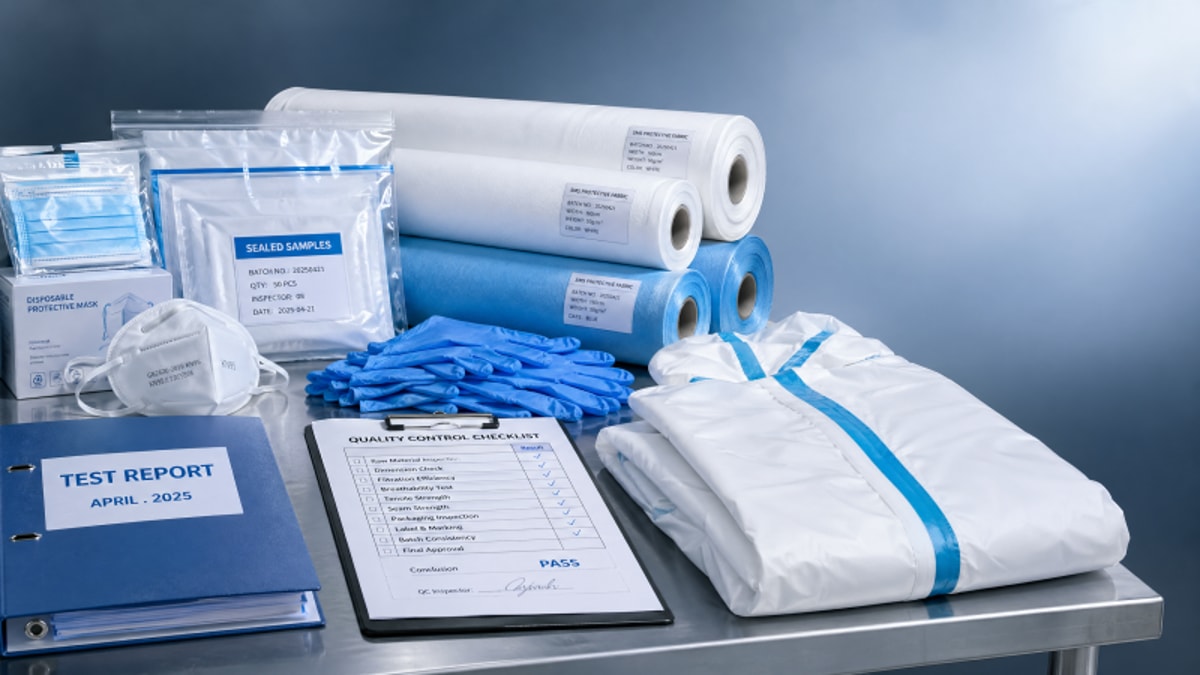
Choosing a PPE factory China partner is not just about price or capacity—it is about verifying quality systems, compliance records, and production consistency before any order is placed. For distributors, agents, and sourcing teams, a structured screening process can reduce supply risk, protect brand reputation, and improve long-term margins. This guide explains how to evaluate manufacturers with greater confidence.
Understanding What a PPE Factory China Evaluation Should Cover
For most distributors, the phrase ppe factory china can refer to a wide supplier base: disposable gloves, masks, gowns, coveralls, face shields, shoe covers, and related protective products. That range is exactly why screening cannot rely on a single checklist. A mask producer with meltblown dependency, for example, faces different process risks than a garment factory cutting laminated nonwoven materials. Before requesting a quote, buyers should define product category, risk level, intended market, and target standards within the first 7 to 14 days of supplier engagement.
In practical sourcing, screening means separating commercial presentation from manufacturing evidence. A polished catalog does not confirm line discipline, batch traceability, or incoming material control. For agents and regional distributors, the real objective is to determine whether a supplier can repeat the same quality in month 1, month 6, and month 18. In PPE, consistency is often more valuable than headline capacity, because one unstable batch can trigger returns, re-labeling costs, or customs delays.
A well-run ppe factory china review usually covers at least 5 dimensions: facility capability, quality management, regulatory alignment, testing discipline, and delivery reliability. In higher-risk channels such as healthcare, laboratory, or institutional procurement, a sixth dimension matters as well: documentation integrity. This includes version control, specification sheets, labeling accuracy, and record retention periods that often extend from 2 to 5 years depending on market expectations.
Why This Topic Matters More Than Ever
Global buyers are no longer evaluating PPE only on unit cost. Hospitals, industrial distributors, and healthcare startups increasingly ask for documented performance, stable lead times, and clearer compliance pathways. As procurement shifts toward evidence-based decisions, the burden of proof moves upstream to the factory. That is where a data-driven review model becomes useful: it turns broad supplier claims into technical checkpoints.
For firms serving medical and life sciences channels, the gap between “sample quality” and “mass production quality” is a major risk. Independent benchmarking logic—such as the approach used by technical evaluation groups like VitalSync Metrics—helps buyers ask better questions: What is the rejection trend by batch? How are critical materials verified? What process parameters are monitored every shift? These are stronger indicators than a low opening quotation.
The goal is not to assume every factory is weak. It is to understand that protective equipment performance depends on process control, not brochure claims. A supplier that passes a structured review is easier to onboard, easier to scale, and easier to defend when downstream customers request technical clarification.
Core Questions to Set Before Supplier Contact
- Which PPE category is being sourced, and is it intended for medical, industrial, laboratory, or general-use channels?
- Which market standards or buyer specifications must be met within the next 30 to 90 days?
- What annual volume range is expected: pilot orders, container-level distribution, or multi-region supply?
- How much tolerance exists for lead time variation, batch deviation, or packaging changes?
These questions provide the baseline for comparing one ppe factory china option against another. Without this step, buyers often compare unlike suppliers using only price and delivery promises, which leads to weak decisions.
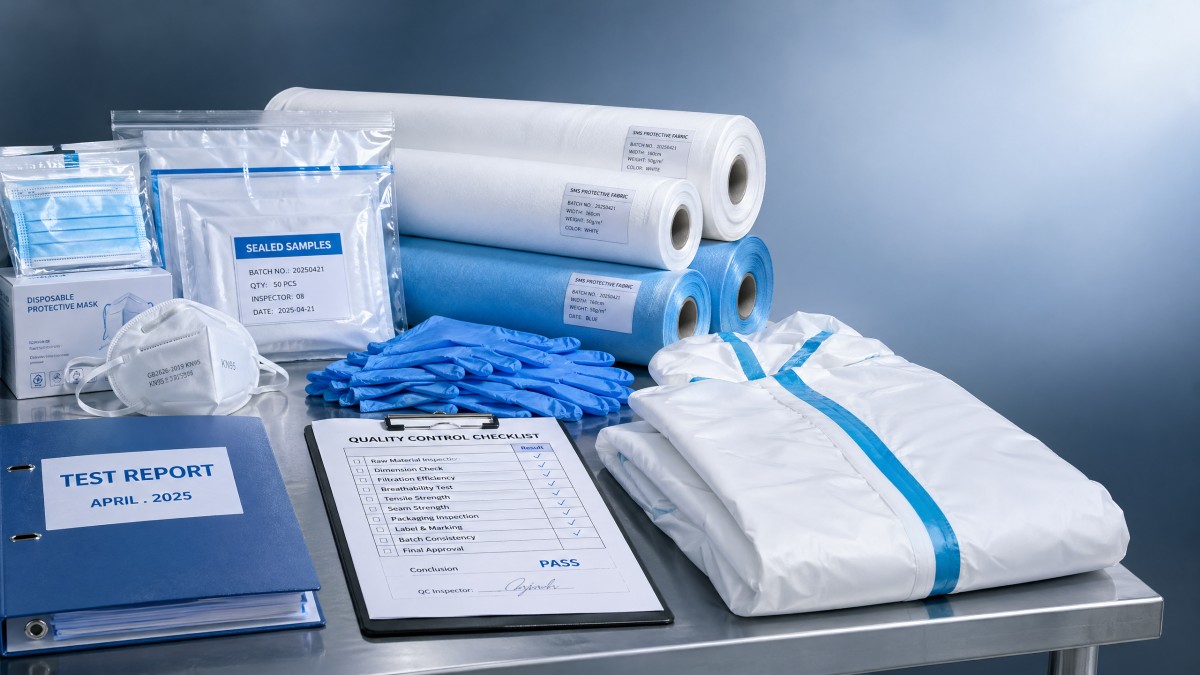
Industry Background: Why Quality Screening Has Become a Strategic Requirement
The PPE market experienced rapid expansion, then normalization, and now a more disciplined procurement phase. Many distributors have already seen the consequences of inconsistent sourcing: filtration variance, seam failures, odor complaints, labeling errors, or packaging that does not survive transit humidity. In the current market, buyers typically shortlist 3 to 5 suppliers but move forward only after evidence review, sample verification, and a production communication test.
This shift is particularly relevant when PPE enters healthcare and laboratory environments. Products may look simple, yet buyer expectations are not simple at all. Material composition, cleanliness controls, and packaging integrity can all affect end-user acceptance. In value-based procurement settings, the lowest quotation may lose importance if failure costs are likely to exceed 8% to 15% of annual margin through claims, rework, or account loss.
A serious ppe factory china review also reflects the broader compliance environment. Even when a buyer is not importing into the most tightly regulated markets, customers still expect disciplined documentation, stable specifications, and transparent testing. Factories that understand this trend usually provide better technical files, clearer change notices, and more reliable pre-shipment communication.
Common Risk Areas by Supplier Maturity
Before onboarding a supplier, it helps to classify risk by operational maturity rather than by sales confidence. The table below summarizes a practical framework for distributor evaluation.
This classification helps a distributor avoid a common mistake: treating all suppliers as functionally identical. A lower-cost supplier may still be suitable for low-risk channels, while higher-demand accounts often need a factory with stronger engineering discipline. The key is alignment between market requirement and factory maturity, not simply a preference for the largest supplier.
What Technical Buyers Should Notice Early
During the first 2 to 3 meetings, pay attention to how the supplier explains defects, process variation, and raw material changes. Factories with stronger controls tend to answer in measurable terms: incoming inspection frequency, retention sample rules, in-process checks per shift, and acceptance thresholds. Vague language such as “normally no problem” often signals weak internal reporting.
It is also useful to check whether commercial staff and technical staff give the same answer. Misalignment between sales promises and production reality is one of the clearest warnings in a ppe factory china review. If delivery, test method, or product scope changes depending on who replies, the onboarding risk increases substantially.
For healthcare-adjacent procurement, documentation discipline should be treated as an operational signal. A supplier that cannot maintain versioned specifications may also struggle with change control during production scaling.
How to Screen Factory Quality Before Ordering
A structured screening program for a ppe factory china partner usually works best in four stages: desktop review, sample validation, factory verification, and trial-order monitoring. Each stage should eliminate risk before larger capital is committed. For many distributors, the screening window lasts 3 to 6 weeks, while strategic healthcare-related accounts may extend this to 8 weeks when multiple product families are involved.
Desktop review should focus on product scope, quality manuals, specification sheets, standard references, production photos or videos, and batch documentation examples. At this stage, do not ask only for certificates. Also ask for how quality is maintained: incoming material checks, process inspection points, packaging controls, and complaint handling flow. This separates compliance presentation from actual execution.
Sample validation is equally important. Test at least 2 to 3 batches when possible, not only one showroom sample. For apparel-type PPE, compare stitching, dimensions, closure strength, and packaging consistency. For masks or barrier products, confirm critical performance data, storage conditions, and packaging details. If a factory cannot provide stable samples across repeated requests, mass production stability is uncertain.
A Practical Screening Checklist
The following table organizes key checkpoints by review area. It is especially useful for agents and distributors managing several suppliers at the same time.
When used correctly, this checklist reduces the chance of overestimating a supplier based on a single successful sample. It also gives sales, quality, and procurement teams a shared language for approval decisions. The strongest signal is not “zero defects,” which is rarely realistic, but whether the factory can identify, record, and contain defects before shipment.
Minimum Actions Before a First Commercial Order
- Request a controlled product specification with revision date, material description, and packaging standard.
- Validate sample consistency across at least 2 submissions or 2 production lots.
- Confirm inspection points for critical features such as fit, seam integrity, barrier properties, or labeling.
- Clarify realistic lead time, usually in a range such as 20 to 45 days rather than a single optimistic date.
- Use a pilot order with tighter acceptance criteria before annual volume commitments.
This approach is especially useful when a distributor needs to protect private-label reputation. A pilot order is not merely a commercial test; it is a stress test of communication, process control, and shipment discipline.
Which Screening Factors Matter Most for Different Buyer Types
Not every buyer evaluates a ppe factory china partner through the same lens. A regional importer focused on retail may prioritize packaging consistency and replenishment speed. A laboratory supply distributor may care more about material cleanliness, specification accuracy, and lot traceability. A healthcare-oriented startup may need stronger regulatory documentation to support investor, partner, or customer due diligence within the next 6 to 12 months.
This is where a classification framework becomes useful. It prevents over-screening low-risk categories and under-screening high-risk channels. The right level of scrutiny depends on exposure: user safety expectations, account sensitivity, customs documentation demands, and brand positioning. In many cases, a mismatch between product channel and supplier maturity creates more cost than the unit price difference itself.
For organizations influenced by medical procurement logic, engineering-style assessment offers a clear advantage. Converting production variables into comparable records—such as defect types, rework frequency, retention samples, and process checkpoints—helps decision-makers choose based on operational evidence rather than assumption.
Buyer Type and Evaluation Priorities
The table below summarizes how screening priorities often differ by channel and business model.
The lesson is simple: screening should match the business model. If your downstream customers ask technical questions every quarter, your supplier should be able to answer with records, not only reassurances. That is why smarter buyers now prefer fewer suppliers with stronger control instead of a large, unstable vendor pool.
Practical Signs of a More Reliable Factory Relationship
Reliable factories usually show a few repeatable behaviors. They disclose what they produce themselves and what they outsource. They can explain the critical control points in under 10 minutes without contradicting their own documents. They also respond to change requests with documented impact on price, lead time, and specifications instead of informal promises.
Another useful sign is whether the supplier asks clarifying questions. A serious ppe factory china partner will want to know destination market, packaging language, carton drop expectations, shelf-life assumptions, and sampling requirements. Factories that ask detailed questions are often easier to scale because they understand that small specification gaps create large downstream costs.
For complex channels, distributors may also benefit from independent technical review support. This is where a benchmarking perspective matters: translating raw manufacturing information into a clearer sourcing decision, especially when commercial and technical inputs appear inconsistent.
Practical Next Steps for Screening, Onboarding, and Long-Term Control
Once a supplier passes initial review, the work is not finished. The first 90 days after approval are often the most revealing period. Buyers should monitor sample-to-batch consistency, pre-shipment communication quality, packaging conformity, and complaint response speed. A supplier that performs well during this phase is more likely to support annual contracts, seasonal surges, or private-label expansion without major disruption.
Long-term control should be light enough to be practical but disciplined enough to catch drift. A quarterly review cycle works well for many distributors. It can include defect trends, returned goods summary, lead time performance, packaging errors, and any material or process changes. Even a 30-minute review every 3 months can prevent larger failures by forcing visibility before problems accumulate.
If your business serves healthcare, laboratory, or higher-specification channels, it is worth documenting a supplier scorecard from the beginning. Typical dimensions include on-time delivery, document accuracy, sample stability, complaint closure time, and response quality during specification changes. Over time, this creates a stronger sourcing memory than relying on staff impressions alone.
Why Work With a Technical Benchmarking Partner
For buyers who want more confidence before scaling a ppe factory china relationship, technical evaluation support can add clarity. VitalSync Metrics focuses on evidence-led review across healthcare and life sciences supply chains, helping decision-makers compare manufacturing claims against operational indicators. That means fewer assumptions, better technical questions, and sourcing choices grounded in measurable reality.
Instead of treating supplier selection as a one-time price event, VSM-style analysis helps turn it into a controlled qualification process. This is especially useful when product performance, compliance readiness, and long-term consistency matter as much as commercial speed. For distributors and agents, that approach can protect both margin and reputation.
A disciplined review framework does not guarantee zero issues, but it significantly improves decision quality. In a market where protective products can appear similar on the surface, structured screening is often the difference between a dependable supply relationship and a costly correction exercise.
Contact Us for Supplier Screening Support
If you are evaluating a ppe factory china source and want a more rigorous basis for decision-making, contact us to discuss your project. We can help you clarify technical parameters, compare product options, review likely delivery windows, and identify the documentation needed for your target market.
You can also reach out for support on sample assessment, specification review, quality checkpoint planning, private-label risk questions, and quotation comparison. For buyers operating in healthcare or laboratory-adjacent channels, we can help frame the right screening criteria before larger orders are placed.
Whether you need guidance on certification expectations, pilot-order strategy, customization feasibility, or supplier communication structure, our team can help you build a clearer evaluation path. The earlier quality screening starts, the easier it becomes to source with confidence and scale with fewer surprises.
Recommended News
- 2026.04.29Healthcare Analytics Metrics That Support Smarter Budget CallsLydia Vancini (Regulatory Compliance Lead)
- 2026.04.29Mobility Assist Selection Mistakes That Limit Long-Term UseSarah Jenkins (Laboratory Infrastructure Consultant)
- 2026.04.29Endoscope Image Resolution Benchmark for Vendor ComparisonDr. Alistair Thorne (Senior Biomedical Engineer)
The VitalSync Intelligence Brief
Receive daily deep-dives into MedTech innovations and regulatory shifts.