
Mobility Assist Selection Mistakes That Limit Long-Term Use
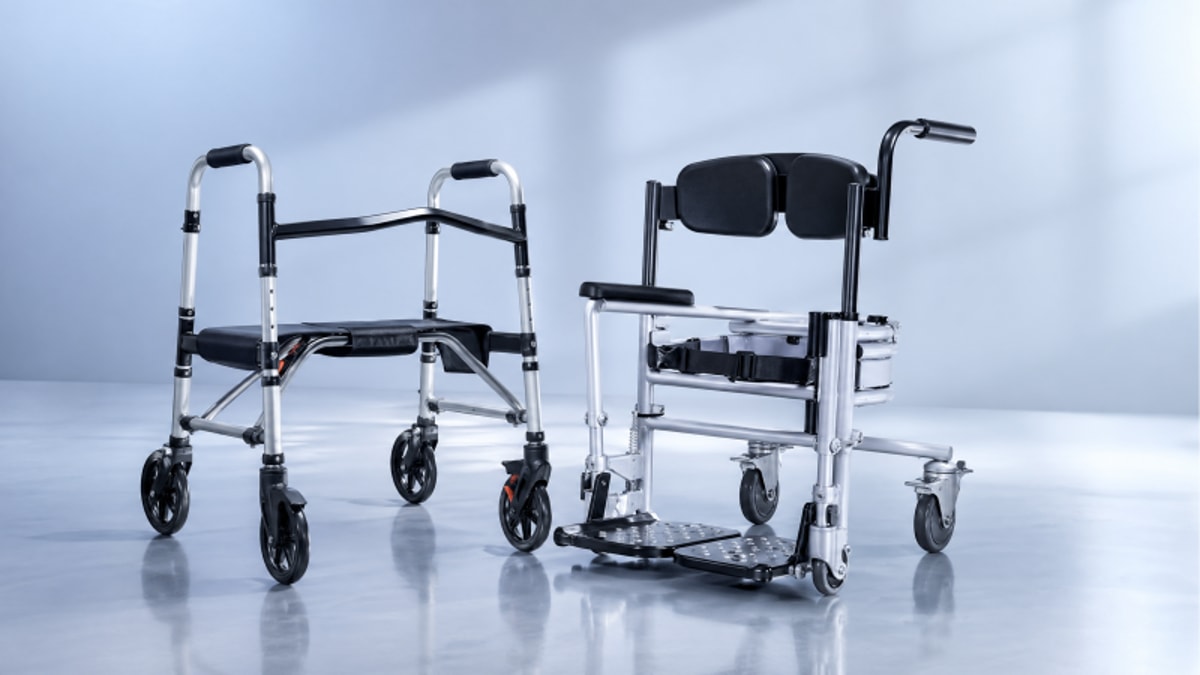
Choosing the wrong Mobility Assist solution can create daily frustration, reduce safety, and shorten long-term usability for operators and end users alike. Many selection mistakes happen when comfort, adjustability, durability, and real-world clinical performance are overlooked in favor of quick purchasing decisions. Understanding these risks early helps users avoid costly replacements and choose support equipment that remains reliable, practical, and effective over time.
Why Mobility Assist Selection Changes by Scenario
A Mobility Assist device that works well in one setting may fail quickly in another. Home recovery, long-shift caregiving, outpatient transfer, and rehabilitation training all place different loads on frames, handles, wheels, braking systems, and support surfaces. For users and operators, the mistake is often assuming that “basic support” is enough, when the real requirement may involve 8 to 12 hours of daily use, repeated transitions, uneven flooring, or frequent cleaning cycles.
In healthcare-adjacent procurement and operational environments, long-term usability depends on more than price and appearance. It depends on fit, repeated-use tolerance, maintenance intervals, safe maneuverability, and compatibility with the user’s physical condition. A Mobility Assist product chosen only by category—walker, transfer aid, rollator, cane, or support chair—can underperform if height range, turning radius, grip design, or weight capacity are not matched to the actual use case.
This is where a technical evaluation mindset matters. At VitalSync Metrics, the practical focus is not promotional language but measurable suitability: adjustment range in centimeters, wheel behavior across common surfaces, expected fatigue points after repeated load cycles, and whether the design supports stable use beyond the first 3 to 6 months. For operators, that means fewer replacements, fewer unsafe workarounds, and better confidence in daily handling.
Common reasons operators misjudge suitability
- They prioritize initial cost over total use period, even though a low-cost frame may loosen or wobble within 6 to 18 months.
- They ignore environment-specific variables such as thresholds, ramps, wet floors, carpet resistance, or narrow corridor turns.
- They choose a Mobility Assist design based on one task, while the user actually needs support across standing, turning, transport, and rest intervals.
- They underestimate the impact of small ergonomic mismatches, such as 2 to 4 cm of incorrect handle height or poor forearm support positioning.
When these issues are missed at the selection stage, the device may still look acceptable on delivery day but become inefficient in real use. That is why scenario-based judgment is essential before any Mobility Assist decision is finalized.
Three Typical Mobility Assist Scenarios Where Selection Mistakes Happen
The best way to avoid long-term disappointment is to break Mobility Assist choices into practical environments. The table below compares three common scenarios where users and operators often choose the wrong support profile because they focus on the product label instead of the operating context.
The pattern is clear: the same Mobility Assist category can become unsuitable when the operating demands differ. In many cases, “wrong product” really means “wrong fit for the setting.” Users who identify their primary scenario first usually make better long-term decisions than those who compare only prices or basic product descriptions.
Scenario 1: Home and community use
Home users often need a Mobility Assist solution that supports repeated short-distance movement over 5 to 20 meters at a time, several times per hour. Door widths, bathroom access, furniture spacing, and floor transitions matter more than institutional durability alone. A bulky frame may feel stable in a showroom yet become frustrating in apartments, elevators, or kitchens.
Another mistake is selecting for occasional use when the actual need is continuous daily support. If a user depends on the device morning to night, grip pressure distribution, folding effort, and seated rest options can strongly affect compliance. Poor comfort often leads to partial use, and partial use may increase fall risk because the device is left aside during key transfers.
For this scenario, operators should check turning behavior, handle adjustability, frame weight, and whether the Mobility Assist unit can be positioned safely beside beds, toilets, and chairs. Even a 1 to 2 cm misfit in seat or handle height can produce poor posture over months of use.
Scenario 2: Assisted transport and clinical handling
In assisted transport, the operator’s workload becomes part of the selection criteria. A Mobility Assist product used in outpatient, eldercare, or step-down care environments may face 20 to 40 transfer interactions per day. Brakes must respond consistently, wheels must resist debris build-up, and surfaces must tolerate regular disinfection without rapid deterioration.
A common error is choosing a unit that feels comfortable for the user but is mechanically inefficient for staff. If push force is too high, braking pedals are awkward, or the frame flexes under directional change, operator fatigue increases. Over time, staff may avoid using the device correctly, creating informal workarounds that reduce safety margins.
This is also the scenario where material fatigue matters most. Joint integrity, caster attachment, and weld quality influence long-term reliability. In benchmark-oriented evaluation, these are more meaningful than decorative features because they affect whether the Mobility Assist system remains dependable after repeated loading and cleaning cycles.
Scenario 3: Rehabilitation and staged recovery
Rehabilitation users rarely stay at one support level. During the first 2 to 12 weeks, weight-bearing tolerance, balance confidence, and gait pattern may change significantly. A Mobility Assist device that cannot adapt will either become too restrictive or insufficiently supportive. That is why fixed, non-progressive designs are often a poor choice in structured recovery plans.
Another mistake is treating rehab as a comfort-only scenario. Comfort matters, but training value matters more. The right equipment should encourage safe movement quality, not simply prevent motion. Height ranges, forearm options, wheel resistance, and frame responsiveness should align with therapeutic goals rather than generic convenience.
When users, caregivers, and therapists align early on expected progression, the Mobility Assist selection becomes more durable as a decision. It supports not only current limitation but also the next functional stage, reducing the chance of replacement midway through recovery.
What to Evaluate Before Choosing a Mobility Assist Solution
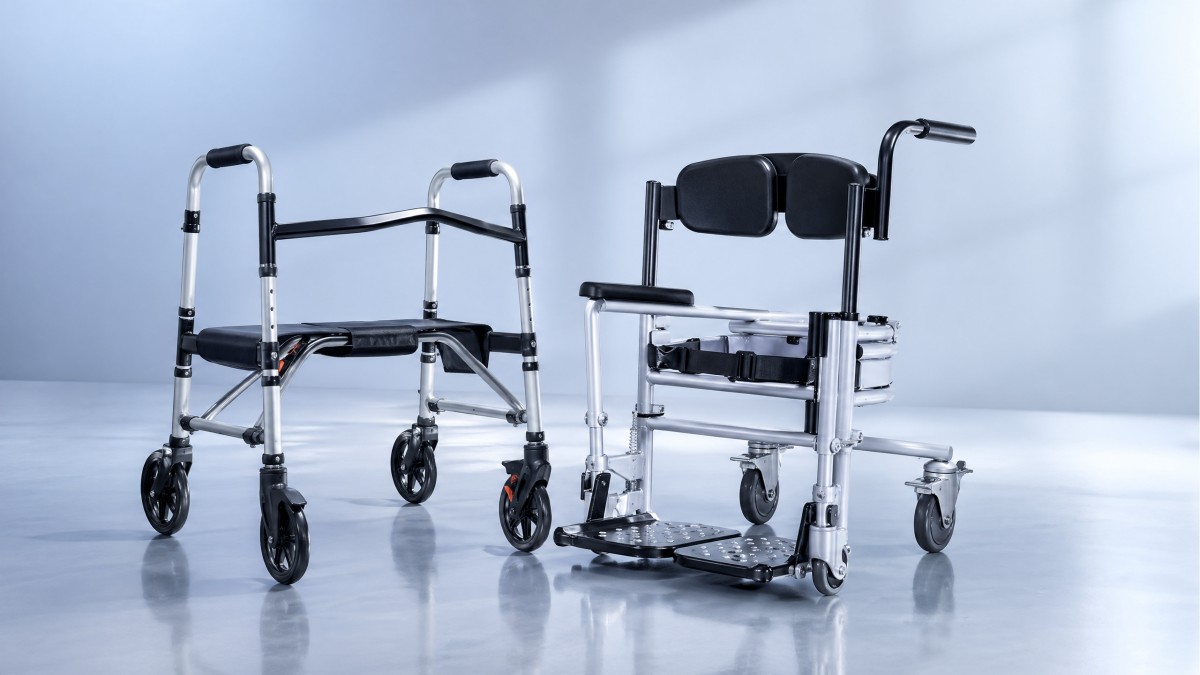
Once the scenario is clear, the next step is to convert needs into measurable checks. Many long-term use problems come from vague selection language such as “comfortable,” “light,” or “strong.” Those words are not enough. Users and operators need criteria that can be observed, compared, and discussed before ordering.
The following table summarizes practical evaluation points that help reduce Mobility Assist mismatch across home, clinical, and rehabilitation settings. These are not brand-specific claims; they are decision dimensions that support safer and more durable choices.
These evaluation points help convert a broad Mobility Assist search into a controlled selection process. Instead of asking only whether the device “looks right,” users can ask whether it matches body dimensions, movement patterns, cleaning demands, and expected daily frequency.
Ergonomics is not a minor detail
Long-term discomfort rarely appears in the first five minutes of testing. It appears after 2 weeks of repetitive grip loading, after 30 sit-to-stand transitions, or after repeated forearm pressure in a poorly shaped support pad. For that reason, a short showroom trial is not enough for a serious Mobility Assist decision.
Operators should observe elbow angle, shoulder tension, wrist position, step length, and whether the user can maintain stable direction changes. If the device causes forward leaning, asymmetric loading, or difficulty braking, long-term use will likely decline even if the frame itself remains intact.
A practical pre-purchase checklist
- Measure the user’s support height requirement and compare it with the full adjustment range, not only the midpoint setting.
- Confirm the primary route of use, including doorways, ramps, flooring changes, and storage area access.
- Estimate daily use frequency, such as 5, 15, or 30 movement cycles, to judge whether a consumer or heavy-duty Mobility Assist profile is needed.
- Review cleaning and maintenance expectations, especially in settings requiring frequent disinfection or shared use.
- Check whether the device still fits if the user’s condition improves or declines over the next 1 to 3 months.
This checklist reduces the risk of under-specifying a Mobility Assist product that seems affordable initially but proves limiting in practice.
Frequent Selection Mistakes That Shorten Long-Term Usability
Certain mistakes appear repeatedly across industries, homes, and care environments. They are not always dramatic at the start, which is why they are so common. A device may function adequately on day one yet still be the wrong Mobility Assist solution for month six.
The first major mistake is buying to the current moment only. A user may have temporary weakness now, but if rehabilitation is planned, the support profile may need to change within 4 to 8 weeks. Choosing a non-adjustable system can force an early replacement or create dependence on a level of support that is no longer ideal.
The second mistake is ignoring operator effort. In shared-use settings, a Mobility Assist device should not only support the person using it but also the person managing transfers, brakes, storage, and positioning. If operator strain is high, real-world compliance declines, and the intended safety benefit is reduced.
Mistakes linked to technical oversight
- Selecting narrow wheels for surfaces that include thresholds, rough outdoor entries, or mixed flooring.
- Overlooking brake engagement feel, which becomes critical after dozens of daily stop-and-start actions.
- Assuming all frame materials perform similarly, even though repeated cleaning and load cycling can expose weak finish or joint quality.
- Ignoring replacement parts availability for wear items that may require service within 12 to 24 months.
Mistakes linked to user fit and behavior
Some Mobility Assist devices fail not because they are poorly made, but because they do not match the way the user actually moves. A person with reduced grip strength may need larger brake levers or more supportive contact points. A user with balance fluctuation may need a different base geometry than someone recovering from a single lower-limb injury.
Behavior also matters. If the device is difficult to fold, awkward to park, or uncomfortable to use during fatigue periods, users often avoid it during exactly the moments they most need support. That gap between available support and real usage is one of the most important warning signs in Mobility Assist selection.
A more durable decision comes from observing use patterns over routine tasks: standing up, turning 90 degrees, moving through a narrow opening, resting, and resuming movement. These are small actions, but they often reveal the hidden limits of an otherwise acceptable-looking product.
How to Match Mobility Assist Solutions to Real Operational Needs
A strong selection process should move from scenario to criteria, then from criteria to confirmation. For users and operators, this means defining the use environment, the body support requirement, and the expected product lifespan before comparing models. In practical terms, even a basic Mobility Assist purchase benefits from a structured review rather than a quick catalog choice.
One useful method is to rank needs into three levels: essential, preferred, and optional. Essential items may include safe height range, brake access, and corridor fit. Preferred items may include foldability, rest seating, or lower frame weight. Optional items may include accessory storage or appearance features. This approach prevents important technical factors from being hidden by minor conveniences.
In more demanding environments, it is also wise to evaluate how the Mobility Assist solution performs after repeated use rather than only during first handling. Serviceability, sanitation compatibility, and component replacement options can make a major difference over a 12-, 24-, or 36-month ownership window.
A scenario-based matching framework
Use the following framework when narrowing options. It helps operators compare Mobility Assist products according to real-world fit rather than generic claims.
- If the main setting is home use, prioritize maneuverability, comfort over repeated short cycles, and storage practicality.
- If the main setting is supervised care, prioritize braking consistency, frame durability, maintenance access, and sanitation tolerance.
- If the main setting is rehabilitation, prioritize adjustability, staged support options, and alignment with changing functional goals.
This kind of matching reflects the broader engineering reality behind support equipment: long-term usability depends on repeated performance under the right conditions, not just short-term acceptability.
Why evidence-based evaluation matters
In the MedTech and healthcare supply chain, surface-level claims are not enough. A Mobility Assist product may appear robust, but users still need clarity on fatigue-prone joints, practical cleaning compatibility, and whether the design remains stable under everyday loads. Evidence-based benchmarking helps separate durable engineering from attractive but unproven presentation.
That is the value of a technical review perspective. By translating performance factors into understandable selection guidance, decision-makers can move from guesswork to informed procurement. For operators, this means choosing support equipment that is easier to trust over time, especially where safety, reliability, and user compliance are tightly connected.
Why Work With Us for Mobility Assist Evaluation and Selection Support
Selecting the right Mobility Assist solution should not rely on assumptions, vague labels, or one-time impressions. It should be based on scenario fit, measurable parameters, and realistic long-term expectations. VitalSync Metrics supports that process by focusing on technical integrity, use-case relevance, and engineering-based comparison logic for healthcare and life sciences decision environments.
If you need support with Mobility Assist selection, we can help you review application scenarios, confirm core parameters, compare product suitability, and identify long-term risks before purchase. This is especially useful when you need to balance user comfort, operator safety, maintenance practicality, and procurement confidence in the same decision.
Contact us to discuss parameter confirmation, product selection guidance, delivery cycle expectations, custom evaluation priorities, certification-related questions, sample support possibilities, or quotation communication. When the goal is dependable long-term use, better decisions start with better technical judgment.
Recommended News
- 2026.04.29Healthcare Analytics Metrics That Support Smarter Budget CallsLydia Vancini (Regulatory Compliance Lead)
- 2026.04.29Mobility Assist Selection Mistakes That Limit Long-Term UseSarah Jenkins (Laboratory Infrastructure Consultant)
- 2026.04.29Endoscope Image Resolution Benchmark for Vendor ComparisonDr. Alistair Thorne (Senior Biomedical Engineer)
The VitalSync Intelligence Brief
Receive daily deep-dives into MedTech innovations and regulatory shifts.