
Autoclave Sterilization Validation Documentation That Auditors Expect
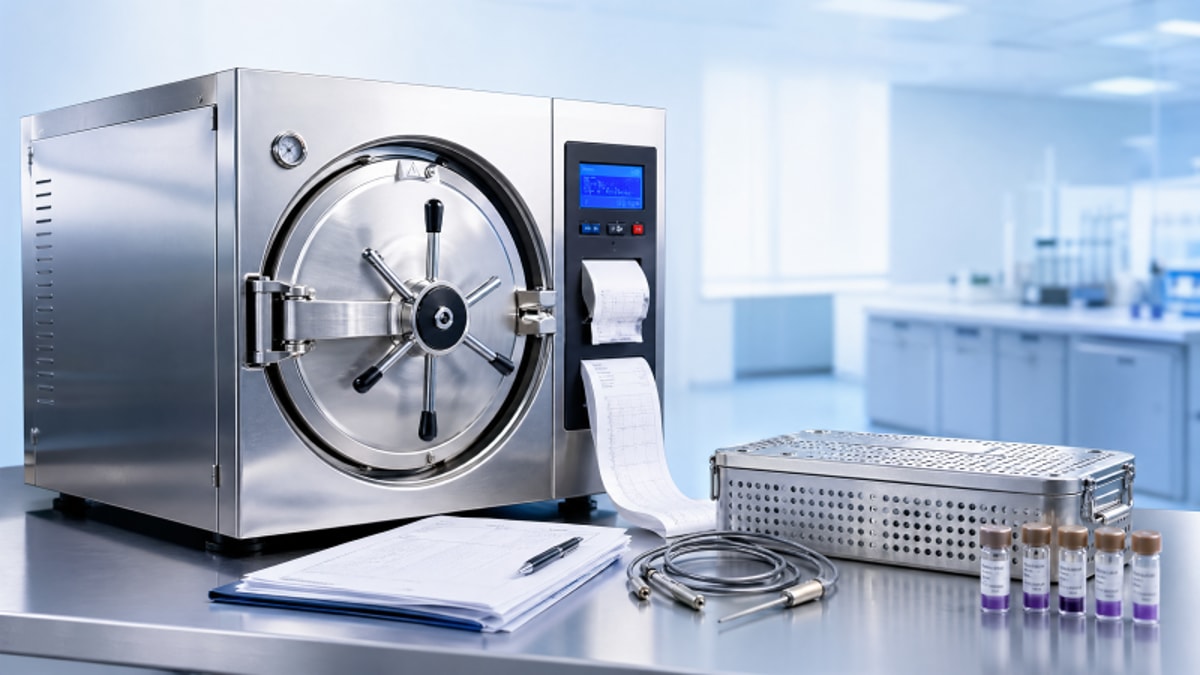
For technical evaluators, autoclave sterilization validation is not just a compliance task—it is the evidence chain auditors use to confirm process control, repeatability, and patient safety. Clear, complete documentation turns cycle data, load configurations, and biological indicator results into defensible proof, helping teams reduce audit risk, close validation gaps, and support confident procurement and regulatory decisions.
Why documentation standards change by application scenario
In practice, autoclave sterilization validation does not fail because teams do not understand sterilization theory. It fails because documentation is not matched to the real use case. A porous wrapped surgical tray, a liquid load in laboratory glassware, and a mixed accessory set for low-volume contract manufacturing can all run in steam, yet the validation file auditors expect will differ in focus, acceptance rationale, and risk language.
For technical evaluators in procurement, quality, engineering, and regulatory review, the first question is rarely “Was a cycle completed?” More often, it is “Was the documented validation package built for this load family, this facility condition, and this intended use?” That distinction matters when cycle times range from 15 to 45 minutes, when exposure temperatures are commonly validated at 121°C or 134°C, and when load density or air removal performance directly affects lethality.
In healthcare and life sciences supply chains, documentation quality also affects supplier qualification. A technically acceptable autoclave may still create procurement risk if its validation records do not clearly link installation qualification, operational qualification, and performance qualification to current production or laboratory use. For that reason, strong autoclave sterilization validation must be read as a scenario-based evidence system, not as a static binder of forms.
What technical evaluators are usually checking first
Before reading detailed cycle printouts, evaluators typically verify whether the documentation identifies product or load categories, worst-case assumptions, chamber mapping logic, sensor placement, and acceptance criteria. If these are missing, even complete raw data may be difficult to defend during an audit. In many reviews, the first 3 to 5 pages of a validation protocol reveal whether the package was designed for control or only for record keeping.
- Defined load families with justification for worst-case selection.
- Clear separation of IQ, OQ, and PQ activities, including requalification triggers.
- Documented acceptance criteria for temperature distribution, air removal, exposure time, and biological indicator response.
- Traceability from instrument calibration to executed cycle reports and final approval.
This is why scenario awareness matters. A laboratory architect assessing a sterilization room for future throughput may focus on chamber utilization, drain cooling considerations, and utility stability over a 12-month operating window. A MedTech startup preparing for supplier qualification may instead need leaner but highly traceable documentation that can survive investor, notified body, or customer review without ambiguity.
Three common application scenarios and what auditors expect in each
The most useful way to assess autoclave sterilization validation is to divide it by application scenario. This helps technical teams avoid copying protocols between departments or suppliers when the actual heat transfer conditions, packaging systems, and release decisions are not equivalent. The table below summarizes the documentation emphasis auditors typically expect to see across three common environments.
The main lesson is that autoclave sterilization validation should always be read through the lens of intended use. Auditors do not expect identical files from every site, but they do expect that the file proves control over the actual risk profile. If a facility runs 8 to 20 cycles per day, routine documentation discipline often becomes as important as the initial validation study itself.
Scenario 1: Hospital sterile processing
In hospital central sterile services, the documentation burden is heavily operational. Auditors want to see that validated cycle parameters are translated into repeatable daily practice, especially for wrapped sets, lumened devices when applicable, and mixed metal instrument loads. The file should connect qualification studies to routine chemical indicators, biological indicator strategy, and operator training records across shifts.
A common weakness is assuming that equipment commissioning documents are enough. They are not. In this setting, autoclave sterilization validation needs explicit load configuration records, acceptance logic for wet packs or rejected loads, and evidence that preventive maintenance does not silently change process performance. Requalification every 6 to 12 months is common practice in many controlled environments, especially after repairs or utility disturbances.
What to verify in hospital files
- Documented load diagrams for the highest-risk tray sets or densest wrapped loads.
- Daily or defined-frequency air removal testing where required by internal procedures.
- BI placement rationale tied to cold spots or worst-case challenge positions.
- Deviation handling for aborted cycles, utility interruptions, or moisture findings.
For procurement teams evaluating outsourced sterilization support or replacement equipment, this scenario demands a close look at operator-facing forms and release records, not just the validation summary report. In many audit findings, the gap is not missing thermocouple data but weak translation of validated conditions into routine use.
Scenario 2: MedTech production and packaging environments
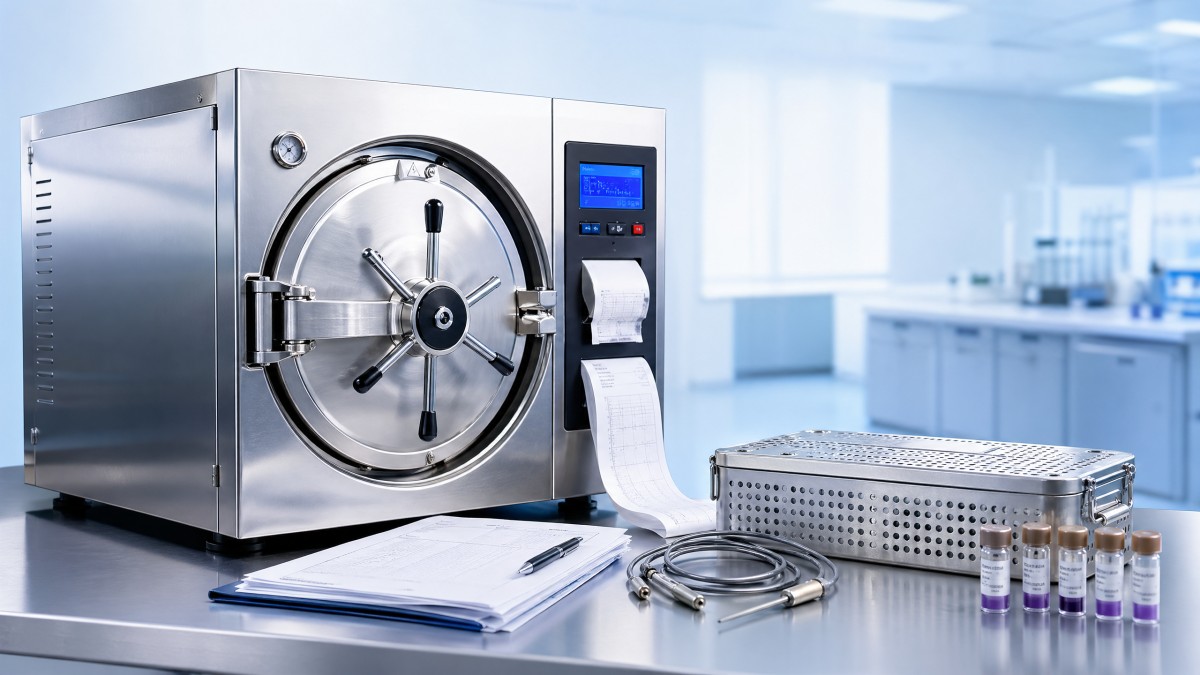
For device manufacturers, autoclave sterilization validation must support design intent, process capability, and controlled change. Auditors typically expect a stronger formal link between validation protocol, product family grouping, packaging configuration, and release criteria. If the same chamber is used for multiple product types, the logic behind family grouping becomes critical, especially when packaging materials, mass, geometry, or moisture retention differ.
This scenario often involves more layered documentation than hospital use. Evaluators may review user requirement specifications, utility qualification, alarm challenge records, calibration certificates, and worst-case PQ runs executed in duplicate or triplicate. Even if volumes are modest—such as pilot lots of 50 to 500 units—the file should still show why the challenge load is representative and how future engineering changes will trigger partial or full revalidation.
A supplier that provides only a general cycle report without traceability to packaging design, load density, and sensor mapping may increase downstream compliance risk. For value-based procurement, stronger documentation reduces the cost of later remediation, especially when onboarding distributors, contract manufacturers, or regional regulatory submissions.
Scenario 3: Research, diagnostics, and laboratory operations
Laboratory environments create a different documentation pattern. Here, the risk is often mismatch between cycle type and load chemistry or heat transfer behavior. Liquid media, biohazard waste, reusable glassware, and accessory parts may all enter the same autoclave program library, yet they should not share identical validation assumptions. A 121°C liquid cycle with long come-up and controlled exhaust behaves very differently from a porous goods program.
Auditors in this scenario often ask whether the documentation proves temperature penetration to the slowest-heating point and whether boil-over, breakage, or incomplete exposure risk was addressed. Facilities running 3 to 10 different cycle recipes should maintain a matrix linking each recipe to validated load categories, utility conditions, and review frequency. Without that matrix, records become difficult to interpret during investigations or expansions.
For laboratory architects and technical reviewers, autoclave sterilization validation also intersects with facility planning. Drain capacity, steam quality, water quality, room heat load, and maintenance access can all influence whether a validated state is sustainable over time. A well-documented file therefore supports both operational reliability and capital planning decisions.
Key document sets that determine whether a validation package is defensible
Across scenarios, certain records consistently determine whether autoclave sterilization validation will stand up in supplier qualification, internal QA review, or external audit. The objective is not to create unnecessary paperwork. It is to ensure that every key claim—cycle capability, repeatability, release confidence, and change control—can be traced to objective evidence within a defined time window.
Technical evaluators should look for documentation that covers the full evidence chain, from equipment baseline to approved report. When one link is weak, such as missing calibration status or undefined acceptance criteria, later records lose strength. In many cases, the difference between a clean review and a corrective action request is not volume of documentation but coherence.
Core files and why they matter
The table below outlines the document groups most auditors expect to see, along with the practical reason each matters during evaluation.
A robust package usually includes raw data review as well as approval records. Auditors often compare the protocol’s stated acceptance limits with final report conclusions. If three PQ runs were planned and only two were executed, the package must explain the deviation and scientific justification clearly. Silence on such gaps tends to trigger deeper scrutiny.
Minimum technical traceability points
- Calibration dates and due dates for thermocouples, pressure sensors, and recording devices.
- Named cycle recipes with revision control and approved parameter ranges.
- Documented linkage between BI lot numbers, incubation records, and interpreted results.
- Formal signatures or electronic approvals showing technical and quality review.
For teams comparing suppliers, these records help distinguish a chamber that can run steam cycles from a sterilization process that is truly audit-ready. That difference directly affects onboarding speed, remediation cost, and long-term confidence in the source.
How to judge scenario fit before accepting a supplier’s validation file
Technical evaluators benefit from a structured review path. Instead of asking whether a validation file is “complete” in the abstract, ask whether it fits the intended business scenario. A file prepared for occasional laboratory glassware sterilization may not be sufficient for repetitive device production release. Likewise, an impressive manufacturing dossier may still miss hospital workflow controls that matter in daily sterile processing.
A practical evaluation should combine process parameters, load logic, and lifecycle controls. This matters especially when procurement timelines are short—often 4 to 8 weeks for qualification review—or when multiple sites share one supplier. In those cases, scenario fit reduces the risk of discovering documentation gaps after installation or during the first quality audit.
A fast review framework for technical teams
- Confirm the intended load categories: porous goods, instruments, liquids, waste, or mixed accessories.
- Check whether cycle parameters and exhaust profile align with those load categories.
- Verify that worst-case load selection is explained, not assumed.
- Review whether maintenance, calibration, and change control keep the validated state current.
- Look for requalification triggers such as repair, relocation, software revision, or packaging change.
Where possible, compare the supplier’s documentation against your own operating scenario. If your facility expects 2 shifts per day, frequent load changes, or cross-regional documentation review under MDR or IVDR-linked quality systems, the validation file should show enough structure to scale with that complexity. A technically correct but thin dossier may create delays later in onboarding or audit response.
Common misjudgments that create avoidable audit risk
One common mistake is relying on a pass result without reviewing challenge conditions. Another is treating all steam cycles as interchangeable. In autoclave sterilization validation, the context of the pass matters: chamber loading, sensor location, packaging system, utility conditions, and BI positioning all affect whether the evidence is transferable. Auditors often focus on these details when a file appears too generic.
A second misjudgment is ignoring document age. A strong validation report from 3 years ago may no longer represent the current process if software was updated, the steam source changed, or new product families were added. Periodic review intervals, commonly 12 months or triggered by major change, should be visible in the quality record set.
A third issue is poor cross-functional ownership. Engineering may own the study, quality may own release, and operations may own the actual loading practice. If those functions are not aligned, documentation becomes inconsistent. For evaluators, this often appears as conflicting load descriptions, missing approval signatures, or unclear deviation closure.
Why technical buyers and quality teams work with VSM
VitalSync Metrics supports technical evaluators who need more than marketing-level sterilization claims. Our perspective is shaped by engineering review, benchmarking discipline, and practical procurement needs across healthcare, MedTech, and laboratory environments. When teams assess autoclave sterilization validation, they often need an independent view on whether a documentation package is scenario-fit, audit-defensible, and sustainable over the equipment lifecycle.
We help decision-makers translate raw technical files into usable evaluation logic. That can include reviewing protocol structure, checking whether load family definitions match actual use, identifying evidence gaps in IQ/OQ/PQ traceability, and highlighting where routine control records may be too weak for supplier approval. For projects under time pressure, this reduces the risk of approving a file that later requires corrective work.
If you are comparing sterilization equipment, reviewing a contract manufacturing partner, planning a new laboratory workflow, or preparing documentation for internal or external audit readiness, contact VSM to discuss your scenario. We can support parameter confirmation, load-category review, supplier file assessment, delivery timeline questions, customized evaluation frameworks, applicable certification expectations, sample documentation review, and quotation discussions tailored to your procurement or validation stage.
Recommended News
- 2026.04.29Healthcare Analytics Metrics That Support Smarter Budget CallsLydia Vancini (Regulatory Compliance Lead)
- 2026.04.29Mobility Assist Selection Mistakes That Limit Long-Term UseSarah Jenkins (Laboratory Infrastructure Consultant)
- 2026.04.29Endoscope Image Resolution Benchmark for Vendor ComparisonDr. Alistair Thorne (Senior Biomedical Engineer)
The VitalSync Intelligence Brief
Receive daily deep-dives into MedTech innovations and regulatory shifts.