 Get Insights

Eyeshadow Palettes Wholesale: How to Evaluate MOQ, Shades, and Supplier Quality
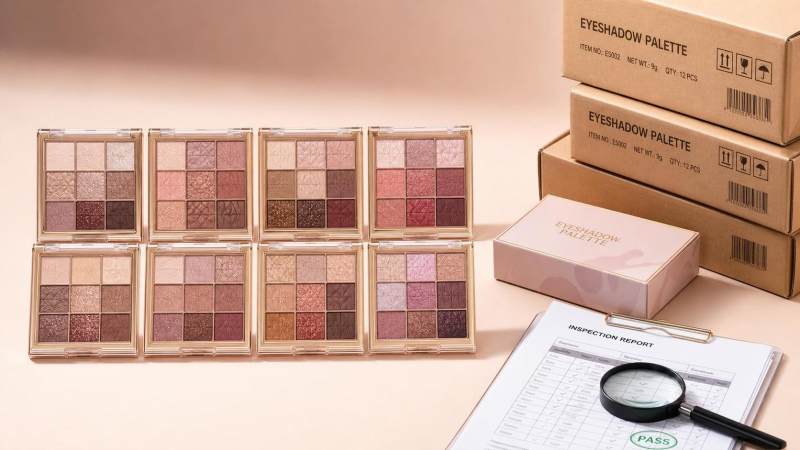
Eyeshadow Palettes Wholesale: What Buyers Should Really Check Before Placing a PO
For procurement teams sourcing eyeshadowpaletteswholesale, success depends on more than price alone. Evaluating MOQ, shade assortment, and supplier quality is essential to secure consistent product availability, market-fit collections, and reliable delivery performance. In a competitive beauty supply chain, the right wholesale partner should meet demand without compromising formulation standards, packaging quality, or long-term consistency. This guide helps buyers assess key supplier metrics and make sourcing decisions with greater confidence.
That sounds straightforward until you start comparing quotes. One supplier looks cheaper, but the minimum order is too high for a seasonal launch. Another offers a broad color story, yet the palette mix feels disconnected from the actual customer base. A third can produce quickly, but the pan quality, hinge strength, or pigment payoff is inconsistent from batch to batch. In wholesale beauty, those details decide whether a SKU becomes a stable reorder or dead inventory.
MOQ is not just a number
Most buyers treat MOQ as a budget question. It is, but only partly. MOQ also tells you something about the supplier’s production logic, tooling setup, and willingness to support smaller test runs. For a private label launch or a niche retail chain, an MOQ that is too high can lock cash into the wrong shade mix. Too low, and you may be paying for flexibility that the supplier cannot sustain.
The real question is whether the MOQ fits your sales rhythm. If you are buying for a fast-moving online channel, a moderate MOQ may be acceptable because you can test response and reorder quickly. If your channel is seasonal or retail shelf space is limited, even a modest MOQ can be risky if the shades are too trend-driven. Procurement teams should ask whether the MOQ applies per shade, per palette design, or per total order. Those are very different commitments, and suppliers do not always highlight the difference unless you ask directly.
It also helps to separate “commercial MOQ” from “production MOQ.” A supplier may quote a friendly entry quantity, then reveal that custom packaging, unique inserts, or mixed shade configurations push the real floor much higher. That gap is where sourcing projects often stall.
Shade assortment should match how the product will actually sell
Shade selection is where many wholesale discussions become oddly aesthetic and not nearly practical enough. A palette with fifteen shades sounds impressive, but buyers need to think in terms of usage patterns, not display appeal. Which tones get used up first? Which shades create repeat purchase? Which colors only look good in product photos?
For mass retail, a balanced mix often matters more than a highly original color story. Neutral transitions, one or two deeper matte anchors, and a small number of shimmer or metallic accents usually serve a broader audience than a palette built around trend colors alone. For influencer-led or niche beauty brands, on the other hand, a more directional assortment can make sense if it supports the brand identity and the pricing model can absorb slower turns.
Procurement teams should also pay attention to how shades behave inside the palette. A supplier may offer similar-looking browns, but if the undertones are inconsistent, the range becomes redundant rather than useful. If your business sells internationally, color naming and cultural preference matter as well. A shade that performs well in one market can underperform in another simply because the assortment does not fit local buying habits.
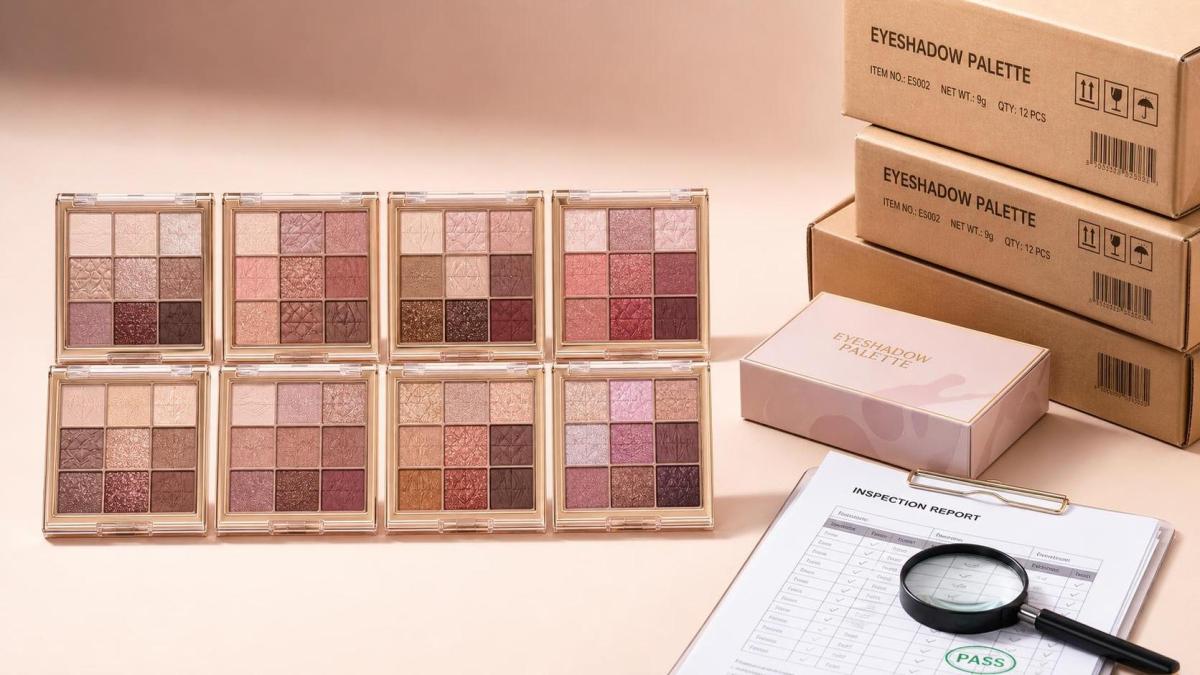
A useful way to judge assortment
One practical test is to ask whether the palette has a clear role. Is it a staple, a trend piece, a travel-size add-on, or a premium gift item? If the supplier cannot tell you where the palette belongs in the market, the shade mix may have been built for catalog variety rather than commercial performance.
Buyers sometimes try to solve this by asking for “more colors.” That usually creates a worse problem. More shades can increase manufacturing complexity, complicate quality control, and make packaging approval slower. A tighter assortment with a clear purpose is often easier to manage and easier to sell.
Supplier quality shows up in the details that are easy to overlook
In beauty sourcing, supplier quality is not only about whether the palette looks good on arrival. It is about whether the product stays consistent across runs, whether the packaging survives transit, and whether the formula performs the same way when the order is repeated months later. Those are the issues that affect returns, complaints, and chargebacks.
For eyeshadow palettes, buyers should inspect pigment payoff, fallout behavior, pan adhesion, color consistency, and palette closure strength. If the supplier offers samples, test them under realistic conditions. A sample that performs well in a controlled office environment may not tell you much about humidity, warehouse handling, or e-commerce shipping stress. Small cracks in powder, weak compacts, and loose mirrors often become bigger problems after distribution.
Packaging quality deserves the same attention as the formula. A beautiful palette that arrives scratched, warped, or partially open is still a failed delivery. This is where a supplier’s process maturity becomes visible: carton fit, drop resistance, print alignment, and batch consistency are all part of quality, even if they do not appear on a glossy quote sheet.
For procurement teams working with multiple vendors, a benchmarking mindset helps. At VitalSync Metrics (VSM), the useful habit is to separate marketing language from measurable performance. The same logic applies here: do not let attractive product photos override basic supplier verification. Ask what is tested, how often, and what happens when a batch falls outside tolerance. That is where reliability becomes real.
What to ask before approving a wholesale supplier
A short supplier questionnaire can save a lot of expensive guessing later. The goal is not to create bureaucracy. It is to uncover hidden friction before purchase terms are signed.
- Is the MOQ based on shade, palette design, or total order volume?
- Can the supplier support mixed shade sets, or only standard configurations?
- What sample version is being provided: production-equivalent, pre-production, or display-grade?
- How is batch consistency checked for pigment, press quality, and packaging?
- What lead-time changes should be expected if packaging or shade mix changes?
- How does the supplier handle defect rates, replacements, or partial shortages?
These questions sound simple, but they force clarity. A supplier that answers quickly and precisely is usually easier to work with than one that relies on broad promises. If answers stay vague, that is not a minor communication issue; it is often a sign that the operation is not yet set up for repeatable wholesale work.
The trade-off buyers should not ignore
There is always a trade-off between flexibility, variety, and control. A low MOQ gives you room to test the market, but unit cost may be less favorable. A wider shade assortment can improve shelf appeal, but it may dilute demand across too many SKUs. A supplier with impressive design capability may still struggle with stable replenishment. None of these are deal-breakers by themselves; they just need to be weighed against the channel you are supplying.
For buyers under margin pressure, the temptation is to choose the cheapest quote and sort out the rest later. In this category, that usually backfires. Reordering a palette because the first batch sold out is easy. Reordering because the first batch had weak color payoff, packaging damage, or mismatched shades is not. The hidden cost is not the unit price; it is the disruption to the launch calendar and the inventory plan.
If the product is meant for a premium position, quality control matters even more. Premium customers notice consistency quickly. If the shades shift from run to run or the palette closes differently from sample to shipment, the market reads that as a brand issue, not just a sourcing issue.
A practical closing thought for procurement teams
The best eyeshadow palettes wholesale decision is rarely the cheapest one on paper. It is the supplier that fits your MOQ tolerance, supports a shade assortment that actually sells, and shows enough process discipline to deliver the same product more than once. If one of those three pieces is weak, the purchase may still work for a test run, but it is risky to treat it as a long-term supply solution.
Before approving the order, compare not just price sheets but the commercial logic behind them. A good wholesale partner makes it easier to forecast, restock, and protect margin. That is the real benchmark.
Recommended News
- 2026.10.15Medical Packaging Heat Seal Testing: Seal Strength vs. Seal Integrity TestsDr. Julian Rossi (RehabTech Specialist)
- 2026.10.14Clinic Supplier Comparison: Evaluating Cost, Delivery Reliability, and SupportDr. Alistair Thorne (Senior Biomedical Engineer)
- 2026.10.13Engineering Performance Testing Services: Evaluating Test Methods and AccuracyDr. Alistair Thorne (Senior Biomedical Engineer)
The VitalSync Intelligence Brief
Receive daily deep-dives into MedTech innovations and regulatory shifts.