
Dental Implant Wholesale Pricing: What Changes the Quote
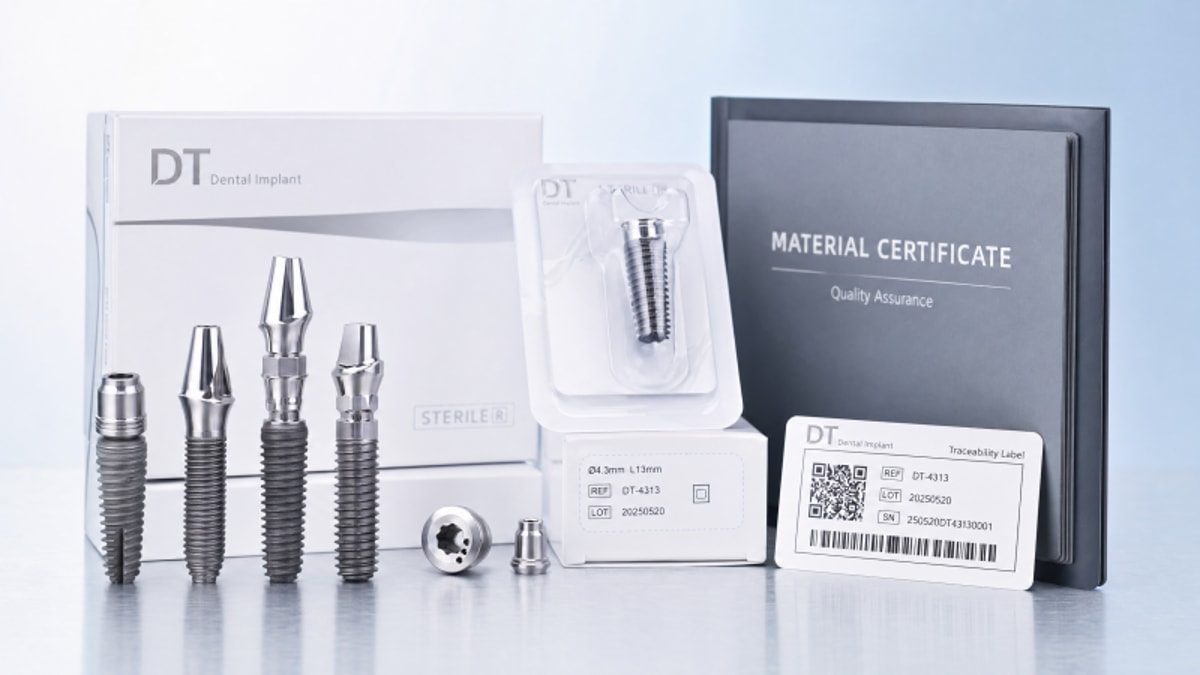
Dental implant wholesale pricing is shaped by far more than unit cost alone. For business evaluators, the real quote depends on material grade, manufacturing precision, regulatory compliance, testing standards, packaging, and supply-chain reliability. Understanding these variables helps procurement teams compare suppliers with greater accuracy, reduce hidden risk, and make sourcing decisions based on long-term technical value rather than headline pricing.
Why does one dental implant wholesale quote differ so much from another?
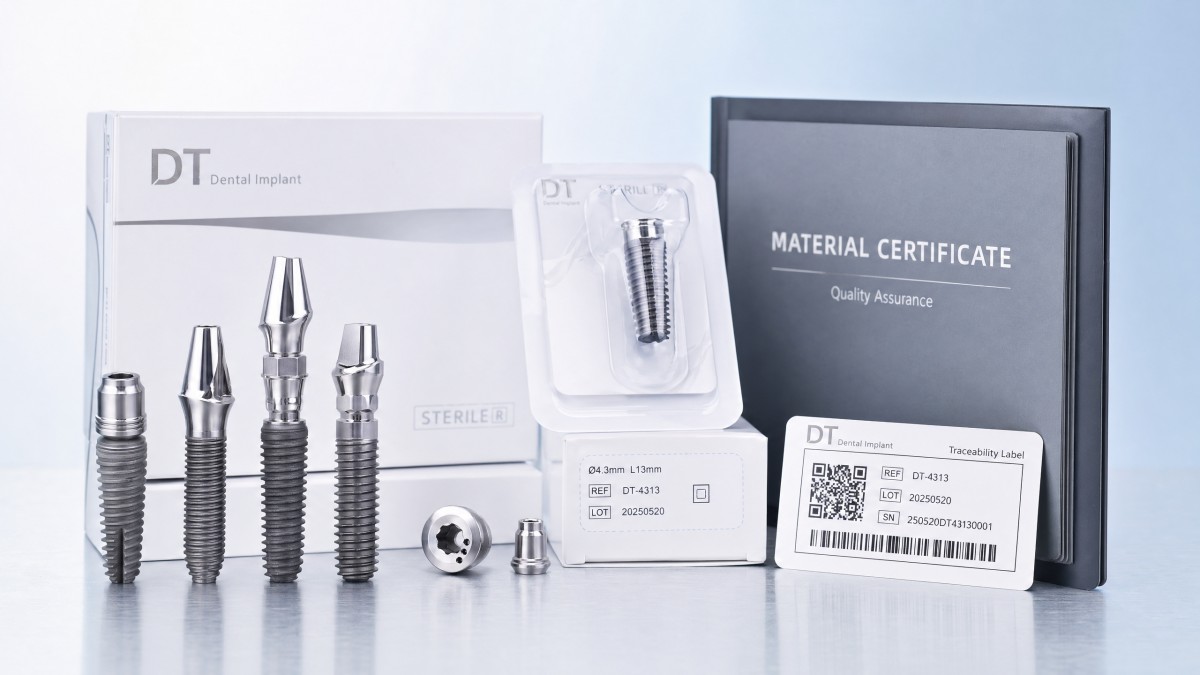
In dental implant wholesale, price variation often begins with the product definition itself. Two suppliers may both offer an implant, but one quote may cover only the fixture, while another includes the abutment, cover screw, sterile packaging, labeling, and traceability documents. For procurement teams comparing offers across 3 to 5 vendors, this creates a false sense of price transparency unless the bill of materials is aligned line by line.
Material choice is another major variable. Commercially pure titanium and titanium alloy are common, but their grade, processing route, and consistency affect both cost and technical performance. Surface treatment also matters. Sandblasted, acid-etched, anodized, or proprietary roughness profiles can change manufacturing complexity, validation burden, and quality-control frequency. In many sourcing discussions, a difference of a few dollars per unit may reflect a very different process discipline behind the product.
Manufacturing precision has direct pricing consequences. Thread geometry, connection tolerance, concentricity, and surface cleanliness are not marketing details; they influence fit, fatigue behavior, and downstream clinical handling. A supplier running tighter tolerances, for example within a narrower micron-level machining band, will usually have higher inspection costs, more advanced equipment, and lower acceptable scrap rates. Those factors are built into the quote even before freight or customs are considered.
Which quote components are most often misunderstood?
Business evaluators often focus on ex-works unit pricing but overlook hidden cost layers. These can include sterilization validation, packaging type, barcode traceability, private labeling, documentation language, and order minimums. If one supplier quotes at a lower base price but requires a 5,000-piece minimum order, while another supports mixed sizes in 500-piece batches, the working capital impact can be significant over a 6- to 12-month procurement cycle.
- Fixture-only versus full restorative component set
- Sterile single-pack versus non-sterile bulk packaging
- Standard documentation versus market-specific regulatory file support
- Generic production batch versus customized OEM labeling and inserts
The practical lesson is simple: in dental implant wholesale, a quote is never just a number. It is a compressed summary of engineering, compliance, packaging, and service assumptions. Unless those assumptions are unpacked, procurement teams may compare unlike-for-unlike products and make a decision that appears efficient but introduces technical or commercial risk later.
What technical factors change the dental implant wholesale price most?
The strongest pricing drivers are usually material integrity, machining accuracy, surface treatment, and connection design complexity. A simple external-hex format with standard dimensions is generally easier to produce than a more demanding internal conical connection requiring tighter interface control. As design complexity rises, tool wear, inspection frequency, and process validation usually rise with it.
Surface engineering can add considerable value and cost. In many dental implant wholesale programs, the visible price difference between two implants is less important than whether the surface is processed consistently batch after batch. If roughness targets, cleaning residues, and passivation steps are not managed properly, the risk is not merely cosmetic. It can affect acceptance quality and increase the need for incoming inspection on the buyer side.
Packaging and sterility also influence the final quotation. Double sterile barrier packaging, lot identification, laser marking, and IFU localization may add small unit costs individually, but together they can materially change the landed cost. For importers supplying hospitals or clinic groups, these details are often essential rather than optional, especially when traceability expectations extend over 5 to 10 years.
The table below summarizes common technical pricing drivers in dental implant wholesale and how they typically influence the quote.
For evaluators, this means the “best” dental implant wholesale price is not automatically the lowest one. A lower quote may be justified when specifications are simpler, but it can also indicate reduced process control, narrower documentation, or omitted service elements. Technical review and cost review should therefore happen together, not in separate stages.
How should buyers compare specifications more accurately?
A strong comparison method is to standardize 8 to 10 core checkpoints before requesting final pricing. These usually include material certificate format, available sizes, dimensional tolerances, surface process description, sterility status, packaging format, batch traceability, shelf life, and regulatory documentation support. Once suppliers answer the same matrix, pricing differences become more interpretable.
It is also useful to ask which items are included in routine release testing and which are only validated periodically. That distinction affects confidence levels. A supplier conducting lot-by-lot checks for critical dimensions may provide stronger consistency than one relying mainly on periodic validation every few months. Such differences rarely appear in headline quotes unless buyers ask directly.
A practical comparison checklist
- Define whether the quote is for fixture only or a complete component set.
- Confirm material grade, source records, and certificate availability.
- Review dimensional tolerance and connection compatibility details.
- Check whether packaging is sterile, non-sterile, bulk, or retail-ready.
- Clarify batch release testing, shelf life, and traceability format.
With this structure, dental implant wholesale decisions become less reactive. Buyers can translate quote differences into technical differences, which is exactly what a disciplined evaluation process should do.
How do compliance and documentation affect the final quote?
Compliance is one of the least visible but most important cost drivers in dental implant wholesale. If a supplier supports regulated markets, documentation demands may include technical files, traceability records, sterilization evidence, packaging validation, shelf-life support, and labeling controls. These requirements do not always change the physical implant, but they change the operating system around it, which adds cost.
For business evaluators working across regions, regulatory readiness can be the difference between a usable quote and a non-usable one. A low-cost offer that lacks coherent documentation may create delays of 4 to 12 weeks during onboarding, sample approval, or market registration review. That time cost can outweigh a lower unit price, especially when launch timelines or hospital tenders are involved.
Documentation quality also influences audit effort. Procurement teams often underestimate the internal labor needed to clean up incomplete supplier files. If each new supplier requires repeated clarification rounds on packaging validation, labeling language, or test reports, the apparent savings on unit cost may be offset by higher qualification workload across quality, regulatory, and sourcing teams.
Which compliance items should be confirmed before accepting a quote?
The table below can be used as a pre-quote or pre-award review tool for dental implant wholesale projects. It helps procurement teams separate a commercially attractive offer from one that is operationally ready.
A compliant dental implant wholesale program is usually more stable over the long term because the supporting documents, release controls, and packaging systems are already designed for repeatability. Buyers do not need perfect paperwork on day one, but they do need enough evidence to avoid hidden implementation costs.
Why do regulated-market quotes often look higher?
Higher quotes often reflect the cost of maintained systems rather than a single product difference. Ongoing lot release review, documentation upkeep, labeling governance, and archived records all require infrastructure. In many cases, that infrastructure protects buyers from expensive disruptions later, such as shipment holds, missing declarations, or repeated packaging revisions.
For a sourcing team, the right question is not “Why is this quote higher?” but “Which risk controls are included in that higher quote?” That shift in evaluation logic usually leads to better supplier selection outcomes.
What supply-chain and order terms can quietly change total procurement cost?
In dental implant wholesale, logistics and commercial terms can change the real cost as much as technical specifications do. Lead time, batch flexibility, MOQ, stock reservation, and reorder responsiveness all affect inventory planning. A supplier offering a lower unit price with a 10- to 14-week lead time may be less attractive than one with a 4- to 6-week cycle if your demand is variable or project-based.
Packaging format has supply-chain consequences too. Bulk-packed implants may reduce packaging cost, but they can increase handling complexity for distributors or private-label buyers. Individually labeled units may cost more upfront yet simplify receiving, warehousing, and downstream resale. Over a yearly purchasing horizon, those operational effects are worth quantifying rather than assuming.
Freight mode and destination requirements matter as well. The total landed cost should include export packaging, document preparation, customs classification support, and possible rework if carton labels or inserts are not market-ready. For procurement teams running 2 or 3 replenishment windows per quarter, small logistics inefficiencies can accumulate faster than many buyers expect.
Which commercial terms deserve closer attention?
- Minimum order quantity by size, not only by total order value
- Lead time for standard SKUs versus customized packaging orders
- Sample availability and whether pilot orders convert into production terms
- Replacement and nonconformance handling time, often measured in business days
- Forecast commitment requirements over 3-, 6-, or 12-month periods
An effective dental implant wholesale evaluation should therefore include a landed-cost model, not just a purchase-price comparison. Even a 5% to 8% unit savings can disappear if safety stock, urgent freight, or repackaging labor rises because the supply arrangement is inflexible.
How can buyers reduce hidden supply risk?
Start by mapping operational questions into the RFQ itself. Ask for standard lead times, rush-order capability, shipment lot structure, and shelf-life remaining at dispatch. Then verify whether the supplier can maintain consistency across multiple order cycles, not only the first trial order. That is often where the real quality of a dental implant wholesale partner becomes visible.
It is also sensible to request a pilot phase covering a limited SKU set before scaling to a full catalog. A 30- to 90-day evaluation period can reveal service stability, documentation responsiveness, and packaging execution more clearly than a desktop quote review alone.
What are the most common mistakes when evaluating dental implant wholesale offers?
The first mistake is treating all implants as interchangeable commodities. While broad product categories may look similar, differences in tolerances, interface design, surface process, and packaging discipline can create very different performance and qualification profiles. In business terms, this means a low-cost quote may carry a higher integration burden for quality and regulatory teams.
The second mistake is ignoring documentation readiness until after commercial selection. Buyers sometimes negotiate aggressively on price only to discover that the supplier cannot support the target market’s labeling, traceability, or file expectations. This often pushes onboarding back by several weeks and forces rushed internal approvals.
The third mistake is comparing samples rather than systems. A supplier may provide acceptable samples, yet still lack the batch consistency, inspection rigor, or packaging stability needed for volume supply. In dental implant wholesale, the ability to repeat the same quality over 1,000, 5,000, or 20,000 units matters more than a single favorable sample review.
A quick FAQ judgment table for business evaluators
The following table condenses common decision questions into a practical evaluation view for sourcing and technical review teams.
These mistakes are common because dental implant wholesale decisions often sit between technical, commercial, and regulatory functions. A stronger process combines these perspectives early, ideally before vendor shortlisting is finalized.
What should a serious RFQ include?
A serious RFQ should define target product scope, expected documentation package, packaging format, annual volume estimate, sample requirement, and delivery window. It should also request clarification on nonconformance handling, change notification practices, and private-label support where relevant. This usually improves quote quality within the first 1 or 2 supplier response rounds.
When that level of clarity is built in, dental implant wholesale pricing becomes easier to audit and easier to defend internally. Procurement teams can explain not only what the quote is, but why it is reasonable relative to risk and supply continuity.
What should you confirm before requesting or approving a final quote?
Before requesting a final dental implant wholesale quotation, confirm whether the project is focused on distribution, OEM, private label, or direct institutional supply. Each route changes the quote structure. OEM projects may require additional packaging development and documentation coordination, while distributor purchases may prioritize stock availability and mixed-SKU flexibility.
It is also wise to separate must-have requirements from preferred features. If sterile packaging, lot traceability, and a defined lead time are non-negotiable, say so upfront. If custom branding is optional for phase one, identify it as a secondary item. This prevents suppliers from overbuilding or underbuilding the offer, both of which distort price comparison.
For business evaluators, the best dental implant wholesale decision is usually the one that balances four areas: technical integrity, documentation readiness, supply reliability, and price consistency over time. A quote that supports only one of these areas rarely performs well after implementation.
Why choose us for technical sourcing insight?
VitalSync Metrics (VSM) supports healthcare supply-chain decision-makers by turning technical complexity into usable procurement intelligence. Our role is not to amplify marketing language, but to help evaluators understand which engineering and compliance variables truly change cost, risk, and long-term sourcing confidence. That is especially valuable in categories like dental implant wholesale, where a simple unit-price comparison often hides the most important differences.
If you need support, we can help structure the right questions before supplier engagement begins. That may include parameter confirmation, quote comparison logic, packaging and traceability review, lead-time evaluation, documentation expectations, sample assessment criteria, or custom sourcing frameworks for OEM and private-label projects.
Contact us to discuss your next evaluation step
If you are reviewing dental implant wholesale options, contact us to clarify product specifications, compare supplier quotations, assess delivery cycles, define documentation checkpoints, or plan a more reliable sample-to-volume pathway. A focused discussion at the beginning can reduce rework later and lead to a sourcing decision based on evidence, not assumptions.
Recommended News
- 2026.04.29Healthcare Analytics Metrics That Support Smarter Budget CallsLydia Vancini (Regulatory Compliance Lead)
- 2026.04.29Mobility Assist Selection Mistakes That Limit Long-Term UseSarah Jenkins (Laboratory Infrastructure Consultant)
- 2026.04.29Endoscope Image Resolution Benchmark for Vendor ComparisonDr. Alistair Thorne (Senior Biomedical Engineer)
The VitalSync Intelligence Brief
Receive daily deep-dives into MedTech innovations and regulatory shifts.